
Sinatra, Silence, and the Birth of New Journalism
Gay Talese's Defining Portrait of Celebrity Power
Frank Sinatra refused to talk. For a celebrity journalist in 1966, this was a death sentence—the story killed before it began. But Gay Talese didn't walk away. Instead, he did something that would redefine magazine writing for the next half-century: he watched.
What emerged in the April 1966 issue of Esquire wasn't just another celebrity profile. "Frank Sinatra Has a Cold" became the most influential magazine article of its generation—a piece that proved a subject's absence could reveal more than any interview, where mood and silence carried more weight than quotes, and where the fragility of power spoke louder than its performance.
No photographs of Sinatra graced its pages. No direct quotes anchored its narrative. Yet this single article captured the contradictions of American celebrity at its apex and established the template for what became New Journalism. Today, the April 1966 Esquire remains one of the most sought-after magazines of the twentieth century, an artifact that changed how stories could be told.
The Cultural Moment: America in 1966
The mid-1960s didn't ask for permission. Vietnam escalated. Civil rights movements forced a national reckoning. A younger generation challenged every assumption about authority, gender, tradition. Television and mass media weren't just changing how Americans consumed information—they were manufacturing a new species of public figure: the celebrity as cultural power broker.
Frank Sinatra stood at the center of this transformation. He embodied postwar American masculinity in its purest form—tough, stylish, magnetic, commanding. Yet by 1966, he was a man caught between eras: aging in a youth-obsessed decade, surrounded by shifting loyalties, navigating the chasm between Rat Pack glamour and the emerging counterculture.
Talese's article didn't just profile this tension—it dissected it. By centering the piece on Sinatra's illness, a simple cold, Talese found his metaphor: even the most powerful men were subject to fragility. Their moods rippled outward, dictating the movements of managers, musicians, hangers-on, an entire ecosystem that orbited a single gravitational force.
For Esquire, this wasn't celebrity journalism. It was cultural anthropology.
Archive Details
Historical Figure: Frank Sinatra
Journalist: Gay Talese
Issue Date: April 1966
Archive Source: Esquire Magazine
Article Title: "Frank Sinatra Has a Cold"
The Anatomy of a Revolution
The Cover and Design
The April 1966 Esquire cover didn't feature Sinatra's face. True to Esquire's bold mid-century editorial vision, the magazine positioned itself as cultural curator, not fan publication. Inside, the design choices were surgical: moody line drawings replaced glossy celebrity portraits, stylized drop caps announced the seriousness of the reporting. Every element distanced the piece from the promotional machinery of entertainment magazines.
Talese's Gambit
What made "Frank Sinatra Has a Cold" revolutionary was simple: Talese refused to fail conventionally.
Sinatra wouldn't grant an interview. So Talese observed him from afar—in bars, in Beverly Hills recording studios, surrounded by his entourage in Las Vegas. He interviewed friends, associates, rivals. He documented rooms, moods, silences, gestures with novelistic precision.
The absence of Sinatra's voice became the story's beating heart. Talese revealed power not through what Sinatra said, but through how others reacted to him—how they orbited, how his mood dictated the atmosphere of entire rooms, how grown men adjusted their behavior based on the tilt of his head.
This was New Journalism in its purest form: literary technique married to factual reporting, transforming the article into a portrait of atmosphere, tension, and cultural meaning.
Visual Language
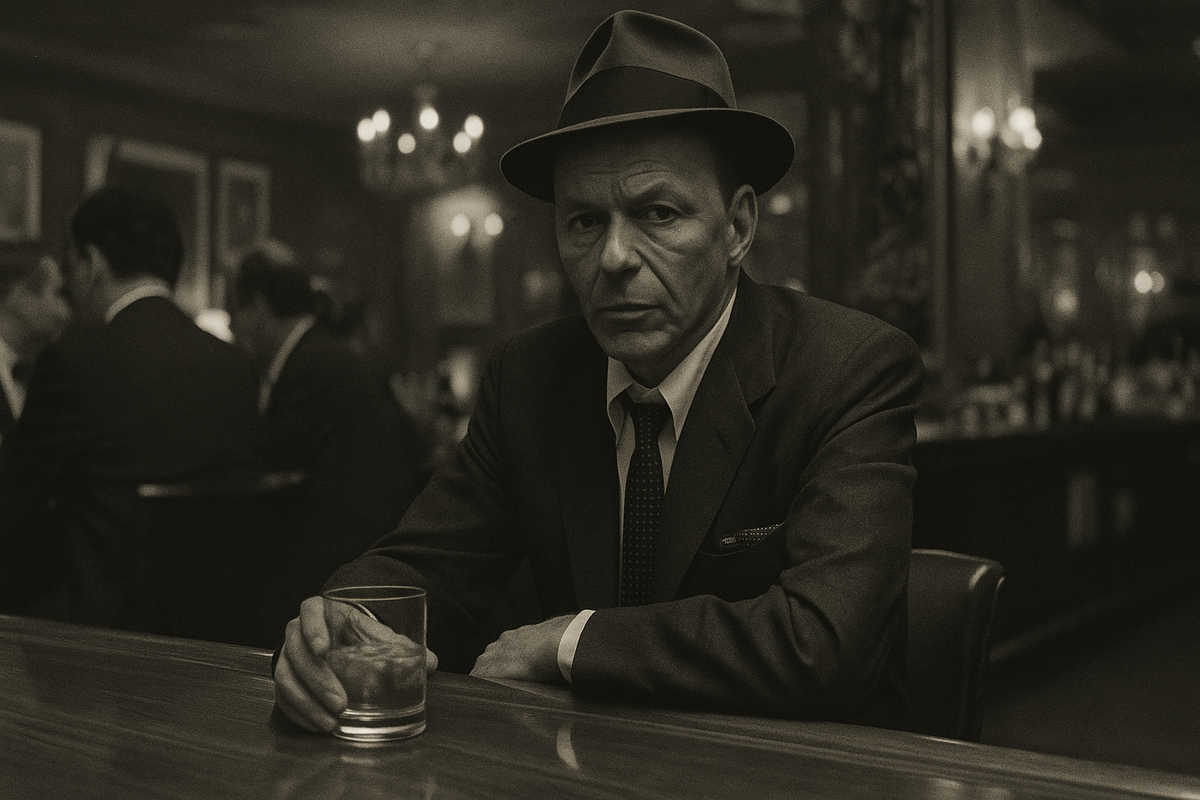
The article's illustrations reinforced Talese's narrative strategy. Readers didn't encounter publicity stills of Sinatra smiling for cameras. They saw stylized interpretations—a hunched figure at the bar, a looming presence defined by absence. These images matched Talese's theme: aura mattered more than appearance.
Even the Weber cartoon interlude—construction workers mistakenly laying railroad tracks—echoed the piece's central metaphor. Men hustling, building, posturing, always awaiting direction from a single figure who might never arrive.
Esquire's Gamble
By publishing "Frank Sinatra Has a Cold," Esquire staked its claim as more than a men's magazine about clothes and cocktails. It became the forum where politics, literature, and style collided—where the thinking man's questions about masculinity, fame, and power were debated with serious intent. This editorial vision separated Esquire from competitors like Playboy or Life, establishing it as the magazine that shaped conversations rather than merely covering them.
What the Article Revealed
Sinatra's cold served as metaphor—the vulnerability beneath celebrity power, the human body's betrayal of the constructed persona.
Talese painted Sinatra as simultaneously commanding and insecure, embodying mid-century manhood even as the 1960s dismantled those ideals.
Sinatra's presence influenced television projects, political campaigns, business deals. His orbit extended far beyond entertainment into the machinery of American influence.
More than voice or quotes, Sinatra's silence dictated atmosphere, controlled rooms, commanded attention. His refusal to speak became the loudest statement in the piece.
Talese's portraits of aides, comedians, managers, and hangers-on exposed the infrastructure sustaining fame in the 1960s—the human cost of proximity to power.
Why Collectors Value the April 1966 Esquire
Historical Timing
Captured the piece at the moment of cultural shift—masculinity, fame, and media transforming in real time, documented as it happened.
Literary Significance
Ensures its place in journalism curricula worldwide. "Frank Sinatra Has a Cold" is taught as the exemplar of New Journalism. Owning the original issue means possessing a primary text of American literary history.
Cultural Iconography
Connects to Sinatra's enduring mythology. As one of the most collectible figures in twentieth-century American culture, this defining profile links collectors directly to the construction of his legend.
Rarity Meets Demand
While many 1960s Esquire issues hold value, milestone issues like this one command particular attention from historians, journalists, and Sinatra devotees.
This isn't paper you flip through. It's an artifact—a cultural object that continues to influence how celebrity journalism is practiced six decades later.
The Enduring Power of a Single Article
Unlike tabloid profiles that fade with their subjects' headlines, Talese's piece endures because it was never just about Sinatra's cold. It captured an entire ecosystem of fame, masculinity, and media at a pivotal American moment. It stands as proof that magazines once served as the stage where culture was debated, dissected, and dramatized—and that the best of that work still resonates.
For collectors, readers, and cultural historians, the April 1966 issue of Esquire is more than a magazine. It's a time capsule of American celebrity culture at its apex and a masterclass in storytelling that refused to follow the rules.
Own a Piece of Journalism History
The April 1966 issue of Esquire featuring "Frank Sinatra Has a Cold" remains available to collectors who understand that some stories transcend their moment. It stands alongside other milestone Esquire issues as part of the broader narrative of mid-century American culture.
Browse Esquire Magazines CollectionFrom Sinatra and the Rat Pack to political reporting and groundbreaking photo essays, each issue offers more than stories—it offers artifacts of cultural transformation.
"Frank Sinatra Has a Cold" marked the turning point when journalism proved it could do more than report—it could create literature. The April 1966 Esquire captured the moment when a simple cold symbolized the fragility of power, the evolution of masculinity, and the profound machinery of celebrity in American life. For those who value history, literature, and the tangible connection to cultural moments that shaped the present, this issue is more than reading material. It's a living artifact from the era when journalism and storytelling converged to create something that refuses to fade.