
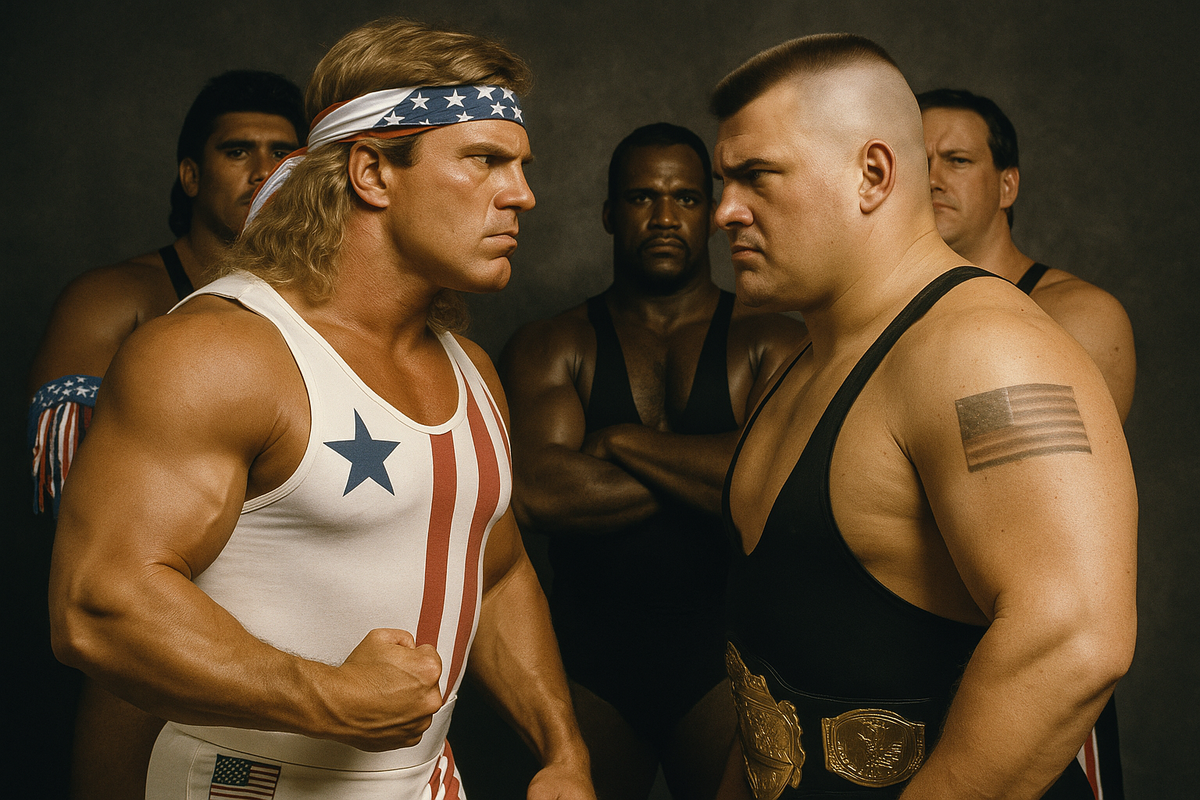
When Four Harts Stood Together
The Survivor Series 1993 Preview That Defined a Family
The clown promised reinforcements. The tax collector assembled a crew. And in the Hart household in Calgary, the phone rang four times.
November 1993 wasn't just another month in the WWF calendar—it was the moment when Jerry "The King" Lawler made his greatest miscalculation. By attacking the Hart family name with enough venom to draw blood, he accomplished what few had managed: he united a wrestling dynasty. Bret, Owen, Bruce, and Keith would all step into Boston Garden together, and the December 1993 issue of WWF Magazine carried the preview that framed it as something more than sport. This was honor itself, printed on glossy paper.
That issue—arriving in mailboxes and on newsstands just as Thanksgiving leftovers filled refrigerators—functioned as the Rosetta Stone for understanding why Survivor Series 1993 mattered. Not just to wrestling fans, but to anyone watching the WWF navigate the uncertain waters between Hulkamania's sunset and whatever would come next.
Archive Details
Publication: WWF Magazine, December 1993 Issue
Featured Event: Survivor Series 1993 (Boston Garden)
Historical Context: New Generation Era, Post-Hulkamania Transition
Key Figures: The Hart Family (Bret, Owen, Bruce, Keith), Jerry Lawler, Lex Luger, Razor Ramon
The Magazine as Oracle
In 1993, WWF Magazine operated as the official scripture of sports entertainment. It didn't simply report matches; it constructed mythology. The Survivor Series preview spread across multiple pages, each one building a case for why these elimination matches deserved your attention and your pay-per-view dollars.
Four distinct storylines received the full treatment, each photographed and narrated with the theatrical precision that separated wrestling from mere athletics:
The Comedy Act With Teeth: Doink the Clown versus Bam Bam Bigelow's squad promised spectacle of the strangest order. Doink's threat to multiply himself—bringing three additional clowns to the ring—got framed by the magazine with deliberate absurdity: "A bushel of Doinks—just like a bushel of mixed nuts at Thanksgiving!" The photos captured Doink's painted grin hovering somewhere between carnival attraction and genuine menace. Against Bigelow, the Headshrinkers, and Bastion Booger, this wasn't just filler. It was the WWF reminding audiences that wrestling could laugh at itself while still delivering chaos.
The Grudge Match Disguised as Team Competition: Razor Ramon, Mr. Perfect, The 1-2-3 Kid, and Marty Jannetty facing IRS, Diesel, Adam Bomb, and Rick Martel represented personal vendettas forced into cooperative structure. The magazine dissected each rivalry with surgical precision—Razor's humiliation of IRS on Monday Night Raw, Diesel's vicious attack on Perfect months earlier, the Kid's underdog clash with veteran Martel. Photos of Razor's cocky smirk opposite IRS's bureaucratic scowl told the story before a word was read.
The King's Fatal Overreach: Jerry Lawler made his intentions brutally clear in the magazine's preview: "It's my chance to obliterate the whole scuzzy lot in one shot." He was speaking about the Hart family—all of them. Bret and Owen were active roster members, legitimate main-event talents. But Bruce and Keith had largely retired from in-ring competition. Lawler's insults were comprehensive enough to pull them back. The magazine's layout placed the four Hart brothers on one page, Lawler and his mysterious Knights on another, building visual opposition before the physical confrontation. This wasn't just another match. The Harts were defending something older than championship belts.
America Versus the World (Again): The main event positioned Lex Luger, The Undertaker, and the Steiner Brothers as the All-Americans against Yokozuna, Ludvig Borga, and the Quebecers—collectively branded the Foreign Fanatics. The magazine reached back to SummerSlam 1993, where Luger defeated Yokozuna by count-out but failed to capture the WWF Championship, leaving unfinished business. Photos emphasized the physical contrast: Luger's chiseled patriotic intensity versus Yokozuna's overwhelming presence. With The Undertaker adding his supernatural element to Team America, the magazine sold this as Cold War morality play updated for the post-Soviet era.
The New Generation, Captured Mid-Transition
December 1993 sits at a precise inflection point in wrestling history. Hulk Hogan's departure earlier that year closed the book on the Rock 'n' Wrestling era. The Attitude Era wouldn't arrive until 1996. In between stretched the New Generation—wrestlers like Bret Hart, Shawn Michaels, and Razor Ramon who brought different body types, different wrestling styles, and different charisma to the main event picture.
WWF Magazine documented this shift in real time without fully understanding where it would lead. The Survivor Series preview showcased a roster in flux: established stars like The Undertaker and Mr. Perfect alongside emerging talents like The 1-2-3 Kid, plus veterans like the Hart brothers returning for family honor. The magazine treated each performer with equal seriousness, building their characters through both photography and narrative context.
The design itself reflected WWF's house style at its peak—bold theatrical portraits, heroes and villains separated across facing pages, kayfabe storytelling delivered with the confidence of absolute truth. For readers in 1993, this wasn't marketing. It was the only insider access available in a pre-internet world.
What the Magazine Preserved
Survivor Series 1993 happened. History recorded the results. But the December 1993 WWF Magazine captured something more valuable: the anticipation. The way rivalries were framed before outcomes were known. The specific language Jerry Lawler used to insult the Harts. The exact visual presentation of Doink's multiple personalities as comedy rather than horror.
The preview established continuity across months of television, reminding readers why IRS and Razor Ramon hated each other, why Diesel's attack on Mr. Perfect demanded payback, why Luger's count-out victory over Yokozuna left business unfinished. In an era when fans couldn't rewatch Monday Night Raw on demand or research storylines online, WWF Magazine served as both record and roadmap.
It also marked the final Survivor Series where the Hart family would stand united. Owen's heel turn would fracture the dynasty months later, leading to the legendary WrestleMania X encounter between the brothers. Bruce and Keith's appearance alongside Bret and Owen represented the last moment when family loyalty trumped individual ambition in the Hart storyline.
Family Unity
The magazine captured the Hart brothers' final united stand—before Owen's betrayal would rewrite their story forever.
Patriotic Theater
The All-Americans vs. Foreign Fanatics represented Cold War storytelling adapted for the post-Soviet 1990s.
Personal Grudges
Each team match disguised individual rivalries—Razor vs. IRS, Perfect vs. Diesel, Kid vs. Martel.
Visual Storytelling
Bold theatrical photography and strategic page layouts built anticipation before a single match aired.
Why Collectors Pursue This Issue
Original copies of the December 1993 WWF Magazine carry weight beyond nostalgia:
Temporal Artifact
This issue documents the WWF mid-transition, after Hulkamania but before the Attitude Era reshaped the industry. It's a snapshot of wrestling figuring out its next identity.
Featured Talent
Bret Hart, Razor Ramon, The Undertaker—these names became Hall of Fame legends. Their early WWF Magazine appearances remain collectible precisely because the publication treated them as stars before consensus arrived.
Event Documentation
Survivor Series previews represent wrestling's biggest annual traditions. This specific preview captured one of the event's most emotionally charged editions.
Design Excellence
The bold portraits, color layouts, and storyline-driven captions represent 1990s WWF visual identity at full strength. These pages don't just inform—they perform.
Condition Scarcity
Three decades of storage, reading, and casual handling mean pristine copies are increasingly rare. Clean, intact issues command premium prices among serious collectors.
Historical Significance
Owning this magazine means possessing an artifact from the moment when four brothers agreed to defend their family name together—proof that in 1993, wrestling was theater that understood the power of family, honor, and spectacle.
Your Gateway to Wrestling's Golden Age
The December 1993 WWF Magazine represents everything that made the Federation's storytelling machinery effective: comedy, patriotism, family drama, and grudge matches built across months of television.
Browse WWF Magazine CollectionFrom Hulkamania's rise through the 1980s to the New Generation of the 1990s and the Attitude Era that followed, WWF Magazine chronicled every shift, every rivalry, every moment that defined sports entertainment.
The December 1993 issue endures because it captured the WWF at a crossroads—honoring its past while building toward an uncertain future. The Survivor Series preview within those pages didn't just sell a pay-per-view event. It preserved the moment when the Hart family stood together one final time, when wrestling's new stars were still proving themselves, and when a magazine could make you believe that everything happening in a Boston ring actually mattered. Thirty years later, holding this issue means holding proof that it did.