
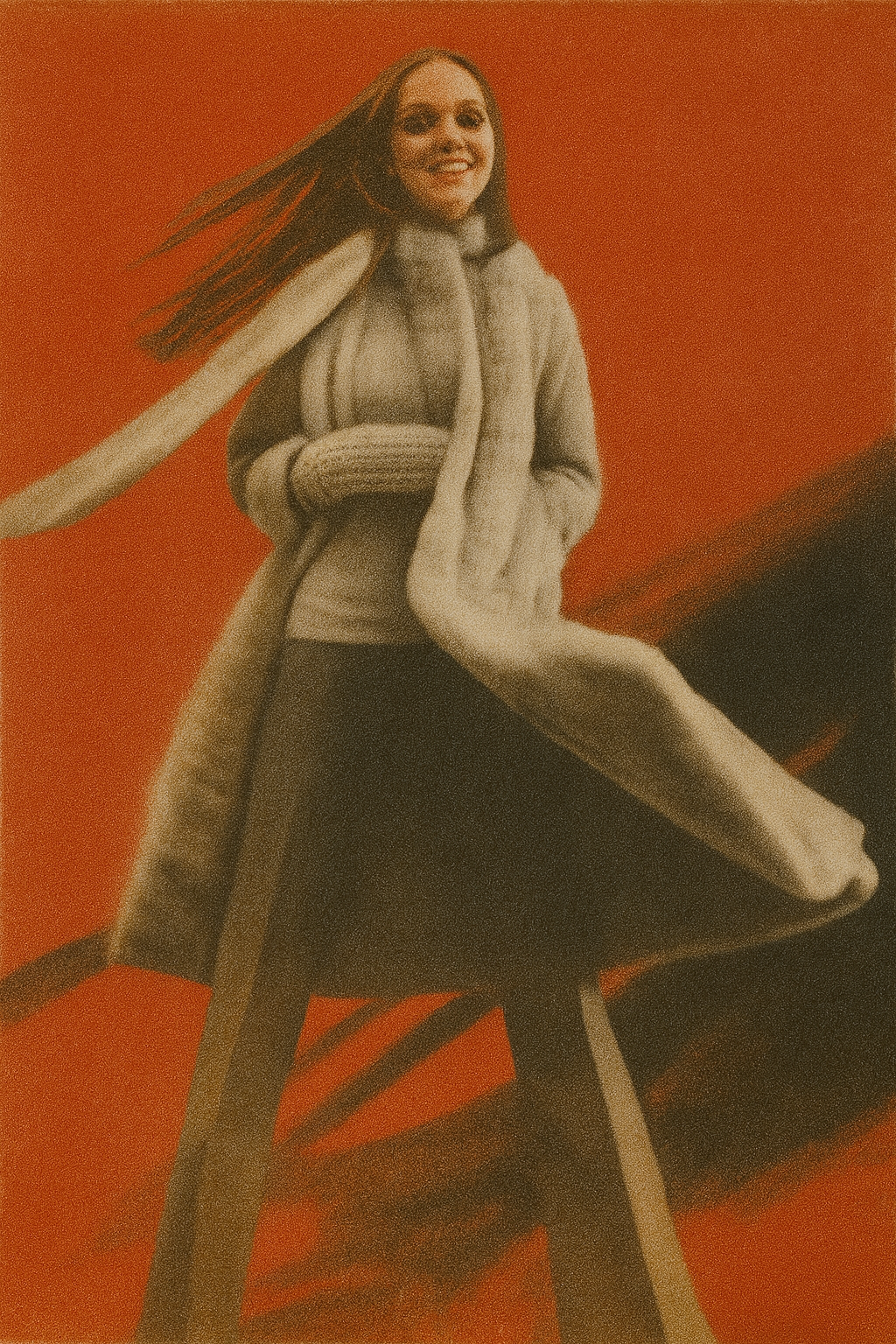
The Moment Fashion Learned to Move
Inside Vogue's January 15, 1970 editorial that transformed walking into a cultural statement
January 15, 1970. A woman strides down a city sidewalk, her cape billowing behind her like a sail catching wind. Her boots strike pavement with purpose. She is not posing. She is going somewhere—and Vogue is watching.
That single editorial decision—to photograph fashion in motion rather than frozen in studio perfection—signaled something larger than hemlines or seasonal trends. It announced that the rules had changed. Women were no longer ornamental. They were kinetic.
The feature was called "A New Way of Walking." The title was literal.
When the Sixties Spilled Into the Seventies
By the time this issue landed on newsstands, the cultural ground had already shifted. The civil rights movement, women's liberation, antiwar protests, and youth counterculture had cracked open the postwar consensus. Fashion, always attuned to the tremors beneath the surface, responded.
The rigid silhouettes of the 1950s and the geometric minimalism of mid-decade mod were finished. What replaced them was fluidity—clothes that moved with the body, that suggested freedom rather than restraint. Halston was draping women in jersey. Yves Saint Laurent was sending them down runways in blazers and trousers. Ossie Clark was cutting bias seams that turned fabric into liquid.
Vogue's January 15 issue captured this transformation at street level. The editorial didn't just show capes, ponchos, and fur-trimmed coats. It showed them in action—blurring past storefronts, whipping in the wind, caught mid-stride against the grit and geometry of urban life.
Walking wasn't incidental. It was the point.
Editorial Archive Details
Publication: Vogue Magazine
Issue Date: January 15, 1970
Featured Editorial: "A New Way of Walking"
Featured Models: Sharon Ryan, Penelope Tree, Joan Whitney Meyer
Archive Source: Original Magazine Collection
The Architecture of the Spread
The Photography
Forget the white seamless backdrop. These images were shot outdoors, in real weather, on real streets. Models moved through trees, traffic, and sidewalk crowds. The effect was documentary, almost journalistic—fashion as it happened, not as it was arranged.
Black-and-white film gave the images starkness and urgency. Striped ponchos and oversized wraps read as bold graphic forms against the city. Hair caught the wind. Coats blurred. The whole thing felt less like a fashion shoot and more like stills from a Godard film.
The Models
Sharon Ryan wore a fur-lined suede coat paired with spats and canvas dresses—luxury recontextualized for daylight. Penelope Tree appeared in an Erté-inspired vinyl skirt ensemble, grounding high fashion in youth culture's appetite for experimentation. Joan Whitney Meyer, granddaughter of a prominent New York figure, brought a lineage of old-world elegance into collision with the new decade's energy.
Each woman wasn't just wearing clothes. She was embodying a version of modern femininity—mobile, individual, unapologetic.
The Styling
Textures mattered: raccoon wraps, striped wool capes, sable-lined coats, canvas, crochet mittens. Tall lace-up boots anchored nearly every look, a defining accessory of the decade to come. But what unified the editorial wasn't the garments themselves—it was how they behaved in motion. This was fashion that refused to sit still.
The Language
Even the captions carried wit. "Where's the fire, Penelope?" one asked. "Why do you suppose capes roll and ponchos fly?" The tone was conversational, knowing, playful. High fashion with a human pulse.
What the Editorial Meant
This wasn't simply a trend forecast. It was a cultural document.
Walking as Liberation
To photograph fashion in motion was to suggest that women had places to be, autonomy to exercise, public space to claim. The street became the runway.
Capes and Ponchos as Symbols
These weren't tailored blazers or cinched waists. They were loose, dramatic, unstructured—garments that suggested freedom of movement and freedom of identity.
Boots as Power
Practical, striking, tall. The boot wasn't decorative. It was functional, even confrontational. It said: I'm moving through the world on my terms.
Personality Over Uniformity
Each model's look reflected individuality. Fashion was no longer about conforming to a single ideal but about expressing a version of self.
The Afterimage
Fashion history is not written in archives alone. It's written in the objects that survive—the magazines people kept, the editorials they remembered, the images that changed how they saw the world.
The January 15, 1970 issue of Vogue remains one of those rare artifacts: a magazine that didn't just reflect its moment but helped define it. "A New Way of Walking" wasn't an instruction manual. It was a manifesto. It said: fashion is not what you wear while standing still. Fashion is how you move through the world.
To hold a copy today is to walk alongside Sharon Ryan, Penelope Tree, and Joan Whitney Meyer on those windswept streets—to feel the weight of a cape catching air, the click of boot heels on pavement, the thrill of momentum.
Fashion, after all, has always been about going somewhere.
Why Collectors Want This Issue
Historical Hinge Point
Published at the exact threshold between decades, it captures the aesthetic and ideological shift from the revolutionary Sixties into the introspective, liberated Seventies.
Iconic Faces
Penelope Tree, Joan Whitney Meyer, Sharon Ryan—these weren't anonymous mannequins. They were personalities, each with cultural currency.
Photographic Innovation
The use of motion, urban environments, and documentary-style framing set this editorial apart from the static glamour shots that dominated earlier eras.
Cultural Resonance
This issue doesn't just document what women wore. It documents how they moved, where they went, and what that movement meant. It's fashion as social history.
Vintage Vogue magazines are prized because they function as primary sources—unfiltered records of aesthetic change, technological innovation in photography, and cultural evolution. This issue, in particular, rewards close study. Every caption, every stride, every windblown cape tells a story about a world in motion.
Own the issue that taught fashion to move.
Original Vogue magazines are more than collectibles—they're tangible access to the moments that shaped modern style. Whether you're a seasoned collector, a design professional, or a student of cultural history, these magazines offer something no digital archive can replicate: the physical presence of history itself.
Browse Vogue Magazine CollectionEach issue is a time capsule. Each page, a primary source. Each editorial, a window into the decade that made us modern.