
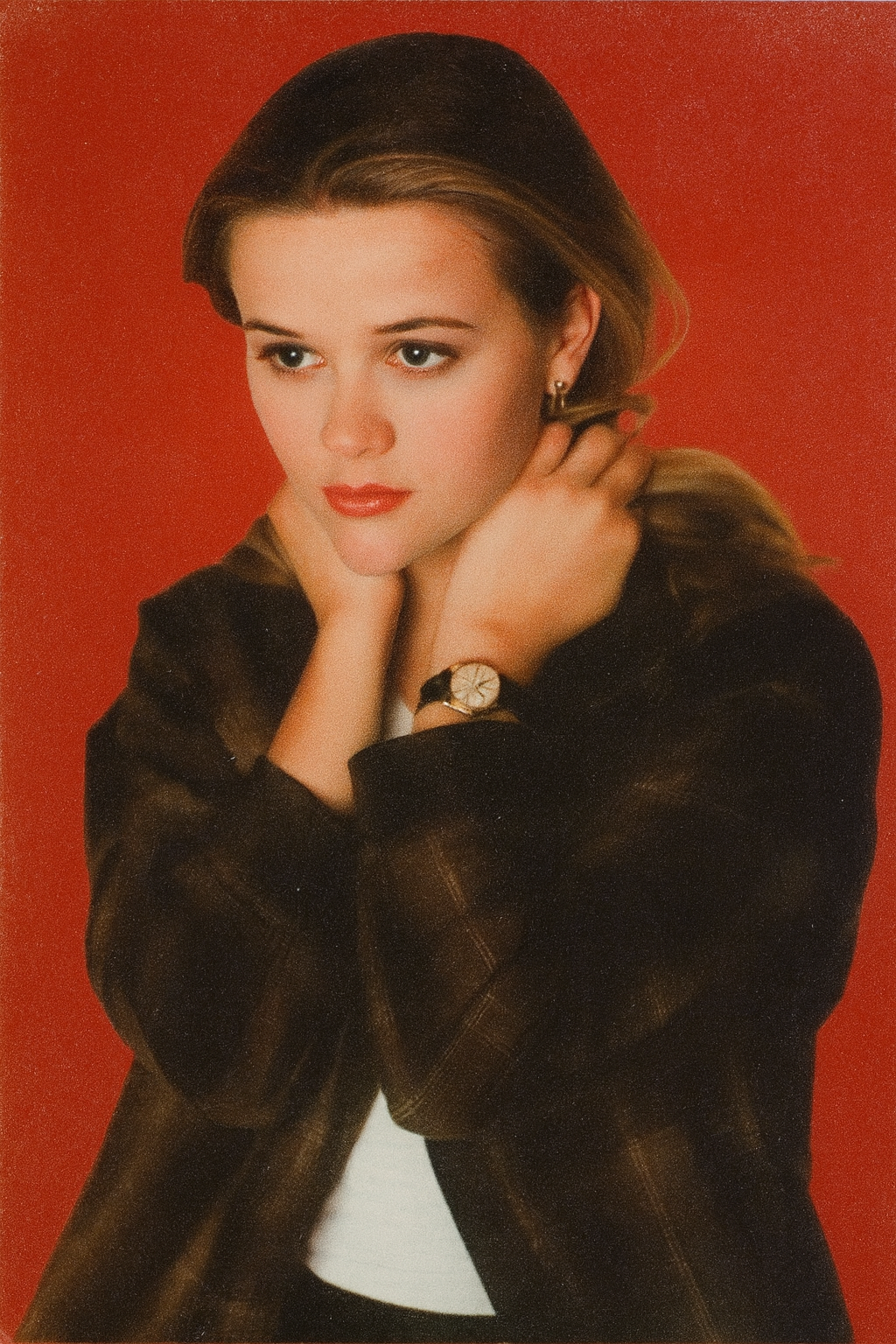
The Last Moment Before Superstardom
Inside Teen Magazine's May 1995 Time Capsule
They didn't know it yet, but the four young women staring out from the pages of Teen Magazine's May 1995 issue were about to become defining voices of their generation. Reese Witherspoon was 18, still years away from Legally Blonde. Christina Ricci was 15, fresh off The Addams Family but not yet a household name. Anna Chlumsky and Gaby Hoffman were navigating the precarious space between child stardom and whatever came next.
This wasn't a "Best of" retrospective. This was the before.
For collectors and cultural historians, that distinction makes all the difference.
Archive Details
Featured Stars: Reese Witherspoon, Christina Ricci, Anna Chlumsky, Gaby Hoffman
Issue Date: May 1995
Archive Source: Teen Magazine
Historical Context: Pre-fame profiles capturing Hollywood's next generation
A Pivot Point in Youth Culture
Spring 1995 marked a shift in how Hollywood packaged adolescence. Clueless would arrive that summer. Now and Then and Casper were in theaters. Teen movies were no longer afterthoughts—they were becoming their own industry, with young actresses at the center rather than the margins.
Teen Magazine understood this instinctively. While adult publications treated youth culture as trend-spotting fodder, Teen spoke directly to its audience without condescension. The May 1995 issue devoted significant space to Witherspoon in its "Girls' Club" feature, then profiled Chlumsky, Ricci, and Hoffman as "Up-and-Coming" stars. The framing was deliberate: these weren't celebrities descending from Olympus. They were peers who happened to work in film.
That editorial choice—treating young actresses as complex individuals rather than press-release fodder—gives this issue its enduring value.
What the Profiles Revealed
Reese Witherspoon, shot in moody black-and-white, came across as thoughtful and slightly detached from the Hollywood machinery. She described acting as "so far from real life," emphasizing the surreal disconnect between film sets and her Nashville upbringing. At 18, she was already positioning herself as someone who wouldn't be consumed by the industry.
Anna Chlumsky wanted normalcy. The My Girl star talked about her Chicago roots, her love of piano, and her admiration for Elijah Wood. She was navigating the classic child-actor dilemma: how to maintain a career without losing yourself. Her upcoming film Gold Diggers suggested she wasn't ready to walk away, but she was setting boundaries.
Gaby Hoffman stood out for sheer unconventionality. Raised in New York's downtown art scene with connections to Andy Warhol's circle, she gravitated toward quirky, offbeat roles that defied the ingenue template. The profile captured her independence—she wasn't chasing mainstream approval.
Christina Ricci, already magnetic at 15, leaned into darker material. Post-Wednesday Addams, she was preparing for Casper and cementing her ability to make morbid characters compelling rather than cartoonish. She listed rock music among her interests and came across as someone comfortable with her own intensity.
Each profile included the kind of humanizing details that made Teen Magazine feel less like publicity and more like documentation: favorite bands, school subjects, hobbies. Chlumsky played piano. Hoffman wrote. Ricci listened to rock. These weren't calculated personal brands—they were teenagers revealing who they were before the industry fully shaped them.
The Visual Strategy
Teen Magazine's photo editors understood aspiration versus relatability.
Witherspoon's black-and-white portrait signaled sophistication—she was being positioned as someone on the verge of adult stardom. The lighting and composition placed her in a different category from the others.
Chlumsky, Ricci, and Hoffman, by contrast, were photographed in bright, casual, natural settings. The aesthetic was accessible, colorful, deliberately youthful. The visual contrast reinforced the editorial hierarchy: Witherspoon as the bridge to what came next, the others as reflections of adolescence in progress.
This wasn't accidental. Teen Magazine knew how to guide its readers' aspirations while keeping them grounded.
Why This Issue Matters Now
Three decades later, this issue of Teen has become a sought-after collectible. The reasons extend beyond nostalgia.
Pre-Fame Documentation
Captured talent before narratives solidified. Witherspoon would win an Oscar. Ricci would become an indie film fixture. Reading these profiles feels like watching footage of a band's first rehearsal before they sold out arenas.
Lost Media Ecosystem
Youth magazines once served as the primary interface between teenagers and popular culture. They shaped identity in ways that feel anthropologically distant in the age of algorithmic feeds.
Cultural Artifact
Scrunchies, mix CDs, mall culture, the rise of teen cinema as a legitimate genre—it's all encoded in these pages. Primary source material for studying pre-digital identity formation.
Editorial Integrity
Teen Magazine took its readers seriously—it didn't talk down, and it didn't sensationalize. That respect for audience is rare and historically significant.
Collector Significance
Historical Timing
Sits at a precise cultural intersection: when teen movies became major business, when young actresses started receiving serious attention, and when magazines still controlled the narrative.
Career Trajectories
All four actresses sustained careers that stretched far beyond their teen years. This issue captures them before fame calcified their public images.
Rarity Factor
Original copies from this period are increasingly scarce. Teen magazines were disposable by design—few were preserved in archival condition.
Research Value
For scholars studying celebrity construction, youth culture, or 1990s media, this is primary source documentation of how identity was manufactured and consumed.
Explore the Archive
For serious collectors of vintage youth magazines, originals from this period represent more than memorabilia. They're historical documents that track the evolution of celebrity, the construction of youth identity, and the editorial strategies that shaped a generation's self-image.
Browse Teen Magazine CollectionHolding History
What makes the May 1995 Teen Magazine endure isn't just that it featured future stars. It's that it captured them at the exact moment before fame calcified their public images. Witherspoon's ambivalence about Hollywood, Ricci's comfort with darkness, Chlumsky's desire for balance, Hoffman's artistic independence—these weren't PR strategies. They were honest self-portraits from young women figuring out who they were.
For collectors, historians, and anyone who values the material culture of youth media, this issue isn't nostalgia. It's evidence of how identity gets made, preserved, and remembered.