
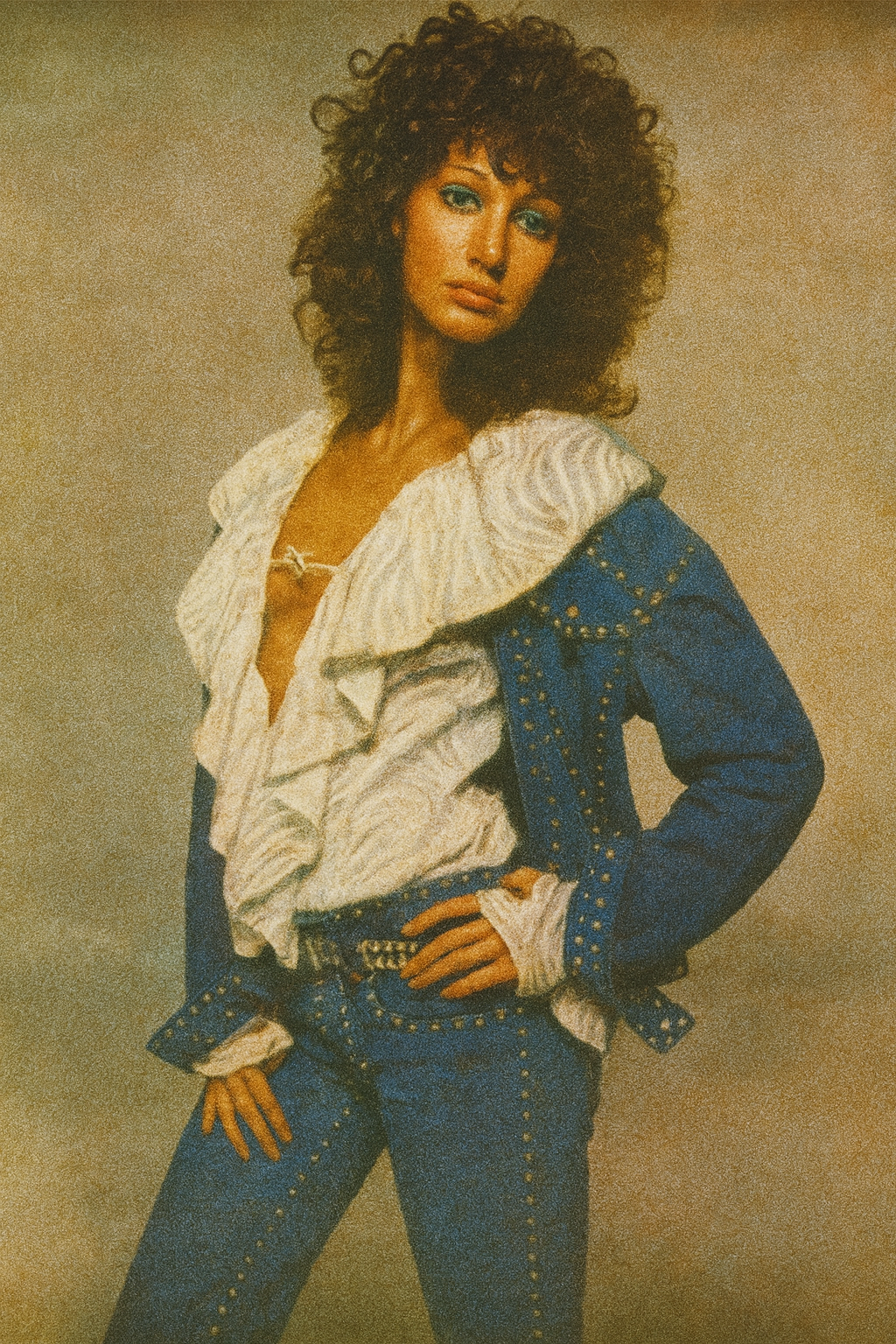
The Moment Denim Stopped Being Dangerous
How Vogue's January 15, 1971 issue transformed workwear into the foundation of modern fashion
January 15, 1971. A woman in a quilted bandana-print coat smiles from the pages of Vogue, and the barricades between workwear and wealth dissolve forever.
This wasn't just another fashion spread. It was a sixteen-page manifesto titled "The Blue Denim Look"—the moment America's most prestigious fashion authority looked at the fabric of gold miners, hippies, and Hell's Angels and declared it worthy of haute couture.
Before this issue, denim belonged to the margins. After it, denim belonged to everyone.
The Fabric That Frightened Parents
By 1971, jeans had spent two decades as the uniform of defiance. James Dean wore them to embody teenage alienation. Marlon Brando wore them to signal working-class menace. Student protesters in Berkeley wore them as armor against the establishment. When parents saw denim, they saw danger.
But something was shifting.
Easy Rider had turned denim into cinematic poetry in 1969. Jane Fonda wore jeans to anti-war rallies and film premieres with equal conviction. Jimi Hendrix performed in them. The counterculture had made denim iconic—but Vogue was about to make it inevitable.
What changed wasn't the fabric. What changed was who had permission to wear it.
Archive Details
Publication: Vogue Magazine
Issue Date: January 15, 1971
Feature Title: "The Blue Denim Look"
Editorial Era: Diana Vreeland Period
Cultural Context: Post-counterculture, pre-disco — the moment American fashion democratized
When Vogue Spoke, Fashion Listened
Under Diana Vreeland's editorial reign, Vogue had become more than a magazine—it was fashion's legislative body. An endorsement in its pages didn't just predict trends; it created them.
The January 15, 1971 issue opened with that quilted bandana-print coat, styled with the casual confidence of someone who knew history was being made. The accompanying text traced denim back to Levi Strauss and the California gold rush, then leapt forward to describe it as "hard-wearing, fast-moving, well-fitting."
But here's what made this feature revolutionary: Vogue refused to keep denim American.
The spread transported readers to St. Tropez, Sardinia, Bangkok, New York. It name-dropped Lauren Hutton, who packed jeans for international travel. It mentioned Pilar Crespi and Mary Russell wearing them with sophistication. It even revealed that Queen Sirikit of Thailand dressed her children in jeans for school.
Suddenly, denim wasn't a fabric—it was a passport. It didn't belong to California or to protest movements. It belonged to the world.
The Editorial Strategy Behind the Revolution
Vogue photographed the denim feature in black-and-white, a deliberate choice that emphasized texture, silhouette, and timelessness over fleeting color trends. The styling oscillated between playful and elegant: straight-legged Levi's paired with snap-front Western shirts, bandana-print dresses that could transition from lunch to dinner.
This wasn't fashion photography. This was cultural anthropology dressed up as a style guide.
The sixteen pages presented denim as simultaneously casual and sophisticated, affordable and aspirational, uniquely American and completely universal. Cowboys wore it. Socialites wore it. Children wore it. The message was clear: denim was the great equalizer, and Vogue was giving everyone permission to participate.
The tone was reverent without being precious. Where other publications treated jeans as either utilitarian necessity or youthful rebellion, Vogue positioned denim as the foundation of modern elegance.
What the Issue Captured
For the first time in fashion history, a single garment could be worn by miners and millionaires without translation.
From San Francisco to St. Tropez, denim had become fashion's first truly borderless language.
When Vogue invoked names like Lauren Hutton and Queen Sirikit, it wasn't name-dropping—it was building legitimacy.
Denim erased the visual markers that had separated social classes for centuries. A pair of Levi's looked the same on everyone.
Those black-and-white images didn't just document fashion—they documented the precise moment when American workwear became international high style.
Vogue's endorsement gave mainstream America permission to embrace what had once been exclusively countercultural.
The Revolution That Never Ended
Today, denim is so ubiquitous we forget it was ever controversial. We forget there was a time when wearing jeans to a nice restaurant would get you turned away. We forget that fashion magazines once dismissed denim as too rough, too common, too working-class for their pages.
The January 15, 1971 issue of Vogue reminds us that every revolution has a beginning—and sometimes that beginning appears in sixteen glossy pages that dare to take the fabric of miners and make it the fabric of the future.
This wasn't just fashion journalism. This was the moment when American democracy found its textile form.
Why This Issue Matters to Collectors
This is the issue where denim crossed the Rubicon. Before January 15, 1971, jeans were countercultural. After this issue, they were canonical.
Diana Vreeland's editorial era at Vogue remains one of the most sought-after periods for collectors, and this issue exemplifies why.
The black-and-white imagery from this feature remains iconic—a masterclass in fashion photography that prioritized timelessness over trend.
This issue links denim to global celebrities and captures a genuine cultural shift, making it essential for both fashion historians and serious collectors.
Owning it means holding the artifact that proves fashion can be both democratic and sophisticated, rebellious and refined, American and universal.
Issues documenting pivotal cultural moments—especially from the Vreeland era—command premium attention in the vintage magazine market.
Explore More Fashion History
If this issue fascinates you, our collection holds more pivotal moments from the 20th century—from the roaring twenties through the revolutionary seventies, each magazine documents the exact instant when culture shifted.
Browse Vogue Magazine CollectionThese aren't reproductions. They're primary sources. They're the moments when fashion became history, preserved in ink and paper.