
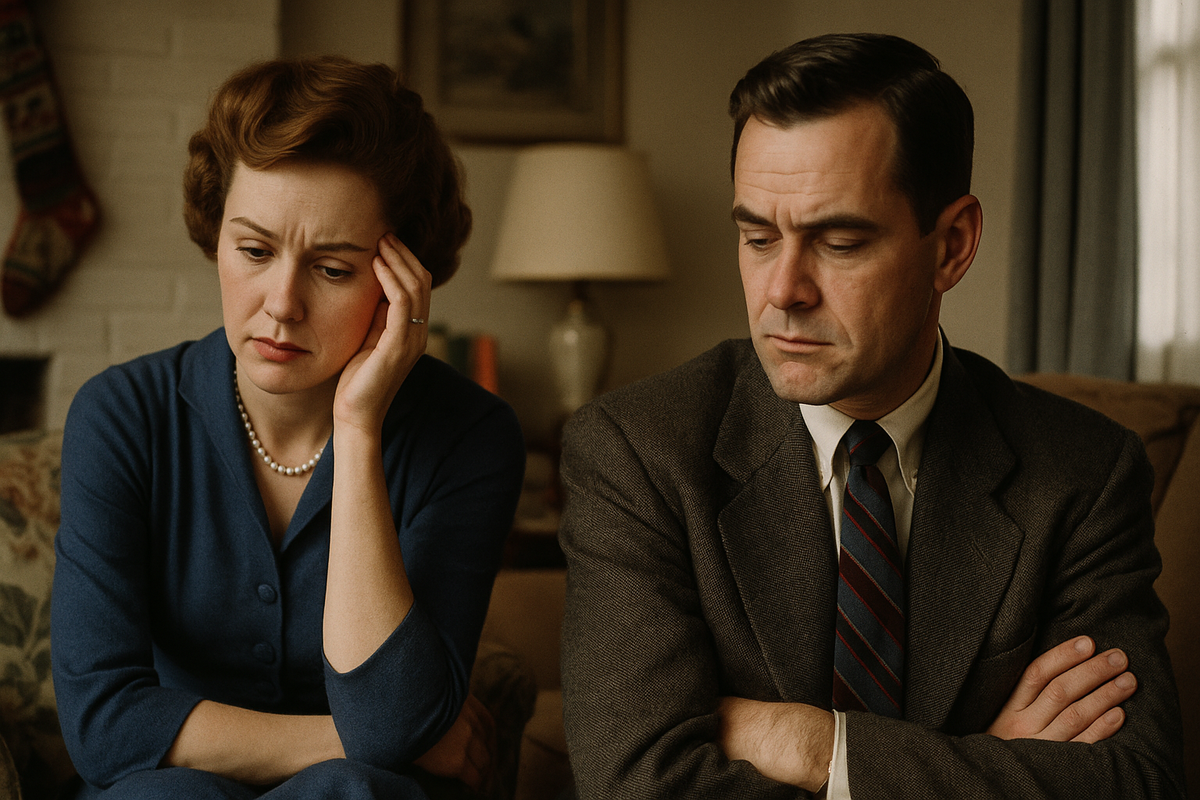
The Woman Who Cried on Her Wedding Night
Inside the Marriage Crisis That Captivated 1950s America
December 1953. Enid sat alone, weeping on what should have been the happiest night of her life. Ten years later, she would confess to the readers of Ladies' Home Journal that she had sensed it from the beginning—the disappointment, the distance, the slow death of a dream she had been promised would save her.
Her husband Clay didn't understand. He paid the bills. He came home every night. What more could she possibly want?
This wasn't just one couple's private heartbreak. It was the December 1953 installment of "Can This Marriage Be Saved?"—and it became a cultural flashpoint for an entire generation of American women trapped between the fantasy of romance and the suffocating reality of postwar domesticity.
Archive Details
Publication: Ladies' Home Journal
Issue Date: December 1953
Featured Column: "Can This Marriage Be Saved?"
Marriage Counselor: Dr. Paul Popenoe
Historical Context: Early postwar America, peak of nuclear family idealization
The Unspoken Contract of 1950s Marriage
The early 1950s sold America a seductive lie: that nuclear families, suburban homes, and booming consumer culture would deliver happiness as reliably as a new refrigerator. Veterans returned from war. Levittowns sprouted like mushrooms. Women's magazines became secular bibles, dictating not just recipes but the very terms of female existence.
For women like Enid, marriage wasn't companionship—it was identity itself. Ladies' Home Journal understood this better than anyone, dedicating entire columns to the architecture of family life. "Can This Marriage Be Saved?" wasn't entertainment. It was emergency instruction.
The feature arrived with the authority of Dr. Paul Popenoe, one of the era's most influential marriage counselors. His presence transformed gossip into gospel, personal struggle into case study. But his guidance came wrapped in the same cultural straitjacket it claimed to loosen: women should want romance, yes—but once married, they should accept stability and stop asking for more.
Men, meanwhile, operated under different rules entirely. Emotional restraint was masculine. Love meant provision, not affection. Clay embodied this perfectly: he measured his worth in paid bills and steady work, not in compliments or tenderness.
The gap between these expectations didn't just strain marriages. It revealed a fracture line running through American culture itself.
Three Voices, One Verdict
The genius of "Can This Marriage Be Saved?" lay in its structure. Each story unfolded through three perspectives, creating a narrative tension that turned readers into jury members.
The wife's confession: Enid spoke with devastating clarity. She had cried on her wedding night. She longed for a husband who was "exciting," who made her feel cherished. Instead, she felt ignored, unloved, diminished. In ten years of marriage, Clay had given her "not one compliment."
The husband's defense: Clay saw himself as practical, hardworking, bewildered. He had done everything right—or so he thought. Providing for his family should have been enough. Enid's hunger for romance struck him as unrealistic, even childish.
The counselor's judgment: Dr. Popenoe walked a careful line. He critiqued women's "misguided search for constant romance" while gently suggesting that husbands might try showing a bit more tenderness. But the burden of adjustment? That fell squarely on Enid's shoulders.
This triangulated storytelling was voyeuristic and educational in equal measure. Readers saw themselves in these pages—their own frustrations, their own compromises, their own quiet desperation made public and validated.
The Magazine as Mirror
Ladies' Home Journal understood that presentation shaped perception. The December 1953 issue deployed every tool in the mid-century editorial arsenal.
The title "Can This Marriage Be Saved?" appeared in sweeping script against soft pastels—dramatic yet domestic, urgent yet genteel. Staged photographs depicted the grammar of marital strain: a wife's weary gaze, a husband's turned shoulder, the physical space between bodies signaling emotional distance.
Then came the commercial intrusion. An advertisement for Rain Dears boots sat alongside Enid and Clay's suffering. This wasn't careless placement—it was the magazine's fundamental DNA. Emotional storytelling and consumer goods shared the same real estate because they sold the same promise: that buying the right things could repair what was broken inside.
Dr. Popenoe's portrait anchored the feature with professional gravitas. These weren't mere stories. They were case studies. They were science.
The combination proved irresistible. "Can This Marriage Be Saved?" became one of the Journal's most enduring franchises, shaping how generations of Americans understood—and failed to understand—each other.
The Moments That Cut Deepest
Thousands of women read Enid's story and recognized their own faces. They wrote letters. They kept reading. They wondered if their own marriages could be saved—or if, like Enid, they were simply asking for too much.
The piece didn't resolve these tensions because American culture hadn't resolved them. It could only name them, display them, and suggest that compromise looked suspiciously like surrender.
The Long Shadow of Ladies' Home Journal
Just as Life Magazine brought war into American living rooms, Ladies' Home Journal brought the intimate architecture of marriage, fashion, and cultural conflict into women's hands. The December 1953 issue stands as testament to how media doesn't just reflect culture—it manufactures it, normalizes it, polices it.
The advice feels dated now. The gender roles seem almost parodic. But strip away the historical distance and the emotional core remains unnervingly familiar: the longing for love that feels just out of reach, the disappointment when routine replaces passion, the struggle to reconcile what we were promised with what we received.
Enid's tears on her wedding night still echo. Clay's bafflement still resonates. Dr. Popenoe's measured verdict—asking women to want less, men to give slightly more—still describes the mathematics of compromise that too many relationships accept as inevitable.
Why Collectors Prize This Issue
Explore the Archive
Thousands of vintage Ladies' Home Journal magazines offer entry points into the 20th century's most intimate spaces.
Browse Ladies' Home Journal Magazine CollectionThe December 1953 issue of Ladies' Home Journal and its "Can This Marriage Be Saved?" feature aren't just magazine pages. They're emotional archaeology—evidence of how a generation of women learned what marriage meant, what they were permitted to want, and how much disappointment they were expected to absorb with grace.
For collectors, these magazines function as living documents. They remind us that family life was shaped by forces far more powerful than individual choice—by magazines, counselors, advertisers, and experts who claimed to know what women needed better than women themselves.
Holding this issue today means holding a story that touched an entire generation. More than that—it means holding the cultural script that told millions of women that their tears, even on their wedding night, were probably their own fault.