
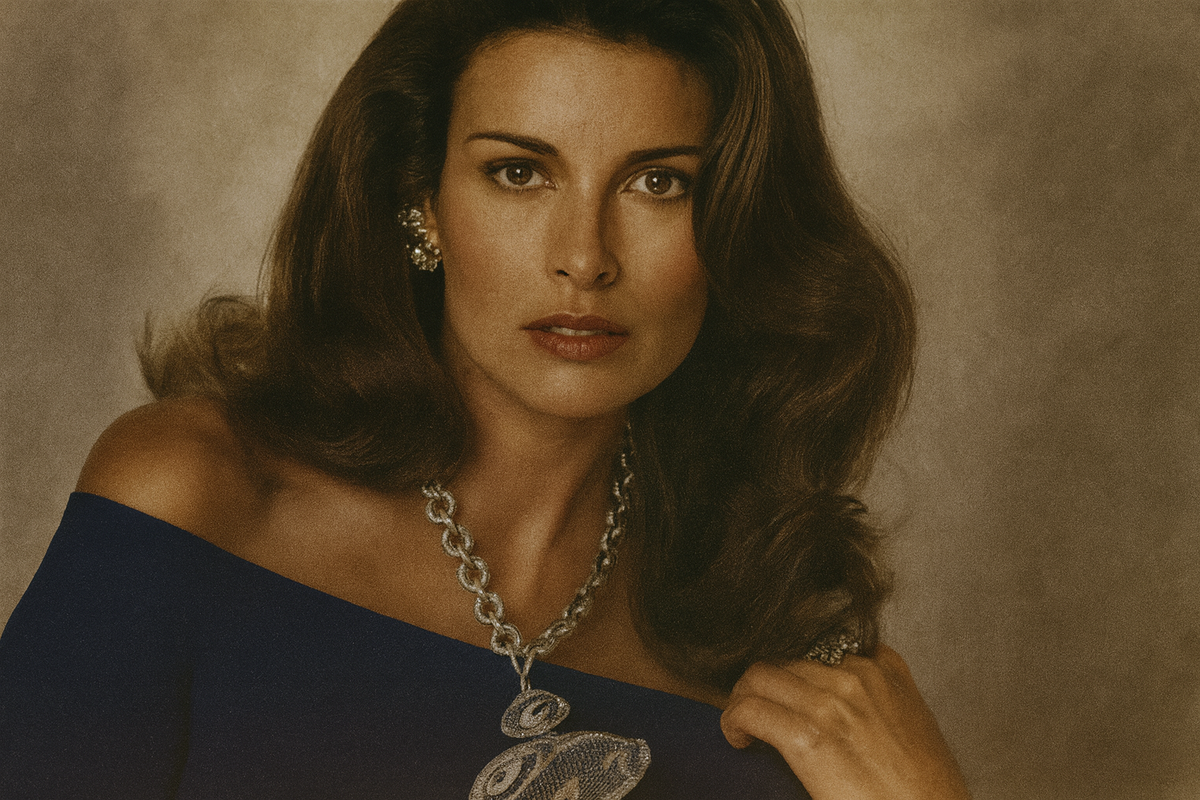
The Bold Jewel, Raquel Welch, and the Glamour of 1970s Fashion
How Vogue's November 1972 editorial captured the transformation of jewelry, celebrity, and feminine power
In November 1972, Vogue made a declaration. Not in an editorial letter or a manifesto, but in the way only Vogue could—through image, through style, through the careful orchestration of a Hollywood icon draped in Parisian jewels. The feature was called "The Bold Jewel," and it placed Raquel Welch at the center of a cultural moment when American cinema, European couture, and the liberation of women's fashion collided on glossy magazine pages.
This was not simply another celebrity fashion spread. It was a document of transformation—of an era shedding its past constraints, of jewelry becoming armor rather than adornment, of a star who embodied both sensuality and self-possession. For anyone who studies the arc of 20th-century style, this single issue remains a touchstone.
Archive Details
Historical Figure: Raquel Welch
Issue Date: November 15, 1972
Archive Source: Vogue Magazine
Photographer: Henry Clarke
Featured Jeweler: Gérard (Paris)
Fashion Designer: Leonard Fashion
Hair Styling: Carita of Paris
The Cultural Landscape of 1972
The early 1970s were years of recalibration. The idealism of the 1960s counterculture had given way to something more pragmatic yet still expressive. Fashion became the arena where these tensions played out. Hemlines, once a battleground in the miniskirt wars, now yielded to fluid silhouettes—maxi dresses, lounge-inspired gowns, the rise of pajama dressing as legitimate eveningwear. Women were experimenting with personal style that fused comfort with extravagance.
The feminist movement was gaining velocity. More women were entering professional fields, demanding workplace equality, rejecting the restrictive beauty ideals of previous decades. Yet Hollywood and pop culture continued to celebrate figures like Raquel Welch, who represented not contradiction but complexity—a woman who could be both sensual and independent, both desired and self-directed.
Jewelry underwent its own revolution. The delicate diamonds and pearls of the 1950s housewife had been replaced by bold, oversized stones, geometric pendants, avant-garde designs from Parisian ateliers like Gérard. Jewelry was no longer background sparkle. It was declaration, identity, power. Vogue's "The Bold Jewel" editorial captured this shift and amplified it.
The Editorial: Anatomy of a Statement
The Title and Its Intent
"The Bold Jewel" was not a suggestion—it was a mandate. What goes for the jewel, the text implied, also goes for the woman wearing it. In 1972, subtlety was passé. The jewel commanded attention, and so did the woman.
Raquel Welch as the Embodiment
Welch was the perfect choice. Known for her roles in Fantastic Voyage (1966) and One Million Years B.C. (1966), she had become a global symbol of feminine allure. But by 1972, she had also established herself as a serious performer, with The Last of Sheila (1973) on the horizon. Vogue understood this duality. By linking Welch with couture jewelry, the magazine positioned her as the modern woman incarnate—glamorous, confident, cinematic, and in control.
The First Spread: Pajama Glamour Redefined
One photograph presents Welch in a flowing striped crepe ensemble by Leonard Fashion, styled like luxurious pajamas. This was not casual loungewear. This was a new species of evening glamour—fluid, saturated with color, unapologetically daring. The palette of purples, oranges, and blues echoed the artistic experimentation coursing through the decade. The text emphasized how these bold fabrics and shapes mirrored the richness of the jewelry itself, creating a total vision rather than a mere outfit.
The Second Spread: Crystal and Diamonds as Power
In a close-up portrait, Welch wears a crystal pendant from Gérard's Parisian collection, overlaid with diamonds and mounted in gold. The description notes the jewel's brilliance and its "unexpected depth"—a phrase that could equally describe Welch herself. The bold pendant and chain are not dainty accents. They are central symbols of allure and authority.
Hair and Makeup: The Balance of Strength and Softness
Welch's hair, styled by Carita of Paris, falls in smooth waves that balance elegance with ease. Her makeup accentuates natural features without competing with the jewels. The beauty styling was part of the editorial's argument: a modern woman could wear bold fashion without being overwhelmed by it.
Vogue's Visual Mastery
The photographs by Henry Clarke elevated the editorial beyond catalog work. Clarke framed Welch not as a model but as a living artwork. The fusion of Hollywood charisma, Parisian craftsmanship, and high-fashion styling created a visual narrative that was part advertising, part cultural commentary, part aspirational fantasy. This layered approach—never just one thing—was what made Vogue singular.
What the Editorial Reveals
Raquel Welch's Dual Identity
The editorial connected Welch's fashion presence to her upcoming film The Last of Sheila, demonstrating how Vogue promoted cinema and couture as intertwined forces.
Pajama Dressing as Eveningwear
Leonard Fashion's crepe ensemble represented the era's embrace of fluid silhouettes and comfortable glamour.
Jewelry as Centerpiece
Gérard's oversized crystal pendant illustrated how jewelry in the 1970s became the focal point of fashion, not its afterthought.
Paris Meets Hollywood
By pairing a French jeweler with an American star, Vogue reinforced fashion as an international dialogue.
Bold Color Palettes
The saturated hues of Welch's gown reflected the decade's rejection of restraint in favor of vibrant, unapologetic expression.
Photography by Henry Clarke
Clarke's visual storytelling transformed the editorial into enduring art.
Carita's Styling
The Parisian salon contributed to Welch's effortless synthesis of softness and strength.
Fashion as Identity
The article suggested that jewels and clothes were not decorations but extensions of personality.
Cultural Symbolism
Welch represented more than glamour. She was independence and confidence in a transitional era.
Luxury Meets Collectibility
The editorial itself has become a collectible artifact, prized by historians and vintage Vogue enthusiasts alike.
The Endurance of Print
What distinguishes Vogue from other publications of its era is its ability to capture the intersection of fashion, culture, and aspiration. "The Bold Jewel" was not about Raquel Welch wearing attractive clothes. It was about how women in 1972 were redefining themselves, using bold colors, oversized jewelry, and Hollywood-inspired glamour as instruments of self-expression.
Unlike ephemeral digital media, vintage magazines endure as artifacts. Each issue is a time capsule, revealing not only what people wore but what they valued, what they aspired to, how beauty itself was conceived. For collectors, this permanence is magnetic.
Why This Issue Matters to Collectors
The November 15, 1972 issue of Vogue holds exceptional value for those who collect cultural artifacts. Issues featuring icons like Raquel Welch are sought not only for their style content but for their historical resonance.
The Raquel Welch Factor
Any Vogue featuring Welch is immediately desirable. She remains one of the most magnetic figures of 20th-century popular culture.
Jewelry Editorials as Historical Milestones
Fashion historians regard features like "The Bold Jewel" as essential documents in tracing the evolution of jewelry's role in 1970s style.
Parisian Craftsmanship
Gérard's crystal pendant represents Paris couture at its apex, linking the magazine to the broader narrative of international luxury.
Photography by Henry Clarke
Clarke's imagery transforms the magazine into a collectible work of art.
1970s Vogue as Time Capsule
Early 1970s issues are increasingly prized as records of cultural transformation. They capture the era's negotiation between counterculture influence and high-fashion sophistication.
To hold this issue is to hold a fragment of the 1970s—a moment when Hollywood, Paris, and Vogue together defined glamour.
Explore the Archive
If you collect vintage magazines, study fashion history, or simply appreciate the glamour of past decades, the November 15, 1972 issue of Vogue featuring Raquel Welch is essential. It represents the boldness of the 1970s, the artistry of Parisian jewelers, and the enduring allure of one of Hollywood's greatest icons.
Browse Vogue Magazine CollectionFrom the 1920s to the 1990s, our archive documents how Vogue captured not just fashion but entire cultural movements.
Conclusion
The Vogue November 15, 1972 issue remains one of the most resonant examples of how the magazine fused Hollywood star power, Parisian fashion, and cultural observation. In "The Bold Jewel," Raquel Welch embodied the spirit of her era—confident, glamorous, unafraid of making statements. The editorial reflected a moment when women were embracing individuality and boldness, when fashion and jewelry became symbols of liberation rather than constraint.
To hold this issue today is to hold a piece of 1970s history, where a jewel could transcend decoration and a star like Welch could transcend performance. Together, they created a vision of beauty and strength that resonates half a century later.