
The Day Glory Became a Ghost
Kane's 24-Hour Championship and the Magazine That Captured It
When photographer Bill Apter raised his camera to capture Kane holding the WWF World Championship belt, he knew he was working against time. Not the deadline kind—the existential kind. Kane had won the title only hours earlier. By the next night, it would be gone.
That photograph—frozen, fleeting, almost funereal—became the centerpiece of Inside Wrestling's Holiday 1998 issue, anchoring a feature titled "The Day of Glory That Ruined Kane's Life." For collectors and Attitude Era scholars, this magazine isn't just wrestling journalism. It's a forensic document of professional wrestling's most paradoxical moment: the champion who had everything and nothing at once.
Archive Details
Subject: Kane (Glenn Jacobs)
Publication: Inside Wrestling, Holiday 1998 Issue
Event: King of the Ring 1998 – WWF Championship
Photographer: Bill Apter
Historical Context: WWF Attitude Era (1997-2001)
The Shortest Reign in History
Summer 1998. King of the Ring. Kane—the masked, seven-foot "Big Red Machine"—defeats Stone Cold Steve Austin for the WWF Championship after Undertaker's interference leaves Austin bloodied and vulnerable. For one night, Kane stands alone at the top of the mountain.
Twenty-four hours later, Austin reclaims the title. Kane's reign enters the record books as one of the briefest in WWF history. Vince McMahon dismisses him publicly as a "fluke champion." Jerry Lawler reports that locker room peers ridicule Kane for being unworthy of the belt. Jim Ross cuts deepest: "I don't think even Kane knows who he is."
Inside Wrestling didn't just report these events. It autopsied them. The magazine turned Kane's victory into a case study in power without identity—a monster capable of destruction but incapable of leadership. For all his fire and dominance, Kane was presented as psychologically unmoored, manipulated by Paul Bearer, overshadowed by his half-brother The Undertaker, and haunted by his own success.
The Mythology of the One-Day Champion
What makes the Holiday 1998 issue significant isn't the match result—fans already knew Kane lost the title. It's the narrative architecture the magazine built around that loss.
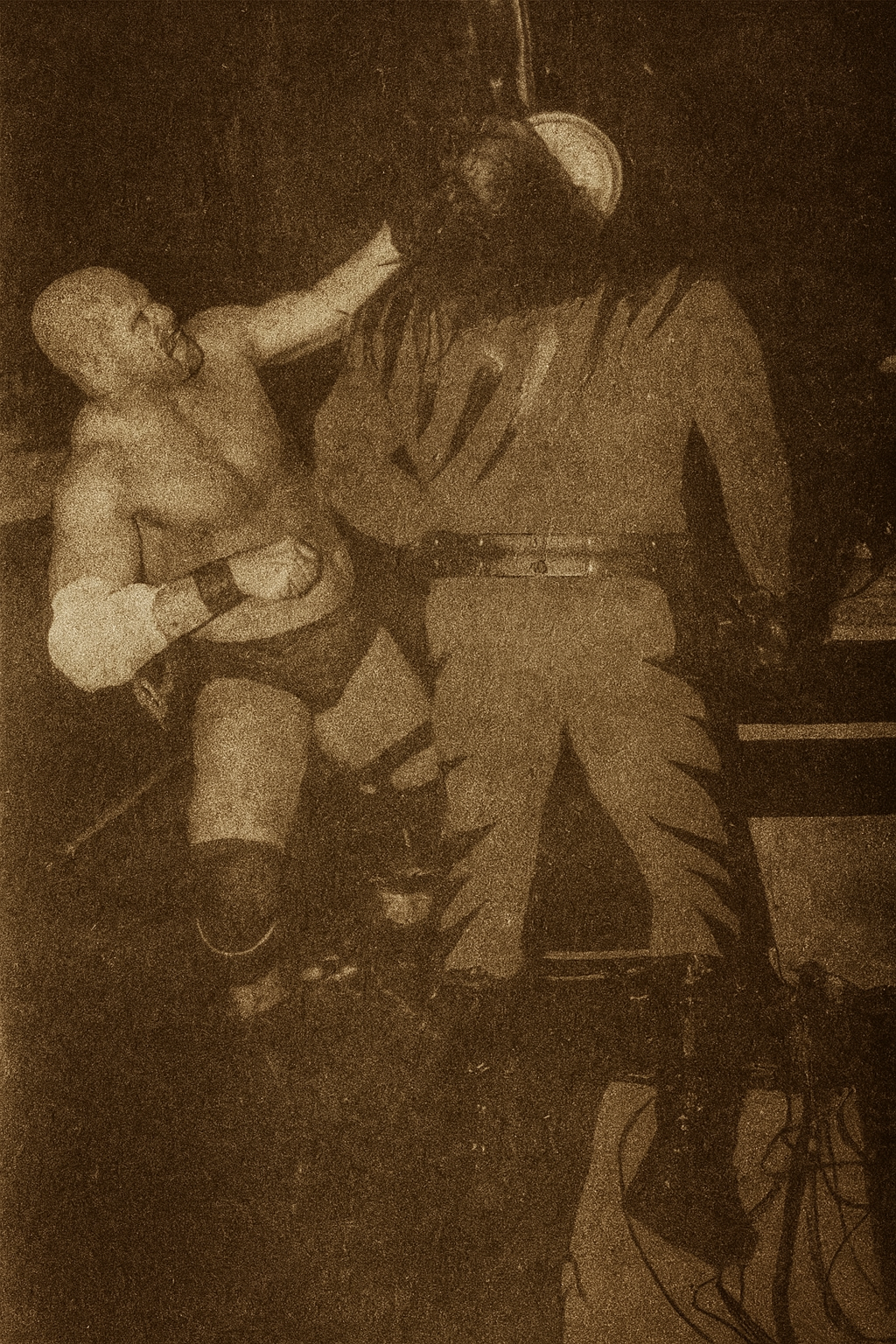
The photography tells the story visually. Apter's image of Kane with the championship belt carries ghostly weight—a moment that vanished almost as soon as it materialized. Other shots show Kane battling Austin, standing beside Undertaker and Bearer, dominating opponents in the ring. Each image underscores the central paradox: overwhelming physical strength coupled with psychological fragility.
The text amplifies this. Kane is portrayed not as a villain or a hero, but as a figure mocked, manipulated, and misunderstood. The magazine stresses his dependence on Bearer and Undertaker, his shaky confidence, the ridicule from management and peers. Ross's commentary anchors the piece: Kane needed solitude, clarity, and distance from his handlers—the same path Undertaker had walked during his own crises.
This wasn't recap journalism. It was psychological portraiture dressed in wrestling mythology.
Kane won the WWF World Title by defeating Steve Austin but lost it back the very next night.
His victory depended on Undertaker's interference, raising questions of legitimacy.
Vince McMahon publicly called Kane a "fluke champion."
Jerry Lawler revealed how Kane's short reign became a joke among his peers.
The article emphasized Kane's toxic reliance on Paul Bearer for guidance.
Jim Ross argued Kane didn't even know who he really was.
Kane was described as strong and brutal, but mentally unstable.
The narrative showed how Kane's career was defined by his brother.
Why This Issue Endures
For collectors, Inside Wrestling Holiday 1998 functions as both artifact and analysis. Few publications devoted this much attention to Kane's one-day reign. The photographs of Kane holding the WWF Championship are rare by definition—he possessed the belt for less than a day. The commentary from Ross and Lawler roots the story in voices fans trusted during wrestling's most unpredictable era.
But the issue's lasting power comes from what it captured about the Attitude Era itself: the blurred lines between performance and reality, the chaos of storylines colliding in real time, the way triumph could invert into tragedy within a single broadcast cycle. Kane's brief championship became a referendum on legitimacy—not just his, but wrestling's.
The magazine understood something essential: in 1998, wrestling fans weren't just watching matches. They were witnessing identity crises, power struggles, and psychological unraveling played out under arena lights. Inside Wrestling gave those moments weight and permanence.
The Magazine as Monument
The brilliance of Inside Wrestling in 1998 was its refusal to treat wrestling as mere entertainment. The magazine approached storylines as mythology worth dissecting, characters as figures worthy of psychological study, and moments like Kane's one-day reign as legitimate cultural events.
Kane is shown not just as a monster in the ring but as a vulnerable figure—powerful enough to win the title but unprepared to carry its weight. The feature captures why magazines mattered in the 1990s. They weren't simply reporting results. They were building mythology, mixing images, interviews, and commentary into stories fans could study long after the broadcast ended.
For readers in 1998, Inside Wrestling gave depth to Kane's story. For readers today, it's a portal back into wrestling's most unpredictable era—and a reminder that glory, once lost, becomes memory.
The Collector's Perspective
Kane's one-day reign received minimal long-form treatment elsewhere. This issue remains the definitive contemporaneous account.
Apter's images document a championship moment that existed for less than 24 hours, making them irreplaceable visual records.
The voices of Ross, Lawler, and McMahon captured here reflect the Attitude Era's unique blend of worked reality and genuine backstage tension.
For fans who lived through 1998, this magazine crystallizes the exact moment Kane's glory slipped away. For younger collectors discovering the era, it offers unmediated access to wrestling's most volatile period.
The issue matters because it preserved what television couldn't: the psychological aftermath of a championship that vanished before anyone could process what it meant.
Collecting the Attitude Era
If you're a serious student of late-1990s WWF, Kane's arc, or the cultural machinery of wrestling media, Inside Wrestling Holiday 1998 belongs in your archive. It captures not just a match but a mythology—the day glory turned into ruin, and a champion became a ghost.
Browse Inside Wrestling Magazine CollectionThe Holiday 1998 Inside Wrestling issue remains a monument to wrestling's most unstable era. Holding it means holding a piece of history where triumph and tragedy collapsed into a single day, and where one photograph captured a championship that existed only as long as the shutter stayed open.