
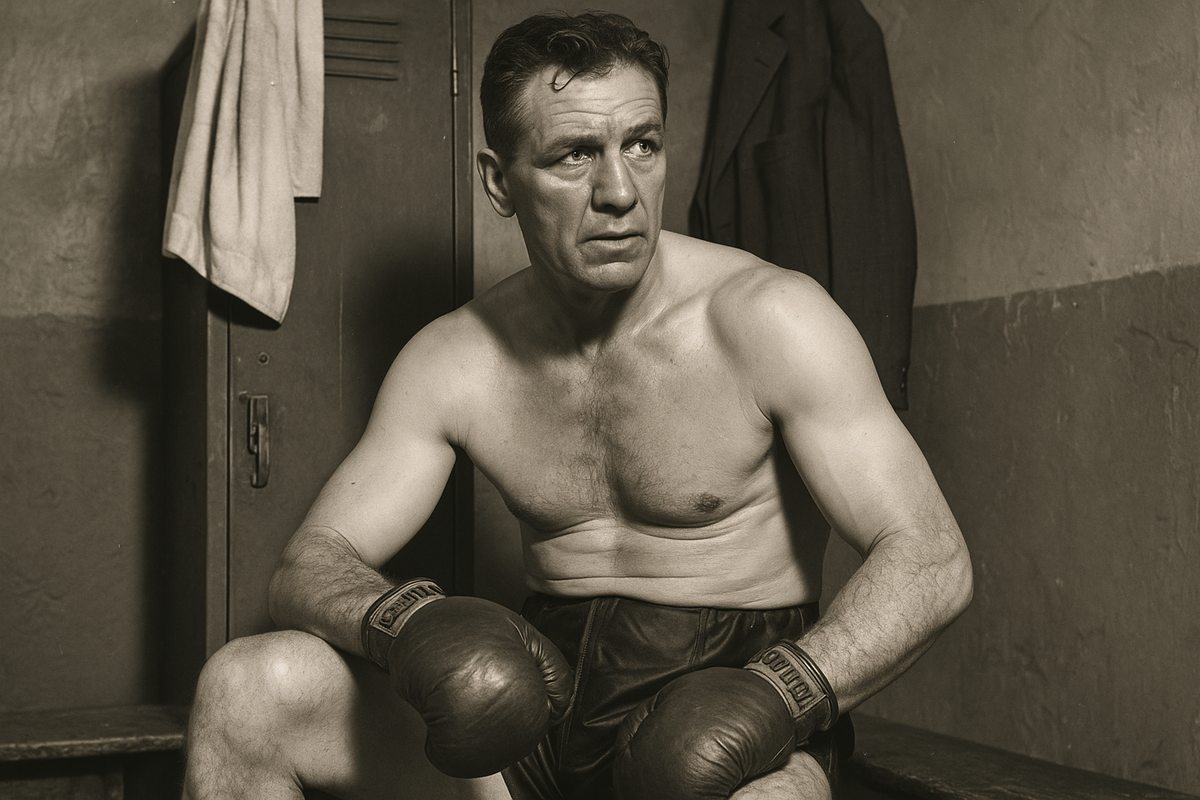
The Champion Who Wrote Philosophy
Gene Tunney, February 1940, and America's Last Peacetime Winter
On February 10, 1940, Americans opened their Saturday Evening Post to find something unexpected. Gene Tunney—the Marine who beat Jack Dempsey, the heavyweight champion who quoted Shakespeare—had not written about knockouts. He had written about the mind.
The article was titled "Champion Is a State of Mind."
Europe was burning. Poland had fallen five months earlier. Hitler's armies stood poised along the Maginot Line. And in American living rooms, a former boxing champion was arguing that victory belonged not to the strongest body, but to the most disciplined mind.
It was the last issue of the Post before the world changed irrevocably. And Tunney's words carried a weight that transcended the ring.
The Context: February 1940
The Saturday Evening Post arrived in millions of homes that week. Its readers were still shaking off the Depression—recovery programs had helped, but scars remained. Unemployment lingered. Families counted pennies. The New Deal had cushioned the fall, but it hadn't restored prosperity.
And now, war.
Americans debated neutrality with the fervor of people who remembered 1917. Interventionists and isolationists clashed in Congress, in newspapers, in church basements. The question wasn't whether Europe's war mattered—it was whether America could afford to stay out of it.
In this atmosphere, Tunney's essay landed like a left hook disguised as philosophy.
The Post had always been more than entertainment. With Norman Rockwell covers, serialized fiction from F. Scott Fitzgerald, and essays bridging high culture with Main Street values, it served as America's cultural parliament. To appear in its pages was to speak to the nation.
Tunney understood this. His article was ostensibly about boxing—training regimens, mental preparation, the psychology of the ring. But every reader in 1940 heard the subtext: discipline wins wars. Character outlasts chaos. The fight is won before the first punch lands.
Issue Archive
Historical Figure: Gene Tunney, Former Heavyweight Champion of the World
Issue Date: February 10, 1940
Archive Source: The Saturday Evening Post
Article Title: "Champion Is a State of Mind"
What Tunney Actually Wrote
"Champion Is a State of Mind" was not a sports memoir. Tunney offered no detailed recounting of the infamous "Long Count" fight, no trash talk about Dempsey, no celebration of his own celebrity.
Instead, he wrote about discipline.
He traced his boxing education back to World War I, where he served as a U.S. Marine. Military training, he argued, had forged the mental clarity that later made him champion. The barracks and the ring shared a common principle: physical strength meant nothing without control, strategy, focus.
Tunney described fights where superior conditioning lost to superior thinking. He recalled Bob Fitzsimmons, a middleweight who won the heavyweight title through technical mastery. He invoked Jim Jeffries, whose power was matched by patience. He returned again and again to the idea that boxing was chess played with fists—and the smartest player won.
For readers in 1940, this was not abstract philosophy. It was a manual for survival.
The essay carried no overt political message, yet its timing made it political. Tunney had fought in one world war and seen what unpreparedness cost. Now, as another war engulfed Europe, he was telling Americans that mental toughness—not just industrial might—would determine their fate.
The Post's editors knew what they were doing. This wasn't filler content. This was a champion telling the country to get ready.
The Philosophy Behind the Fists
Boxing as Chess
Tunney emphasized that fighting required strategy, patience, and emotional control—not just physical power. The disciplined mind outweighed brute strength.
Military to Civilian
From the Marines to the ring, Tunney connected wartime discipline with athletic success, showing how one shaped the other.
State of Mind Over Circumstance
He recounted moments where mental focus determined outcomes—teaching readers that success in any arena depended on mindset.
American Character
As the United States debated its global role, Tunney's message that Americans could endure through resilience resonated deeply.
For readers, the article transcended boxing legends like Jack Dempsey, Bob Fitzsimmons, or Jim Jeffries. It addressed the broader question of what it meant to endure challenges—whether personal, economic, or national.
The Post's Enduring Legacy
The Saturday Evening Post was not just a magazine. It was a national forum where writers, illustrators, and essayists shaped public opinion and reflected American identity back to itself.
Each issue combined fiction, serialized novels, humor columns, editorial commentary, and visual art into a cohesive statement about what mattered. The Post's editors understood that entertainment and instruction were inseparable—that a story about small-town life could carry the same cultural weight as a political essay.
The February 10, 1940 issue exemplifies this. Gene Tunney's philosophy sits alongside fiction, advertisements, and illustrations, all of which together form a portrait of America in transition. Readers didn't just consume content—they participated in a national conversation.
For modern readers, these issues offer something textbooks cannot: the unfiltered voice of the past. You don't read about 1940—you read from 1940, in the same words and images that Americans saw when the news was still uncertain and the future unwritten.
Why This Issue Matters to Collectors
Historical Inflection Point
Published in the last winter before France fell, before the Blitz, before Pearl Harbor—this issue captures the final months when Americans could still debate whether to enter the war.
Sports and Cultural Authority
Tunney was not just a boxer but a public intellectual—a champion who retired undefeated and became a businessman, lecturer, and writer.
The Post at Its Peak
By 1940, circulation topped 3 million. Its contributors included the best writers, illustrators, and thinkers of the era. This is a primary source document of American consciousness.
Advertising as History
Delco batteries, Universal washing machines, insurance pitches—these ads are themselves collectible snapshots of what Americans bought, feared, and aspired to on the eve of total war.
Final Thoughts
The February 10, 1940 Saturday Evening Post is not just a magazine about boxing. It is a document of American character at a crossroads.
Gene Tunney's "Champion Is a State of Mind" spoke to readers who faced economic uncertainty and global violence. His message—that discipline, mental preparation, and resilience mattered more than raw power—resonated because Americans sensed they would soon need those qualities themselves.
For collectors today, this issue represents more than sports history. It captures a nation preparing, consciously or not, for the fight of its life.
Holding this magazine is holding February 10, 1940—the advertisements, the stories, the Norman Rockwell sensibility, and Tunney's voice telling Americans to train their minds, not just their bodies.
It is a reminder that champions are made before the bell rings.
And in 1940, America was learning that lesson all over again.
Explore the Archive
Our collection includes thousands of original Saturday Evening Post magazines spanning from the early 20th century through the 1960s. Each issue is an original artifact—not a reproduction, not a digital file, but the actual magazine printed and distributed in its era.
Whether you're a boxing historian tracing the sport's evolution, a collector of World War II-era Americana, or someone preserving family history, these magazines offer direct access to the past.
Browse The Saturday Evening Post Magazine Collection