
The Fall of J. Robert Oppenheimer
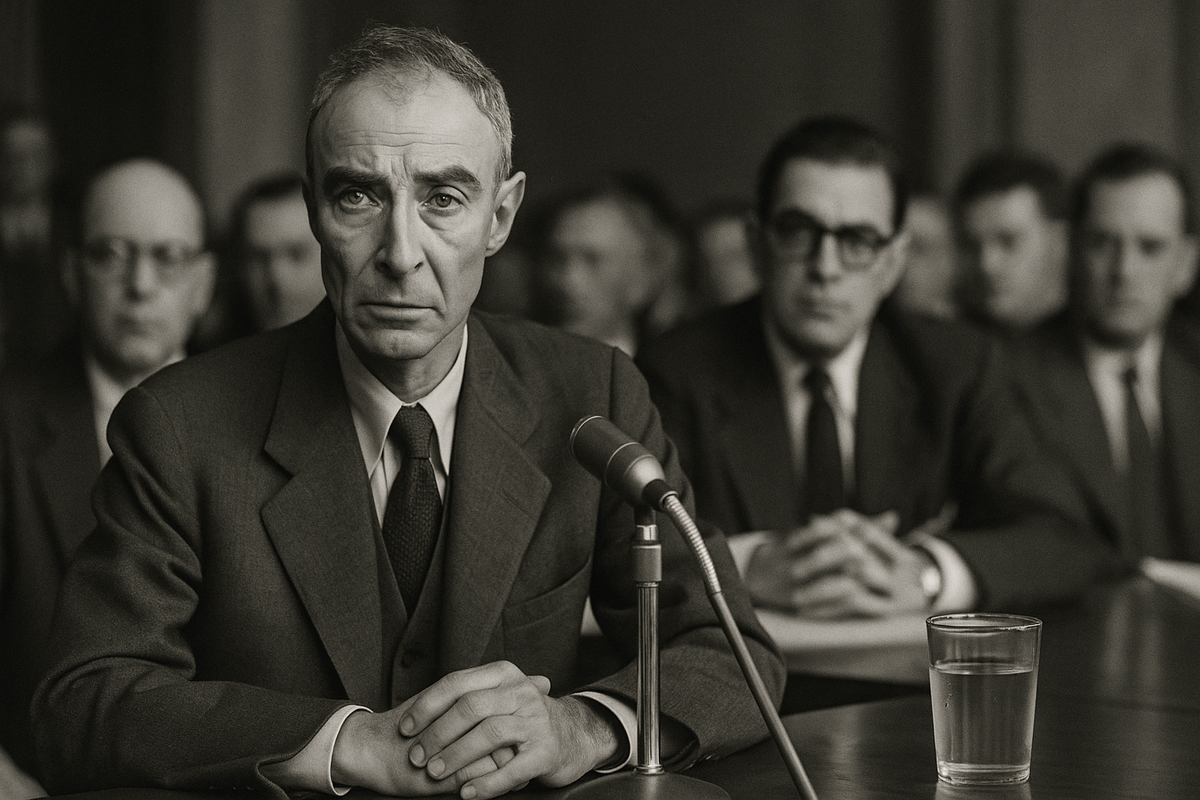
On June 14, 1954, Americans who picked up their copy of Time Magazine found themselves staring into the gaunt, penetrating eyes of J. Robert Oppenheimer—the man who had built the atomic bomb, and who had just been destroyed by the government he served.
The cover story, "The Atom: A Matter of Character," documented what amounted to a public execution by committee: the revocation of Oppenheimer's security clearance by the Atomic Energy Commission. For a nation still reeling from Hiroshima's shadow and gripped by the paranoia of the Red Scare, this was more than the downfall of one scientist. It was a referendum on whether intellectual independence could survive in the atomic age.
Time didn't just report the story. It crystallized the moment when America turned on its own Prometheus.
Archive Details
Historical Figure: J. Robert Oppenheimer
Issue Date: June 14, 1954
Archive Source: Time Magazine
Cover Story: "The Atom: A Matter of Character"
The Red Scare's Long Shadow
The early 1950s belonged to Joseph McCarthy and the loyalty boards. Accusations didn't need evidence—suspicion was sufficient. Even the architects of victory in World War II found themselves under interrogation.
The Hydrogen Bomb Debate – After leading the Manhattan Project to its terrible success, Oppenheimer had argued against the crash program to develop the hydrogen bomb, citing both technical uncertainties and moral qualms. His caution was interpreted by some as something darker: disloyalty.
The Security Clearance Hearing – In 1954, Oppenheimer endured weeks of testimony before a panel led by Gordon Gray. The board's conclusion was damning in its subtlety: Oppenheimer was loyal to the United States, but he was "too susceptible to influence" to be trusted with the nation's secrets. It was a verdict that destroyed without convicting.
The Larger Stakes – To Time's readers, the case represented the fundamental tension of the Cold War: how much freedom could a democracy sacrifice in the name of security? Could scientists offer independent counsel, or would political orthodoxy always prevail?
This wasn't simply about one man's career. It was about the shape of American power in the nuclear era.
How Time Framed the Tragedy
Time understood that its readers wanted more than policy analysis—they wanted a story with characters, conflict, and consequence.
"A Matter of Character" – The framing was deliberate. By focusing on character rather than security protocol, Time elevated the case into moral drama. Oppenheimer became a figure from Greek tragedy: brilliant, flawed, undone by hubris and circumstance.
The Cast of Judgment – The magazine populated its pages with the faces of those who decided Oppenheimer's fate, transforming a bureaucratic hearing into a courtroom spectacle. Readers saw the commissioners at work, the witnesses testifying, the scientist isolated.
Unflinching Assessment – Time didn't canonize Oppenheimer. The coverage acknowledged his aloofness, his political naivety, his association with leftist circles in the 1930s. It presented a complicated man in a complicated moment—neither hero nor villain, but something more human.
Clarity Over Jargon – Rather than drowning readers in technical minutiae about thermonuclear weapons or security classifications, Time made the stakes visceral: Could America afford doubt? Could it afford certainty?
In living rooms across the country, this issue landed with the force of both scandal and lament.
The Visual Archive of a Reckoning
The Cover – Oppenheimer's face stares out from the cover, skeletal and contemplative. The portrait conveys both genius and defeat—the cost of having built something the world wasn't ready for.
Interior Photography – Inside, the layout reads like evidence from a trial: the sterile hearing rooms, the stern commissioners, the isolated intellectual. Photographs of figures like Harold Cherniss and Edward Condon gave the narrative texture and immediacy, transforming abstract policy into human consequence.
Editorial Calibration – Time walked a tightrope. It acknowledged Oppenheimer's loyalty while validating the security fears that condemned him. The magazine's voice—narrative yet analytical, accessible yet authoritative—shaped how millions of Americans understood what had happened.
At a moment when public trust in both science and government hung in precarious balance, Time's editorial choices mattered. They still do.
The Verdict and Its Reverberations
Loyal but Suspect
The most chilling aspect of the verdict was its logic: Oppenheimer was judged a loyal citizen, yet too vulnerable in judgment and past associations to be trusted. Loyalty, it turned out, was not enough.
The Weaponization of the Past
His earlier connections to leftist groups, his friendships with communists in the 1930s, his opposition to the hydrogen bomb program—all were deployed against him, evidence not of treason but of insufficient certainty.
The Commission's Climate of Fear
The AEC's decision reflected less about Oppenheimer's record than about the atmosphere of the time. In 1954, doubt was disqualifying. Ambiguity was dangerous.
The Scientist's Dilemma
Could scientists maintain intellectual independence when advising on matters of national survival? Or would politics—and politicians—always have the final word?
A National Morality Play
Time understood that Oppenheimer's hearing was symbolic. America was deciding what kind of country it would be: one that tolerated dissent, or one that demanded conformity in the name of security.
Why This Issue Endures
Time's coverage of Oppenheimer remains essential because it captured a turning point in real time. The magazine didn't just report—it framed. It gave shape to a national conversation about power, loyalty, and the price of intellectual freedom.
In an era when news dissolves into the digital ether within hours, these printed magazines stand as reminders of when events were read, reread, and debated at length. They were kept. They were referenced. They mattered.
Why Collectors Covet This Issue
Capturing the Moment
This issue appeared as Oppenheimer's influence in government science ended. It documented the precise instant when the architect of American atomic power became its most famous casualty.
Cultural Weight
With Oppenheimer's story now enshrined in popular consciousness—including recent biographical films—early contemporary coverage has gained new urgency. This is how the event was understood as it happened.
Visual and Editorial Craft
The cover portrait and interior spreads make this a visually arresting artifact. It's a magazine designed to be kept, not discarded.
Collector Demand
Issues tied to McCarthyism, nuclear history, and defining Cold War figures command attention from serious collectors, historians, and institutions alike.
For the Serious Collector
If you're drawn to Cold War history, the nuclear age, or the golden era of American journalism, this issue represents a milestone. It documents the week when the "father of the atomic bomb" was stripped of his authority, when America decided that loyalty without absolute certainty was a liability.
Browse Time Magazine CollectionA Final Word
The June 14, 1954 issue of Time Magazine stands as testimony—not only to what happened to J. Robert Oppenheimer, but to what America was willing to do in the name of security. In his story, readers confronted the limits of tolerance, the weight of suspicion, and the uneasy bargain between knowledge and power.
To hold this magazine today is to hold the moment when the atomic age turned inward, when the builder of the bomb became its most emblematic victim.
For those who value history preserved in its original form, vintage Time issues like this are not mere collectibles. They are living documents—archives of tension, consequence, and the choices that shaped the world we inherited.