
When Esquire Took Apart the Machine
Gay Talese and the Anatomy of Power
In November 1966, readers expecting another issue of sharp suits and sharper prose got something else entirely: a vivisection.
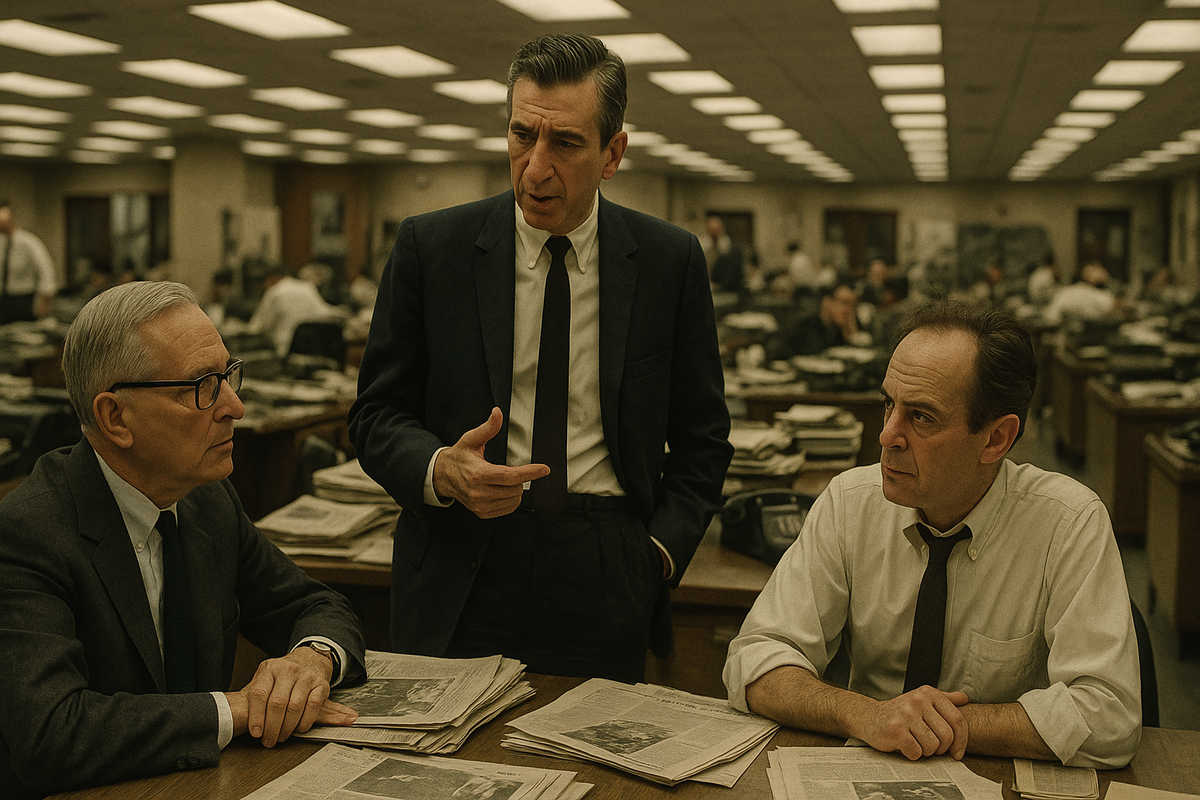
Gay Talese's "The Kingdoms, The Powers, and The Glories of The New York Times" wasn't media criticism. It was an autopsy performed on a living organism—the most powerful newspaper in America, laid open across Esquire's pages while its heart was still beating. No preamble. No deference. Just Talese, armed with months of access, dissecting the institution that told the nation what mattered.
The timing was no accident. Vietnam was metastasizing. Cities were burning. The Kennedy assassination still haunted the national psyche. And in that chaos, one editorial office on West 43rd Street functioned as America's unofficial ministry of truth. What the Times printed on Monday shaped policy by Wednesday. Its Sunday editions didn't just report culture—they were culture, dictating what Manhattan socialists and Midwestern professors would argue about over coffee.
Esquire understood what it had: not just a profile, but a power map.
Archive Details
Historical Figure: Gay Talese
Issue Date: November 1966
Archive Source: Esquire Magazine
Article: "The Kingdoms, The Powers, and The Glories of The New York Times"
The Institution as Nation-State
Talese's brilliance lay in treating the Times not as a business but as a sovereign entity. It had dynasties—the Sulzberger family maintaining continuity across generations like Medici princes. It had ministers—Clifton Daniel, the managing editor whose postwar ascent symbolized journalism's transformation into a credentialed elite profession. It had foreign envoys, none more crucial than Harrison Salisbury, filing dispatches from Saigon that made cabinet members wince.
The piece revealed rituals and hierarchies that bordered on the ecclesiastical. Decisions flowed through layers of tradition and protocol. The masthead itself functioned as iconography, a symbol of authority that Esquire's designers overlaid across haunting illustrations of Daniel and other Times royalty. Journalism here wasn't just a job—it was identity, calling, faith.
And like any state, the Times wielded influence that exceeded its formal powers. White House officials reportedly read the paper before formulating positions. Its cultural sections didn't cover the arts; they canonized them. To be reviewed in the Times was to exist. To be ignored was oblivion.
The Paradox Talese Captured
But this wasn't hagiography. Talese documented the arrogance that came with omnipotence—the aloofness, the patrician distance from ordinary American life, the assumption that authority was birthright rather than earned daily. The Times was both revered and resented, an essential institution that inspired as much suspicion as trust.
This tension—authority in a democracy that distrusted authority—gave the piece its enduring power. Talese showed readers the machinery of influence without telling them whether to celebrate or fear it. He presented the contradictions and let them metabolize.
Esquire's editorial instinct was impeccable. By placing this meditation on power between fashion spreads and bourbon advertisements, the magazine staked its claim as more than lifestyle guide. It declared itself a forum for examining how masculinity, intellect, and power intersected in American life. The Times shaped what men knew. Esquire would shape how they understood that shaping.
Why This Issue Endures
More than half a century later, collectors and historians prize the November 1966 Esquire for reasons beyond nostalgia.
Historical Inflection Point
The issue captured American journalism at its apex of influence, just before television would fracture the monoculture and Vietnam would shatter institutional trust. The Times' authority would never be quite this absolute again.
Talese's Method
This article helped define New Journalism—literary technique fused with reportorial rigor. It demonstrated that serious inquiry didn't require academic dryness, that narrative power could coexist with intellectual substance.
The Anatomy Itself
Few institutions have been examined with this combination of access, skepticism, and craft. Talese documented personalities, power dynamics, and cultural impact while catching contradictions in the paper's simultaneous reputation for infallibility and conservatism.
Material Artifact
Original issues exist as physical evidence of mid-century magazine culture—the weight of paper stock, the integration of illustration with text, the assumption that readers would spend hours with a single article.
The Legacy in Your Hands
Owning this issue means possessing a primary source document from the moment when American media confronted its own power. Not a reprint. Not a retrospective. The actual object that circulated through the country when the Times still functioned as national consensus, before that consensus shattered.
For collectors of vintage Esquire magazines, this stands among the publication's most significant issues—a demonstration of what magazines could accomplish when they treated their audience as capable of sustained intellectual engagement. For students of media history, it's required reading that happens to come in its original form.
And for anyone trying to understand how information, authority, and democracy intertwined in the American century, Talese's dissection remains essential. The kingdoms change. The powers shift. But the questions he posed about institutions and influence never quite resolve.
Collector Significance
Cultural Milestone
One of the most important journalistic portraits of its era, capturing the Times at the absolute height of its institutional authority and influence over American public life.
New Journalism Cornerstone
A defining example of Gay Talese's pioneering work blending literary style with investigative depth—a technique that would transform American journalism.
Historical Document
Published during the Vietnam War and cultural upheaval, it serves as a time capsule of mid-1960s America and the role of media in shaping democratic discourse.
Material Quality
Features striking illustrations and design work that elevated the piece beyond reportage into cultural commentary—exemplifying Esquire's editorial sophistication.
Add This Historic Issue to Your Collection
Every issue in our archive is an original printing—not a reproduction. Each represents a specific moment when culture, commerce, and journalism collided in ink and paper.
Browse Esquire Magazine Collection