
The Man Who Pulled a Thread
When Time Magazine Exposed the Rot Inside America's Tax System
October 1952. Korea bled into its second year. Truman's approval ratings scraped bottom. And Americans who'd dutifully mailed their tax checks discovered that the men collecting those checks were on the take.
The Bureau of Internal Revenue—predecessor to today's IRS—wasn't just incompetent. It was corrupt from the collectors' offices in Brooklyn to the Commissioner's desk in Washington. Bribes. Kickbacks. Tax returns doctored for cash. The scandal had everything except a hero.
Then Time Magazine found one.
When the October 13, 1952 issue hit newsstands, its readers met Senator John J. Williams of Delaware: a chicken-feed dealer who spoke in a monotone, lived modestly in Millsboro, and had just torn apart the federal tax apparatus with nothing but canceled checks and subpoenaed ledgers. Time's article, "Investigations: The Man Who Pulled a Thread," transformed a freshman Republican senator into the embodiment of what investigative persistence could achieve against entrenched power.
This wasn't puffery. Williams had the receipts.
Archive Details
The Scandal That Ate Washington
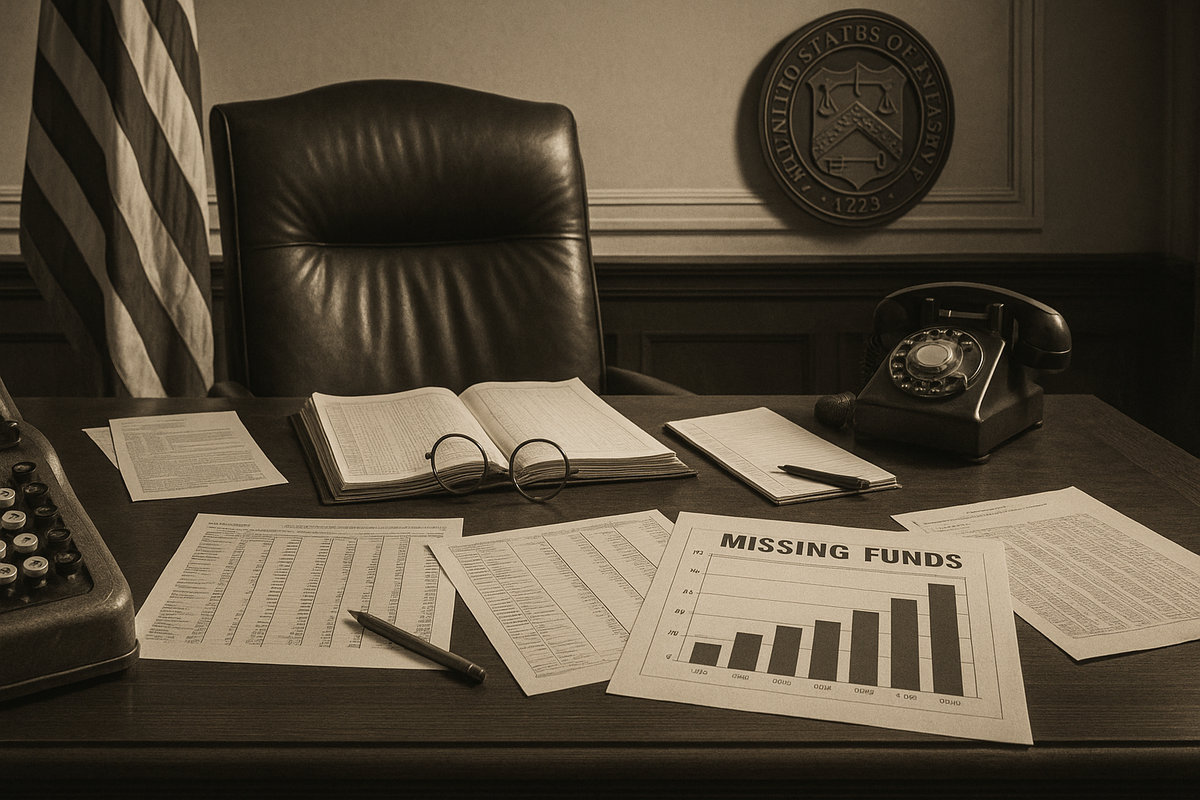
By fall 1952, the Bureau of Internal Revenue had become a national disgrace. Collectors pocketed bribes. Middlemen brokered tax settlements for a cut. Officials who should have been watchdogs were taking liquor deals and falsifying returns. The machinery of American taxation—the sacred contract between citizen and state—had been perverted into a protection racket.
Williams began pulling threads in 1951. What unraveled was staggering: $81 million missing from Agriculture Department accounts. Delinquent tax cases in Brooklyn mysteriously closed. Treasury officials stone-walling until Williams produced documents they'd sworn didn't exist. Each revelation compounded the last, and by October 1952, the scandal had metastasized into a full crisis of public trust.
For Americans already furious about inflation, war casualties, and partisan deadlock, the BIR scandal was confirmation of their worst suspicions: the system was rigged, and the riggers were in charge.
Time's Portrait of an Unlikely Crusader
Time knew how to frame a story. The magazine had built its reputation on authoritative reporting wrapped in narrative propulsion, and the Williams profile delivered both. The piece opened with President Truman's grudging admission that corruption existed, then pivoted to Williams: unpolished, relentless, incorruptible.
Time compared him to Lincoln Steffens and Tom Walsh—muckrakers who'd brought down Tammany Hall and Teapot Dome. The parallels weren't accidental. Williams embodied a particular American archetype: the plainspoken outsider who exposes what the insiders want buried. He didn't chase headlines. He chased ledgers. He sorted files late into the night. He confronted Treasury officials with evidence they couldn't refute.
The article supplied granular detail—names of implicated officials (Delaney, Finnegan, Grunewald, Bolich, Nunan), mechanics of the schemes, paper trails Williams had traced across agencies. But Time also understood that scandal is fundamentally about betrayal. The BIR wasn't just stealing money; it was violating the civic compact. Every compromised tax case was a theft from the Americans who'd paid honestly.
The timing mattered. With the presidential election three weeks away, the scandal became a referendum on Democratic governance. Eisenhower's campaign didn't need to manufacture outrage—Time and Williams had already supplied it.
What Made Williams Dangerous
Williams wasn't a showboat. That's what made him lethal. Flashy politicians could be dismissed as grandstanders. Williams simply showed up with evidence. He didn't speculate; he documented. He didn't make accusations; he asked questions prosecutors should have asked years earlier.
His background mattered too. Williams came from Millsboro, Delaware—population 1,200—where he'd made his living selling chicken feed. He had no Ivy League pedigree, no legal training, no Washington connections. He was nicknamed "the Conscience of the Senate" not because he sermonized, but because he wouldn't let things go. Where others saw complexity requiring compromise, Williams saw theft requiring prosecution.
Time captured this perfectly. The magazine's reporting blended concrete detail—the canceled checks, the subpoenaed ledgers, the $81 million gap—with character study. Readers understood both what Williams found and who Williams was. The former gave the story weight; the latter gave it meaning.
The Visual Record
Time's design philosophy in 1952 was deceptively simple: bold portraiture, clean typography, that iconic red border. The October 13 issue delivered photographs of the scandal's key players alongside images of Williams and context about his background. Captions and sidebars ensured accessibility without dumbing down the reporting.
The magazine understood that scandal requires faces. Abstract corruption is forgettable. But Delaney's photo next to a paragraph about Brooklyn kickbacks? Finnegan caught in a liquor deal? Those images made the rot tangible. Time wasn't just reporting facts; it was building a visual archive of institutional failure.
And the ads—hotels, whiskey, mid-century consumer goods—provided inadvertent context. This was America in 1952: prosperous, anxious, caught between postwar optimism and Cold War dread. The juxtaposition of corruption exposé and aspirational advertising captured the tension perfectly.
Why This Issue Matters to Collectors
Political Documentation
Captures a defining scandal that helped swing a presidential election and reshape American governance.
Journalistic Peak
Showcases Time at maximum influence—when magazine coverage could reshape national debate.
Cultural Archive
Preserves the visual and rhetorical language of 1952 America through photography, prose, and advertising.
Historical Scarcity
Scandal-focused issues disappeared faster as readers passed them around, making original copies rare.
The October 13, 1952 Time Magazine isn't just a back issue. It's a primary document from a moment when American democracy stress-tested itself and survived.
But the deeper appeal is historical weight. To hold this issue is to hold the moment when one senator from a town of 1,200 people proved that institutions could still be held accountable. When journalism still had the power to move the needle. When corruption, once exposed, still carried consequences.
The Thread Williams Pulled
The BIR scandal didn't end with Time's coverage. Williams' investigations continued, forcing resignations and reforms. The bureau was eventually reorganized and renamed the Internal Revenue Service. Eisenhower won in a landslide. Truman left office under a cloud.
But the October 13, 1952 issue freezes a particular moment: when the rot was exposed but not yet excised, when public fury peaked, when one man's refusal to let things slide became a national reckoning.
For modern readers, the issue reads like prophecy. The patterns Williams uncovered—institutional self-protection, official denial, the gap between stated values and actual behavior—remain depressingly familiar. The names change. The mechanisms evolve. But the dynamic persists: power protects itself until someone forces accountability.
Williams understood something simple: you don't need charisma to change things. You need evidence and the willingness to use it. Time understood something equally simple: great journalism doesn't just report what happened. It makes readers understand why it matters.
Collector Significance
The October 13, 1952 issue represents the intersection of politics, journalism, and cultural documentation—a single artifact that contains multitudes.
Historical Weight
A primary document from the moment one senator proved institutions could still be held accountable.
Election Context
Published three weeks before Eisenhower's landslide victory, capturing the scandal that shaped voter sentiment.
Visual Archive
Photographs of key scandal figures alongside period advertising create a complete portrait of 1952 America.
Investigative Legacy
Showcases the power of persistent journalism and evidence-based accountability in American democracy.
Hold History in Your Hands
From the 1920s through the late 20th century, thousands of original Time Magazine issues covering politics, culture, and world events. Each one a preserved artifact. Each one a time capsule.
Browse Time Magazine Collection