
The Road Warriors in 1986: When Legends Were Questioned
Inside Wrestling's October 1986 investigation into whether Hawk and Animal had lost their killer instinct
The cover line didn't mince words: "Have They Lost Their Killer Instinct?"
For fans who grabbed the October 1986 issue of Inside Wrestling off the newsstand, the question was heretical. Hawk and Animal—the Road Warriors—were supposed to be unstoppable. Painted faces. Spiked shoulders. Pure brutality. They were the team that made grown men flinch when their music hit.
But by fall 1986, something had shifted. The magazine's editors sensed it. The photographers captured it. And the fans, whether they admitted it or not, could feel it: the most feared tag team in wrestling was vulnerable.
This wasn't speculation. It was an autopsy in real time.
The Paradox of Dominance
The Road Warriors had conquered territories. They'd headlined sold-out arenas from Minneapolis to Tokyo. Yet for all their destruction, one prize eluded them: the NWA World Tag Team Championship—the belt that defined tag team supremacy in the sport's most prestigious alliance.
Instead, Hawk and Animal were co-holding the NWA Six-Man Tag Team Titles alongside Dusty Rhodes. Respectable? Sure. But fans didn't pay to see the Warriors share the spotlight. They wanted carnage. They wanted two-man dominance. They wanted Hawk and Animal obliterating the Midnight Express or the Rock 'n' Roll Express on their way to gold.
Inside Wrestling asked the uncomfortable question: Why wasn't this happening?
The magazine pointed fingers at manager Paul Ellering, suggesting he'd failed to secure the marquee bouts that matched the Warriors' box office draw. One damning statistic stood out: the team appeared in only one title match out of five cards. For a duo marketed as the most dangerous force in wrestling, that was an alarming ratio.
Were international tours—particularly their frequent trips to Japan—siphoning focus from NWA opportunities? Had the six-man format diluted their mystique? Or, more troubling still, had Hawk and Animal themselves lost the edge that made them terrifying?
Archive Details
Featured Team: The Road Warriors (Hawk and Animal)
Publication: Inside Wrestling, October 1986
Historical Context: Mid-1980s NWA territory era, peak of tag team wrestling's golden age
Key Question: Have the Road Warriors lost their killer instinct?
Evidence in Black and White
The magazine's photographic evidence told a story the text only hinted at.
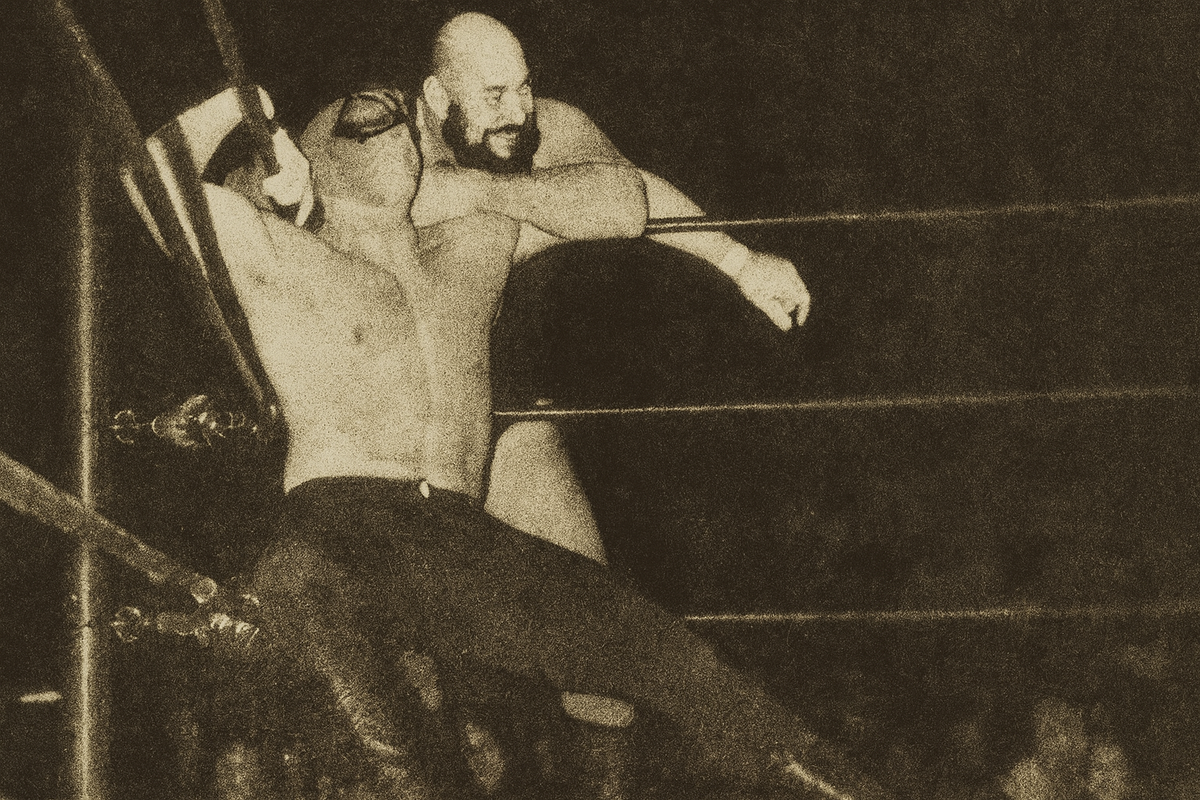
One image: Hawk launching himself at Ivan Koloff, only for the veteran to sidestep and counter. Another: Animal trapped in the ropes, absorbing punishment from Bobby Eaton's precision strikes. A third: Hawk locked in a double-team by Baron Von Raschke and Nikita Koloff, his painted face contorted in pain.
These weren't victory shots. They were moments of weakness—rare glimpses of the Warriors on the defensive, scrambling, human.
The opposition wasn't random. Ivan Koloff and Krusher Khruschev brought Soviet brutality. Baron Von Raschke wielded the Claw. The Midnight Express combined technical mastery with cunning psychology. These weren't jobbers. They were credible threats, and the photos proved it: the Warriors could be hurt.
For fans accustomed to seeing Hawk and Animal destroy opponents in minutes, these images were jarring. The magazine had visual proof that the narrative of invincibility was cracking.
Wrestling Journalism as Fan Parliament
Inside Wrestling operated in the golden age of wrestling magazines—a pre-internet era when print publications didn't just report results; they shaped perception. The October 1986 issue exemplifies this power.
The feature didn't simply ask if the Road Warriors had declined. It staged a trial. It presented evidence (match results, photo documentation), raised motive (Ellering's management, the six-man distraction), and let readers serve as jury. This wasn't objective journalism. It was storytelling that preserved kayfabe while stoking genuine fan debate.
The magazine's tone walked a tightrope. It treated the "killer instinct" question as legitimate editorial concern, not storyline hype. Yet it never broke character—never acknowledged that match outcomes were predetermined or that the Warriors' "struggles" might be narrative positioning. The result was content that felt investigative, urgent, and emotionally real.
For wrestling fans in 1986, this mattered profoundly. No internet forums existed to dissect booking decisions. No podcasts featured shoot interviews with managers. Magazines like Inside Wrestling were the only venues where fans could engage with wrestling's larger questions: Are my heroes slipping? Is this the end of an era? What happens next?
Why This Issue Endures
More than three decades later, the October 1986 Inside Wrestling remains significant for reasons beyond nostalgia.
The Legacy in Your Hands
Wrestling magazines weren't designed as collectibles. They were disposable newsstand fodder, meant to be read and discarded. That most copies didn't survive makes the remaining issues valuable—not just monetarily, but culturally.
The October 1986 Inside Wrestling is a window into how legends were questioned before they became untouchable. It shows that even the most dominant forces faced doubt. It proves that vulnerability, captured at the right moment, makes the eventual triumph more meaningful.
Hawk and Animal didn't lose their killer instinct. But for one issue in fall 1986, the wrestling world wondered if they had—and that wondering is preserved here, in ink and newsprint, waiting to be rediscovered.
Collector Significance
For Collectors and Historians
If you're building a serious collection of wrestling's documentary history, issues like this are non-negotiable. They're the primary texts that shaped how fans experienced the sport's most consequential eras.
Browse Inside Wrestling Magazine CollectionBrowse the complete original Inside Wrestling collection and discover wrestling history as it was first written.