
The Magazine That Held a War in Its Hands
Inside Time's December 24, 1990 issue—the last full portrait of Kuwait before Operation Desert Storm
December 1990. Half a million troops massing in the Saudi desert. A nation erased from the map by its neighbor. And on American newsstands, a single issue of Time Magazine that would become the last full portrait of Kuwait before the bombs fell.
When readers opened the December 24, 1990 edition, they weren't just reading news—they were holding the final testimony of a country on the edge of annihilation.
August 2, 1990: The Day Kuwait Disappeared
The invasion took hours. Saddam Hussein's Republican Guard rolled across the border at dawn, and by nightfall, Kuwait had ceased to exist as a sovereign state. Iraq's dictator declared it his "19th province"—a bureaucratic phrase that masked the brutality of occupation: arbitrary arrests, systematic torture, a government driven into exile.
By December, the world had assembled the largest military coalition since Vietnam. Nearly 500,000 troops. Thirty-four nations. One question that Time dared to ask aloud: Was Kuwait worth dying for?
The magazine didn't offer easy answers. Instead, it delivered something rarer—a full accounting of what would be lost if the world looked away.
Issue Profile
Publication: Time Magazine
Issue Date: December 24, 1990
Cover Story: "Toward a New Kuwait"
Historical Context: Published 22 days before Operation Desert Storm
Key Figures: Sheikh Jaber al-Ahmad al-Sabah (Emir of Kuwait), Sheikh Saad al-Abdullah (Crown Prince and Prime Minister)
The Emir's Government in Waiting
Time's December 24 issue gave extraordinary access to Kuwait's leadership in exile. Sheikh Jaber al-Ahmad al-Sabah, the Emir, and Sheikh Saad al-Abdullah, the Crown Prince and Prime Minister, were not merely governing from hotel suites in Saudi Arabia—they were waging a diplomatic war for their nation's survival.
The magazine captured the exhaustion in their faces. The makeshift offices. The relentless lobbying of foreign capitals. These were not symbolic figureheads waiting for rescue—they were men fighting to prove their country deserved to exist.
But Time pushed further. It gave voice to ordinary Kuwaitis enduring the occupation: families separated, dissidents tortured, citizens who resisted and paid the price. The coverage refused to reduce Kuwait to an abstraction about oil markets or geopolitical chess. This was a nation of people, and they were suffering in real time.
The Cover That Warned of Fire
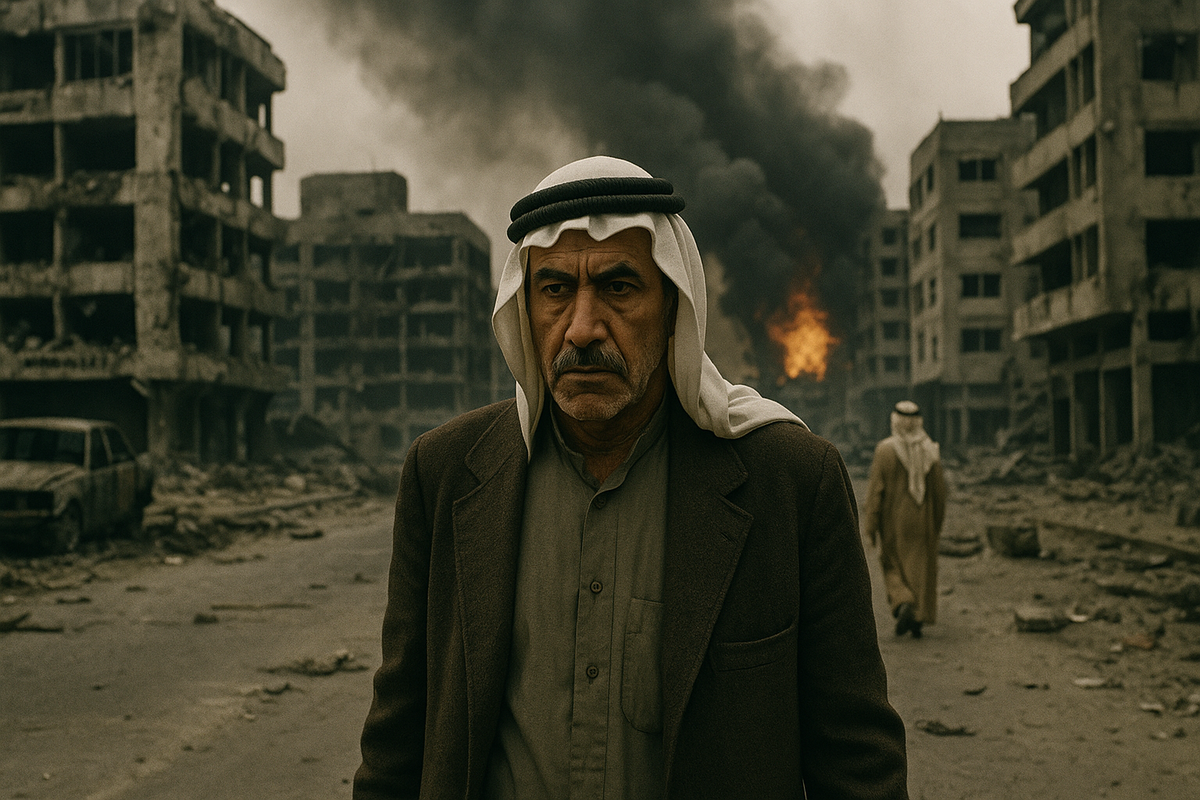
Against a backdrop of smoke and shattered buildings, Time's cover declared: "Toward a New Kuwait."
The typography was stark. The image—bomb-damaged, apocalyptic—communicated what words could not: uncertainty. Would there be a new Kuwait? Or would this small Gulf state become a permanent casualty of Saddam's ambition?
Inside, the photojournalism hit harder than the prose. Burning oil fields. Exiled ministers hunched over desks in anonymous rooms. The dignified strain on faces that had once governed in comfort. These weren't illustrations—they were evidence submitted to history.
Where other publications leaned on military analysis or diplomatic abstractions, Time understood that wars are visceral. The magazine made readers see the crisis, not just understand it.
Five Questions Time Forced America to Answer
Could Kuwait's Rulers Reform?
The magazine didn't shy from asking whether liberation would lead to political evolution—or a return to autocracy.
What Was the Human Cost of Occupation?
Accounts of arrests and forced disappearances made the moral case for intervention when strategic arguments faltered.
Was This About Oil—or Something Larger?
Time acknowledged Kuwait's petroleum wealth while insisting the stakes transcended economics: this was a test of international order in the post-Cold War world.
Could the Coalition Hold?
With Arab states fighting alongside Western powers, the alliance itself was fragile, unprecedented, and essential.
What Would War Look Like?
By late December, conflict was no longer hypothetical. Time prepared readers for the inevitable storm.
The Power of Real-Time History
What separates this issue from later retrospectives is its uncertainty. Time's journalists didn't know if Saddam would withdraw. They didn't know if the coalition would fracture. They didn't know if Kuwait City would be leveled in the fighting to come.
That unknowing—that journalistic humility in the face of unfolding events—gives the coverage a tension that historical hindsight can never recreate. The fear was real. The stakes were real. And Time captured both with unflinching clarity.
To hold this issue is to hold a question the world was asking itself: Do we fight for a country most Americans couldn't find on a map?
Three weeks later, the answer arrived in the skies over Baghdad.
Why Collectors Covet This Issue
Historical Timing
Published 22 days before Operation Desert Storm began, it documents the world's last breath before war—history captured at the moment of maximum uncertainty.
Visual Impact
The cover remains one of the most striking of the Gulf Crisis era—immediately recognizable, deeply unsettling, and iconically representative of the period.
Cultural Snapshot
This was the first major test of American global leadership after the Cold War's end. The issue shows a nation grappling with what that leadership would mean.
Archival Value
Gulf War-era Time issues remain sought after by historians, educators, military families, and archivists documenting the defining conflicts of the 1990s.
Preservation as Mission
Our archive spans decades: World War II dispatches, Cold War tensions, the Berlin Wall's fall, and the defining crises of the late 20th century. Each issue is a direct link to the past—not a summary, not a paraphrase, but the original words and images that shaped public consciousness.
Browse Time Magazine Collection