
When Life Magazine Made a Criminal Into a Revolutionary
How the January 11, 1937 issue transformed Margaret Sanger from pariah to pioneer—and changed photojournalism forever
On January 11, 1937, millions of Americans reached for the newest issue of Life Magazine—barely two months old and still proving itself as the nation's visual chronicler. The cover showed Japanese soldiers, a grim preview of the war to come. But inside, Life had made a different kind of bet: twenty pages devoted to the most legally embattled woman in America.
Margaret Sanger had spent two decades in courtrooms, jail cells, and exile. She had been branded an obscenity peddler, a threat to public morals, a corrupter of youth. And now, in December 1936, she had won. The U.S. Court of Appeals ruled that physicians could legally mail contraceptives—demolishing a central pillar of the Comstock laws that had criminalized birth control since the 1870s.
Life didn't just report the verdict. It canonized it. Through photographs spanning Sanger's entire life—from her Brooklyn arrest to her meetings with Gandhi—the magazine transformed a pariah into a pioneer. For readers in 1937, many encountering her story without the filter of scandal for the first time, it was a revelation. For us, it remains one of the most consequential pieces of photojournalism in American social history.
Archive Details
Historical Figure: Margaret Sanger (1879-1966)
Issue Date: January 11, 1937
Archive Source: Life Magazine, Volume 2, Number 2
Legal Milestone: United States v. One Package of Japanese Pessaries (December 1936)
The Nurse Who Refused to Look Away
Margaret Higgins Sanger entered the world in 1883 in Corning, New York, the sixth of eleven children. Her mother died young, exhausted by pregnancy after pregnancy. Her father lived into his eighties. The arithmetic of that disparity never left her.
By the 1910s, Sanger was working as a nurse in New York City's tenement districts, where she witnessed what the law's silence cost: women hemorrhaging from botched abortions, families shattered by unwanted pregnancies, children dying of neglect because their mothers had no space left to care for them. One case broke her. A young woman begged her doctor for contraception. He refused—it was illegal. She tried to abort the pregnancy herself. She died.
Sanger made a vow that day: no woman should die begging for information her government refused to let her have.
In 1914, she launched The Woman Rebel, a newsletter that coined the phrase "birth control" and dared authorities to prosecute her. They did. In 1916, she opened the first birth control clinic in the United States in Brooklyn's Brownsville neighborhood. Police raided it after ten days. She was arrested, tried, and sentenced to thirty days in the workhouse.
The jail time didn't silence her. It made her famous.
The Turning Point Life Captured
By the 1930s, Sanger had become an international figure. She had traveled to Russia, Japan, India, and Switzerland, forging alliances with scientists, writers, and reformers. But in the United States, federal law still classified contraceptives as obscene material. Physicians who mailed diaphragms risked prosecution. Clinics operated in legal gray zones.
Then came United States v. One Package of Japanese Pessaries—a case Sanger had engineered by having contraceptives shipped from Japan to a New York doctor. In December 1936, the Second Circuit Court of Appeals ruled that contraceptives prescribed by physicians for medical purposes were legal. The Comstock stranglehold had cracked.
Life Magazine, launched in November 1936 by Henry Luce, was hunting for stories that combined visual drama with cultural weight. Sanger's victory gave them both. The January 11, 1937 feature wasn't a news brief. It was a photographic biography—a genre Life was inventing in real time.
How Life Told the Story
What made the feature extraordinary was its structure. Instead of a written narrative with token illustrations, Life inverted the formula: photographs drove the story, and captions provided context. The result was cinematic.
Readers saw:
Brooklyn Trial, 1916
Images captured her facing jeers and cheers after her arrest for running America's first birth control clinic. The caption reframed lawbreaking as civil disobedience.
International Travels
Meeting Gandhi in India, observing abortion practices in Russia, hiking in Switzerland, consulting with Baroness Ishimoto in Japan—proof of global stature.
Her Allies
H.G. Wells, Pearl Buck, and Mrs. Thomas N. Hepburn. By showing literary giants in her orbit, Life made its case: serious people took Sanger seriously.
Private Life
Images of her children, her marriage to oil magnate J. Noah Slee, and her home. The subtext: she wasn't destroying families—she was protecting them.
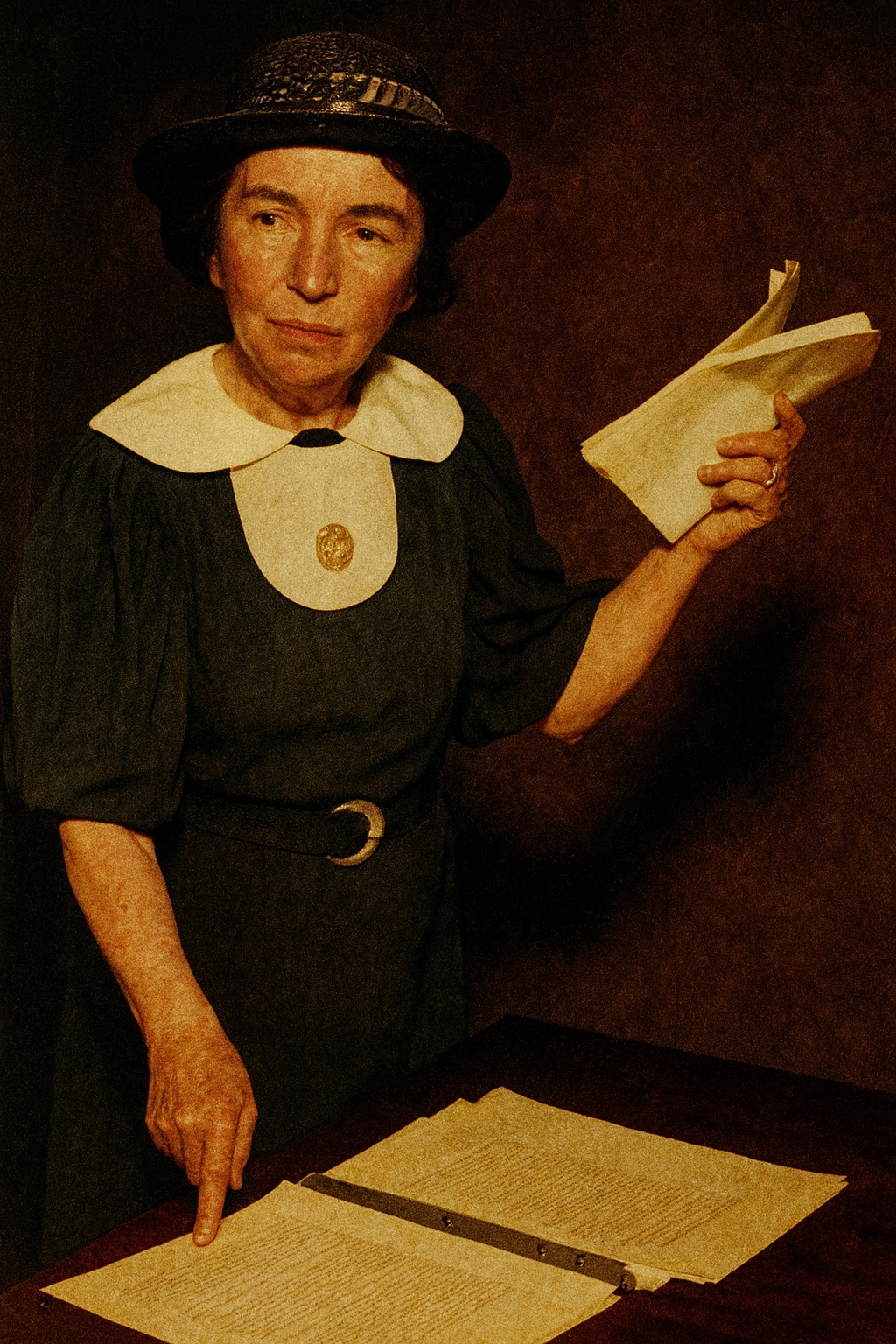
The final photograph showed Sanger holding court documents at a Manhattan press conference in December 1936. The image radiated vindication.
The layout was a masterclass in visual argument. By the time readers reached the final pages, they had watched a criminal become a crusader—and the law itself transform from obstacle to ally.
Why This Issue Changed Photojournalism
Life was only two months old when it published the Sanger feature, but the editors understood something crucial: photography could do more than illustrate. It could argue.
Most publications in 1937 treated birth control as a subject too scandalous for mainstream audiences. Newspapers buried it in euphemisms. Women's magazines ignored it. Academic journals made it incomprehensible. Life made it visible.
The choice to run the feature also revealed Henry Luce's editorial instincts. The cover—Japanese soldiers in Manchuria—signaled that war was coming. Inside, the Sanger story signaled that domestic revolutions mattered just as much. Together, they framed Life's mission: to document the forces reshaping the modern world, whether on battlefields or in courtrooms.
For Sanger, the exposure was a turning point. The woman who had been arrested, exiled, and vilified was now profiled in the most influential photo magazine in America. The feature didn't erase controversy—her critics remained fierce—but it moved her from the margins to the mainstream.
Why Collectors Prize This Issue
Timing
Published just two months after Life's launch, it captures the magazine at its most experimental, before it settled into predictable wartime coverage.
Subject Matter
Margaret Sanger remains one of the most influential—and debated—figures in 20th-century American history. This issue documents her at the apex of her public triumph.
Rarity
Early 1936–1937 issues were printed in smaller runs than later wartime editions, making them scarcer in the collectibles market.
Archival Significance
The photographs inside are original prints of moments that shaped women's health policy, global population debates, and the birth control movement. For historians, this issue is a primary source.
Cultural Artifact
Owning this issue means holding a tangible piece of the debate that transformed American law, medicine, and women's autonomy.
For collectors, it's not nostalgia. It's owning the moment when the private became public, when medicine overtook moralism, and when one woman's persistence rewrote the rules.
The Enduring Power of Early Life
What distinguishes Life's early issues—1936 through the late 1940s—is their willingness to take risks. These weren't just magazines. They were arguments about what mattered, captured in images that refused to let history slip past unnoticed.
The Margaret Sanger feature embodies that ethos. At a time when most media treated women's health as too controversial, too vulgar, or too dangerous to cover fairly, Life gave it the full photographic treatment. The result wasn't propaganda. It was documentation elevated to art.
That editorial courage is why these issues endure. They are time capsules, yes—but they are also evidence of what journalism can accomplish when it refuses to look away.
Explore the Collection
If the January 11, 1937 issue speaks to you—or if you're drawn to the broader story of 20th-century America told through its most iconic magazine—thousands of original vintage Life issues are available to browse.
Browse Life Magazine CollectionWhether you're a collector, a historian, or someone honoring family members who lived through these pivotal decades, these aren't just magazines. They're artifacts. They're arguments. They're proof that the past still speaks—if we're willing to listen.
A Victory Worth Remembering
The January 11, 1937 issue of Life Magazine captured Margaret Sanger at a singular moment: not as an outlaw, but as a victor. Through decades of arrests, trials, and exile, she had forced America to confront a question it preferred to ignore—who controlled women's bodies, and why?
Life answered by showing her story in full: the tragedies that radicalized her, the laws that opposed her, the allies who supported her, and the court ruling that vindicated her. For readers in 1937, it was a rare chance to see a controversial figure without distortion. For us, it's a reminder that the rights we take for granted were fought for, one clinic and one courtroom at a time.
To hold this issue is to hold that fight in your hands—a piece of history that still echoes.