
When Time Magazine Crowned U2
The April 27, 1987 Issue That Captured Rock's Conscience
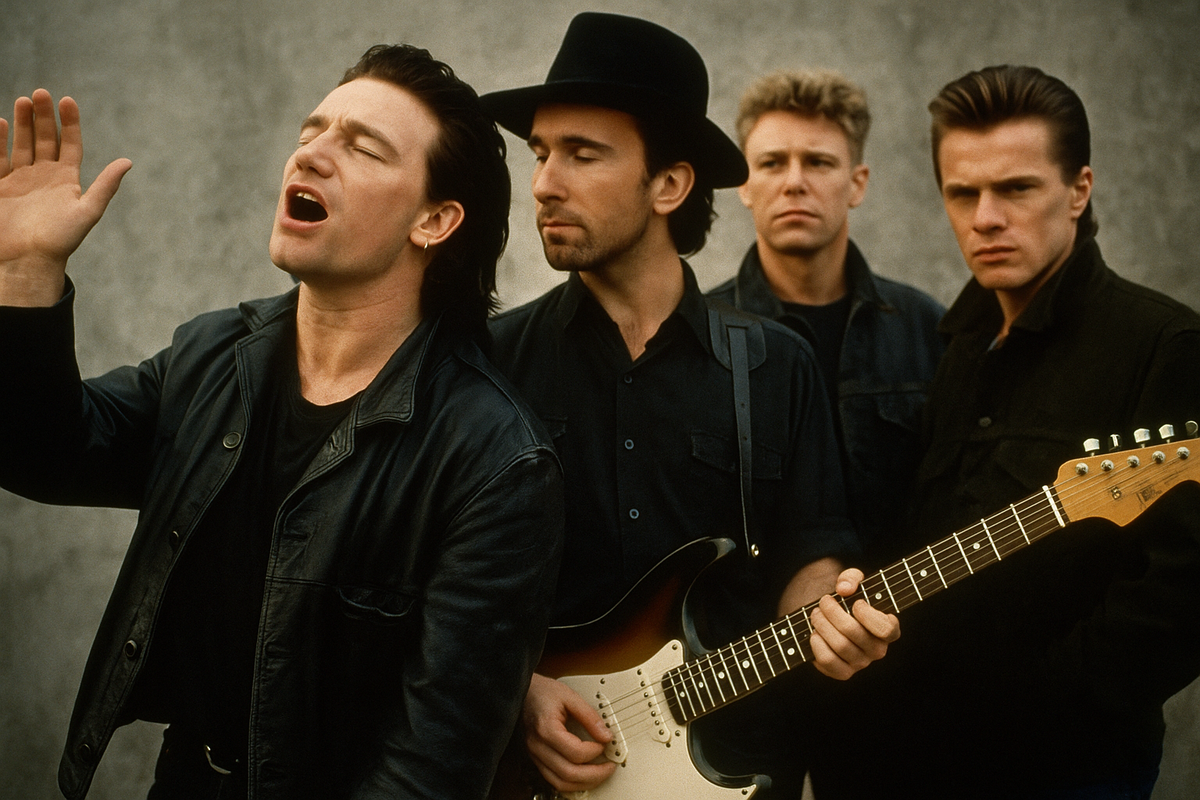
The photograph stops you cold: Bono, mid-performance, eyes shut, arms flung wide in an attitude somewhere between prayer and defiance. This wasn't a pop star posing for the camera. This was a man possessed by something larger than celebrity—and Time Magazine knew it.
On newsstands across America that April week in 1987, Time did something remarkable. The most trusted newsweekly in the country placed a rock band on its cover and treated them not as entertainers, but as a cultural force worth the same editorial gravity reserved for presidents and world crises. The message was unmistakable: U2 had transcended music. They had become the conscience of a generation.
For collectors and cultural historians today, the April 27, 1987 issue stands as one of the defining artifacts of 1980s culture—a moment when mainstream media recognized that rock and roll could still carry weight, still speak truth, still matter beyond the charts.
The Unlikely Architects of Stadium-Sized Conscience
The mid-1980s offered a landscape of contradictions. MTV had transformed music into visual spectacle. Consumer culture flourished. Cold War anxieties simmered beneath a veneer of prosperity. Into this restless moment stepped four young men from Dublin who insisted that music could be both massive and meaningful.
U2 had already proven their mettle. War (1983) established their political edge. The Unforgettable Fire (1984) expanded their sonic ambition. Their performance at Live Aid in 1985 transformed them from successful band to global phenomenon—not through pyrotechnics or pageantry, but through raw connection.
Then came The Joshua Tree in March 1987.
"With or Without You" climbed to number one. "I Still Haven't Found What I'm Looking For" followed. "Where the Streets Have No Name" became an anthem. But these weren't just hits—they were spiritual inquiries set to soaring rock, political meditations wrapped in hooks that lodged in the collective unconscious.
Time recognized what was happening. As America wrestled with Vietnam's lingering wounds, the Cold War's persistent threat, and fundamental questions about faith in the modern world, U2 offered music that engaged rather than escaped. Bono told Time: "We could have had our own gang and not put up with the rest of the world. But our commitment was to a better way."
The April 27 cover story marked an inflection point: rock music wasn't merely entertainment anymore. It was commentary. It was testimony. It was news.
Archive Details
Publication: Time Magazine
Issue Date: April 27, 1987
Featured Subject: U2 and The Joshua Tree
Historical Context: Published weeks after The Joshua Tree release, capturing U2 at their cultural zenith
Time's Editorial Vision: Treating Rock with Journalistic Rigor
Time's editors understood the assignment. This wouldn't be glossy celebrity coverage or trend-chasing hype. They approached U2 with the seriousness the band's ambitions deserved.
The photography told the story in frames:
Bono in leather, radiating urgency and charisma—the frontman as prophet and provocateur.
The Edge alone with his guitar, embodying the band's atmospheric minimalism and architectural approach to sound.
Larry Mullen Jr. and Adam Clayton captured in candid moments, revealing the grounded foundation beneath the band's soaring ambitions.
The editorial voice balanced analysis of the band's meteoric rise with attention to their humility, their Irish roots, their refusal to mistake fame for purpose. For American families who trusted Time to explain the world, this feature served as both introduction and validation. U2 wasn't a fad. They were important.
The Cover That Defined a Cultural Moment
That April 27 cover image—Bono mid-performance, vulnerable and commanding at once—captured the essential tension in U2's music: the intimate made epic, the personal rendered universal. Time's designers kept the typography minimal, letting the image command the space. It was a visual statement about authenticity trumping spectacle.
Inside, the magazine deployed its classic formula: serious journalism enriched by vivid photography and clear narrative architecture. Where music magazines amplified hype, Time provided context. They positioned U2 within the broader currents of 1980s culture and politics, explaining not just what the band was, but what they meant.
This was Time fulfilling its historical role—not merely reporting the news, but shaping how Americans understood their moment.
The Themes That Made U2 Essential Reading
Time's coverage identified the elements that set U2 apart:
Faith Without Apology
Bono spoke openly about religion, doubt, and the search for meaning when most bands avoided such territory. U2 embraced the questions that haunted thoughtful listeners.
Politics as Personal
The band wove references to Nicaragua, El Salvador, and American foreign policy into their music, refusing to separate art from conscience.
Authenticity as Currency
Time emphasized the band's Dublin origins and their loyalty to one another, underscoring that this wasn't manufactured image—it was earned identity.
The Joshua Tree as Canon
Time positioned the album not merely as successful, but as transformative—a record that belonged alongside the greatest works in rock history.
The Enduring Value of Magazine Archives
Newspapers yellow and crumble. Magazines, properly preserved, offer lasting windows into cultural moments. They capture not only events but the frameworks through which those events were understood and interpreted.
Time magazines, in particular, provide one of the most comprehensive archives of 20th-century American consciousness. They show us what mattered, how it was framed, what questions were asked.
In U2's case, this April 27, 1987 issue endures because it documents more than celebrity. It shows how four outsiders from Ireland became the conscience of rock and roll during a decade that desperately needed one.
Why This Issue Commands Collector Attention
For serious collectors of vintage Time magazines, the April 27, 1987 issue represents premium acquisition for specific reasons:
Precise Historical Timing
Published mere weeks after The Joshua Tree's release, it captures U2 at the exact moment they became the world's biggest band—not in retrospect, but in real time.
Cultural Intersection
The issue documents the merger of rock music and political conscience, a phenomenon still studied in music history and cultural studies programs.
Iconic Photography
The images of Bono, The Edge, Adam Clayton, and Larry Mullen Jr. represent the band at their peak, before decades of context and evolution altered the frame.
Sustained Relevance
U2 remains one of the most influential bands in rock history. Memorabilia from their 1980s breakthrough continues to appreciate in both cultural and market value.
This isn't merely a magazine. It's a time capsule from 1987, when rock music carried the weight of both entertainment and activism.
Your Access to Cultural History
This U2 issue represents just one artifact in a vast archive of 20th-century cultural documentation. Original Time magazines spanning decades of history—from war coverage to technological breakthroughs to cultural watersheds—remain available to collectors, researchers, and enthusiasts.
These aren't reproductions or digital facsimiles. They're the original artifacts—the actual magazines that Americans held in 1987, with the smell of vintage paper and the weight of history in their pages.
Browse Time Magazine CollectionThe April 27, 1987 Time Magazine featuring U2 stands as one of the most significant cultural issues of the 1980s. It documented a band that refused the division between music and meaning, between entertainment and engagement, between spirit and sound.
With The Joshua Tree, U2 didn't just release an album. They provided a soundtrack for a restless decade searching for something to believe in.
To hold this issue today is to stand at a crossroads where music met history—a reminder of when a rock band from Dublin gave voice to the longing, faith, and conscience of a generation caught between cynicism and hope.
The magazine captured that moment perfectly. It still does.