
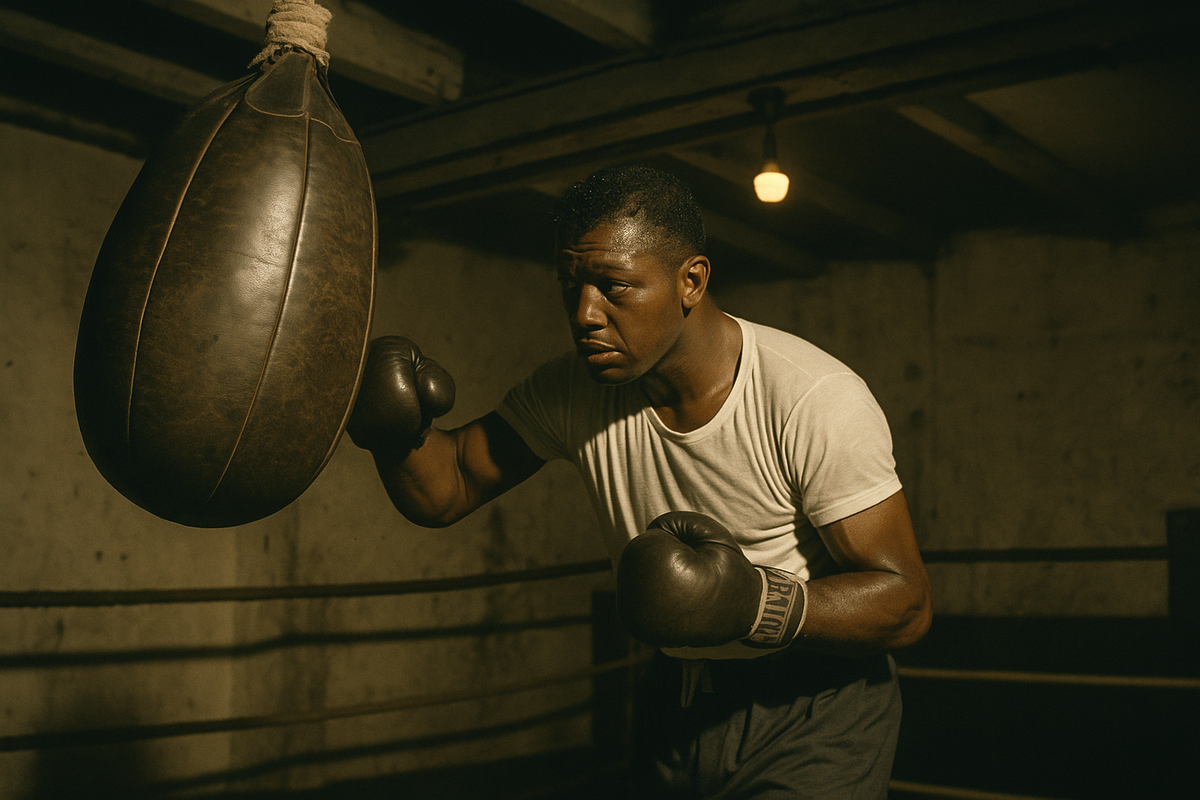
Sugar Ray Robinson, Boxing's Businessman, and the Golden Age of the Ring
How Time Magazine's June 25, 1951 issue captured the fighter who revolutionized athletic independence
On June 25, 1951, Americans who opened their mailboxes didn't just receive a magazine. They received a ringside seat to history.
That week's Time Magazine delivered Sugar Ray Robinson—mid-punch, mid-empire, mid-transformation of what an athlete could be in America. The profile arrived three months after Robinson dismantled Jake LaMotta in Chicago, seizing the World Middleweight Title in a fight so savage it would become the climax of Raging Bull three decades later. But Time wasn't interested in just another knockout. They were documenting something larger: the emergence of the fighter-as-mogul, the Black athlete as independent power, and boxing's last great moment before television would fracture its cultural dominance.
This wasn't sports reporting. It was cultural archaeology in real time.
Archive Details
Historical Figure: Sugar Ray Robinson, World Middleweight Champion
Issue Date: June 25, 1951
Archive Source: Time Magazine Sports Section
Cultural Context: Published during boxing's golden age, at the intersection of postwar American prosperity and early civil rights advancement
The Sport at Its Zenith
By 1951, boxing occupied the center of American life in ways that feel almost unimaginable now. Joe Louis had become a national symbol. Rocky Marciano was ascending. Jake LaMotta, Kid Gavilán, and a constellation of middleweights and welterweights commanded attention that today's athletes reserve for Super Bowls and Game 7s. Championship fights stopped the country.
Robinson transcended even this elevated field. His elegance wasn't decorative—it was tactical. His precision wasn't cautious—it was devastating. Where other fighters brawled, Robinson dismantled. Where others survived, Robinson orchestrated. Time captured him at the apex: undefeated as a welterweight, newly crowned at middleweight, and universally acknowledged as the pound-for-pound king—a designation that would shadow every great fighter who followed.
But the magazine understood something deeper. Robinson wasn't just winning fights. He was rewriting the terms of engagement.
Most boxers of the era were economic hostages—exploited by promoters, bled dry by managers, discarded after their primes. Robinson owned a nightclub in Harlem. He controlled real estate. He negotiated his own contracts and dictated his own terms. In an America still suffocating under Jim Crow, this level of financial autonomy wasn't just rare for a Black athlete—it was a direct challenge to the economic architecture of segregation.
Time's readers were watching more than athletic excellence. They were witnessing the prototype of Muhammad Ali, Michael Jordan, LeBron James—the athlete who refuses to be merely talent, who demands to own the enterprise built on his name.
Time's Editorial Power
In the early 1950s, Time Magazine wasn't simply influential—it was definitional. To appear on its pages, particularly in a full profile, was to be ratified as historically significant. The magazine's visual vocabulary—stark covers, dynamic action photography, narrative captions—transformed subjects into icons.
The June 25 issue deployed this apparatus at full force. Robinson appeared in training photographs, mid-fight sequences, and posed portraits that captured not just his athleticism but his presence. The coverage spanned his career arc: the 1942 dismantling of Fritzie Zivic that announced his arrival; the 1949 masterclass against Kid Gavilán; the 1950 European triumph over Robert Villemain that made him an international phenomenon; and finally, the LaMotta war that secured his middleweight crown.
Time's prose style matched Robinson's fighting rhythm—sharp, kinetic, relentless. "Bang-Bang-Bang. Relaxed and loose, he constantly circled the Dutchman, spotted the opening…" The writing didn't describe fights. It re-created them. Readers weren't spectators. They were at ringside, feeling the velocity.
The magazine also documented Robinson's cultural crossover. His friendships with musicians like Billy Eckstine. His reception in Paris, where he was dubbed "Le Sucre Merveilleux"—The Wonderful Sugar. His Harlem roots and his global appeal. This was portraiture at the intersection of sport, race, business, and celebrity—the kind of multidimensional coverage that understood Robinson's significance extended far beyond any single ring.
The Fights That Built the Legend
But Time's most revealing section wasn't about violence. It was about business. The magazine profiled Robinson's Harlem enterprises with the same seriousness it gave his fighting record—understanding, perhaps before Robinson himself fully realized it, that this financial independence was as revolutionary as his left hook.
The Artifact as Time Machine
Digital archives flatten history into searchable text. Vintage magazines preserve it as lived experience—the paper stock, the advertising, the typography, the editorial voice of a specific cultural moment. The June 25, 1951 Time Magazine places you in a reader's hands seventy-three years ago, when boxing mattered like nothing else and Sugar Ray Robinson was rewriting the rules.
For historians of sport, students of mid-century African American achievement, or collectors of cultural artifacts, this issue isn't supplementary reading. It's foundational evidence.
Why Collectors Covet This Issue
Explore the Archive
Original Time magazines from the 1930s through the 1970s document American culture as it unfolded—before revision, before hindsight, in the raw immediacy of weekly journalism. Browse thousands of issues and discover history as it happened, preserved in ink and paper.
Browse Time Magazine CollectionThe Enduring Significance
The June 25, 1951 issue remains essential for anyone serious about boxing history, mid-century American culture, or the evolution of the athlete-entrepreneur. Time's profile captured Robinson not at the beginning or end of his story, but at its blazing center—champion, businessman, cultural force, and architect of a model that every athlete-mogul since has followed, whether they know his name or not.
To own this issue is to possess a moment: when boxing was America's sport, when Harlem was a capital of Black achievement, and when Sugar Ray Robinson showed the world that excellence in the ring could fund independence outside it.
For collectors and historians alike, it speaks as clearly now as it did when it first landed on newsstands in the summer of 1951.