
The Magazine That Liberated the Hemline
Vogue's February 1970 Boutique Revolution
On February 1, 1970, Vogue published an issue that would quietly dismantle fifty years of fashion dictatorship.
Tucked between its covers was "Vogue's Own Boutique: Suggestions, Finds, and Observations"—an editorial feature that read less like a shopping guide and more like a declaration of independence. For the first time in the magazine's history, readers weren't being told what to wear. They were being offered choices. Halston's hemlines ranged from mini to ankle-length in a single collection. Gypsy-inspired skirts shared pages with snakeskin boots. Hand-painted Brazilian shoes sat alongside Fifth Avenue couture. The rigid seasonal mandates from Paris—those ironclad decrees that had governed American closets since before the war—had finally collapsed.
This wasn't fashion evolution. It was fashion revolution, documented in real time.
Archive Details
Publication: Vogue Magazine
Issue Date: February 1, 1970
Feature: "Vogue's Own Boutique: Suggestions, Finds, and Observations"
Key Designers: Halston, Adolfo, Giorgio di Sant'Angelo, Beth Levine
Historical Context: Dawn of the 1970s fashion liberation
The Cultural Powder Keg Behind the Clothes
By early 1970, American women had spent a decade dismantling every structure that confined them. The civil rights movement had challenged institutional racism. Second-wave feminism was interrogating domesticity itself. Anti-war protests had made conformity suspect. Fashion, that most visible marker of social compliance, couldn't remain immune.
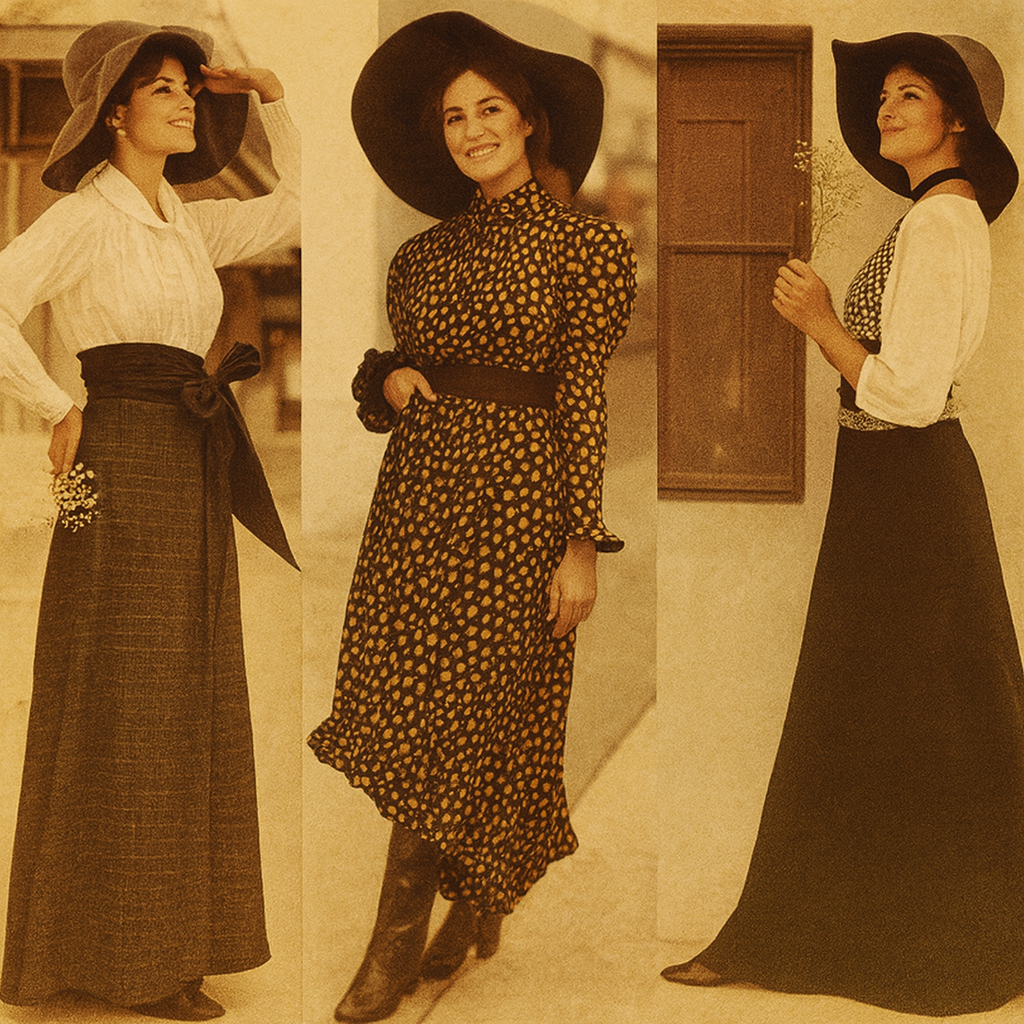
Vogue's February issue didn't report on these shifts—it embodied them. The "gypsy inspiration" that dominated the editorial wasn't merely aesthetic borrowing from "Spanish gypsies" to "Romanian gypsies," as the magazine described it. It was a visual vocabulary for restlessness, for rejecting the suburban ideal, for women who wanted to look like they might leave at any moment. Flowing skirts became symbolic armor. Ponchos and bright prints weren't just clothing—they were territorial claims on personal freedom.
The boutique movement that Vogue championed represented something more radical than retail innovation. When designers like Halston and Adolfo launched boutique lines, they were circumventing the traditional fashion hierarchy. No longer would style trickle down exclusively from Parisian ateliers to American department stores. Now it could emerge from a Greenwich Village shop, a Los Angeles sidewalk, or a Brazilian artisan's workshop.
The Democratization of Elegance
What makes this issue historically significant isn't what it included—it's what it refused to exclude.
Giorgio di Sant'Angelo's pleated cotton print dresses brought exotic inspiration into mainstream accessibility. Pablo and Delia, Brazilian artisans whose hand-painted shoes and fantasy handbags earned Vogue's praise for their "dreamlike, one-of-a-kind quality," represented the magazine's willingness to elevate craft to the level of couture. Beth Levine's snakeskin boots, styled with a Halston skirt, merged texture and audacity in ways that would have been unthinkable five years earlier.
But the true revelation was Halston's spring collection, framed by Vogue as a "story of lengths." This wasn't a designer hedging his bets—it was a philosophical statement. Women could choose mini dresses or ankle-length skirts, short suits or maxi lengths. The fashion industry, for perhaps the first time, was acknowledging that style belonged to the wearer, not the house.
Adolfo's crocheted caps and matching mufflers blurred the boundary between craft culture and high fashion. When Vogue photographed maxi dresses on Los Angeles sidewalks—styled for daily wear, not runway fantasy—the magazine acknowledged what Paris had long denied: American street fashion had become as influential as European couture.
The Visual Language of Liberation
Vogue's visual presentation matched its editorial radicalism. The cover maintained the magazine's signature minimalist authority, but the interior layouts told a different story. Black-and-white photographs captured women striding confidently rather than posing obediently. Candid-style shots of boutique finds replaced the static formality that had defined fashion photography for decades. Collages of eclectic accessories suggested abundance rather than restriction.
This wasn't accidental. The photographic shift from rigid composition to movement-based imagery reflected a broader truth: authenticity was replacing aspiration as fashion's organizing principle. Women no longer needed to look like socialites. They needed to look like themselves.
Essential Elements of the 1970 Revolution
Gypsy Freedom
Flowing fabrics, ponchos, and global-inspired prints celebrated as fashionable freedom and wanderlust.
Halston's Hemline Story
From mini to maxi in one collection—the choice-driven era of women's fashion begins.
Artisan Craftsmanship
Pablo and Delia's hand-painted shoes introduced boutique luxury with handmade authenticity.
Crochet Revival
Adolfo's handmade caps merged craft culture with couture sophistication.
Street Style Validation
Los Angeles sidewalk fashion proved American style rivaled Parisian runways.
Exotic Textures
Beth Levine's snakeskin boots became symbols of bold self-expression and tactile daring.
The Artifact as Evidence
What distinguishes vintage fashion magazines from digital archives is their material authority. The February 1, 1970 issue of Vogue isn't merely reporting on the death of fashion conformity—it is that death, rendered in ink and paper. Every page provides forensic evidence of how women's liberation manifested in hemlines and handbags, in the elevation of craft over couture houses, in the validation of street style over Parisian decree.
In an era when trends are born and extinguished within Instagram's algorithm, holding this magazine means holding the documented origin of principles we now take for granted: that style is personal, that fashion can be democratic, that choosing what to wear is itself a form of freedom.
Why Collectors Covet This Issue
Halston's Archival Importance
This issue captures Halston before he became the defining name of American sportswear—when his experiments with hemline variety were still radical proposals rather than industry standard.
The Bohemian Watershed
As one of the first major fashion editorials to embrace bohemian inspiration as aspirational rather than countercultural, this issue marks the moment when rebellion entered the mainstream.
Artisan Visibility
Featuring Pablo and Delia positioned handmade craft as luxury—a conceptual shift that anticipated the contemporary appetite for artisanal goods by four decades.
Photographic Innovation
The adoption of street-style inspired, movement-based photography makes this issue a pivotal document in Vogue's visual evolution.
The Boutique Thesis
This issue chronicles the moment when fashion's power structure fundamentally reorganized, moving from centralized authority to distributed creativity.
Cultural Documentation
Vintage Vogue magazines command premium prices, but issues tied to seismic cultural shifts transcend monetary value—they function as three-dimensional archives of historical transformation.
The Lasting Significance
The February 1, 1970 issue of Vogue stands as one of the magazine's most consequential publications precisely because it refused to dictate. With its "Vogue's Own Boutique" feature, it captured the moment when global influences, handcrafted fashion, and boutique designers redefined not just what was fashionable, but what fashion could mean. From gypsy-inspired gowns to Halston's groundbreaking hemline variety, this issue didn't merely report on change—it validated the idea that style could be simultaneously personal and authoritative, eclectic and elegant, liberated and luxurious.
For anyone who understands that fashion history is cultural history, this isn't just a magazine. It's evidence of transformation—and a reminder that the most radical act in fashion has always been choosing for yourself.
For the Serious Collector
If you're building a collection that documents the cultural revolutions of the 20th century, this issue is foundational. These aren't reproductions or digital scans—they're primary sources and tangible connections to the style revolutions that continue to influence contemporary design.
Browse Vogue Magazine Collection