
The Night Dr. Spock Told America's Mothers They Were Doing It Wrong
How a February 1955 Ladies' Home Journal article transformed American parenting from punishment to compassion
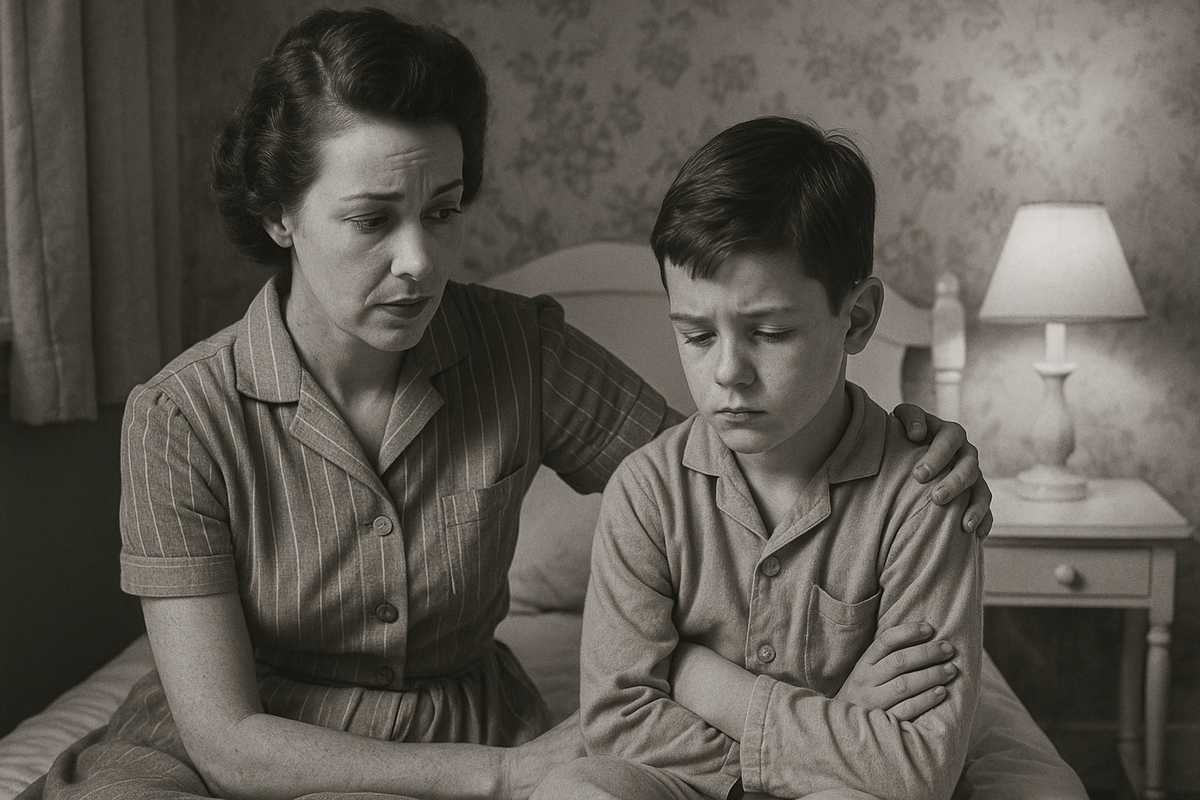
February 1955. A mother in suburban Cleveland opens her Ladies' Home Journal at the kitchen table. Her coffee grows cold. She's reading about bed-wetting—her secret shame, the thing she can't mention at bridge club—and for the first time, someone is telling her it isn't her fault.
Dr. Benjamin Spock's article that month wasn't medical advice. It was absolution.
And it arrived at precisely the moment America needed it.
Archive Details
Historical Figure: Dr. Benjamin Spock
Issue Date: February 1955
Archive Source: Ladies' Home Journal
Article Title: "Dr. Spock Talks with Mothers"
The Baby Boom's Breaking Point
By 1955, the United States was drowning in children. The postwar baby boom had flooded suburban homes with young families, and mothers—many college-educated women who'd worked during the war—found themselves isolated in ranch houses, armed only with magazines and conflicting folklore about child-rearing.
Traditional wisdom was brutal: bed-wetting meant laziness, disobedience, or worse. Punishment was standard. Shame was the currency.
Then Spock changed the script.
His Common Sense Book of Baby and Child Care had already become the bible of a new generation when it launched in 1946, but nine years later, mothers still wrestled with one particular demon. Enuresis. The problem no one discussed but everyone endured.
In "Dr. Spock Talks with Mothers," he did something radical: he listened. And then he told them to stop punishing their children.
When London's Children Wet Their Beds
Spock's argument hinged on a wartime revelation. During the London Blitz, British authorities evacuated thousands of children from the city to escape German bombing. Safe in the countryside, separated from their families, these children—many previously toilet-trained—suddenly began wetting the bed again.
Not because they were lazy. Because they were terrified.
Spock seized on this evidence: bed-wetting wasn't a discipline problem. It was an anxiety disorder. New siblings, family disruption, parental pressure—these were the triggers, not weak character or willful disobedience.
This reframing was revolutionary. In an era when psychology was still suspect and Freud was debated in faculty lounges rather than living rooms, Spock brought emotional health into the domestic mainstream. He gave mothers permission to see their children as complex beings, not miniature adults requiring correction.
The implications reached far beyond wet sheets.
The Magazine That Shaped Middle-Class Motherhood
Ladies' Home Journal wasn't just another women's magazine. It was the women's magazine—circulation in the millions, influence beyond measure. Its tagline, "Never underestimate the power of a woman," positioned readers as both students and authorities in their own domain.
The editorial strategy was brilliant: sandwich serious discourse between recipes and fashion spreads. Normalize the intellectual life of homemakers. Make cultural commentary as essential as casserole instructions.
The February 1955 issue embodied this formula perfectly. The cover showcased postwar femininity—elegant, composed, aspirational. Inside, Spock dismantled centuries of parenting orthodoxy in plain language any exhausted mother could absorb between diaper changes.
The presentation mattered as much as the content. Spock's portrait—serious, authoritative, but not condescending—signaled trust. The headline's conversational intimacy ("Dr. Spock Talks with Mothers") erased the distance between expert and reader.
This wasn't a lecture. It was a kitchen-table conversation with a neighbor who happened to have a medical degree.
The Revolutionary Prescription: Do Less
Spock's specific guidance sounds obvious now. In 1955, it was heretical:
The subtext was unmistakable: your child isn't broken. Your instinct to comfort rather than punish is correct. Trust yourself.
For mothers raised in an era of rigid parenting hierarchies, this message was oxygen.
The Collector's Lens: Why This Issue Endures
Vintage magazines are time machines, but not all moments are worth preserving. The February 1955 Ladies' Home Journal matters because it captures American family life at an inflection point.
That shift didn't happen in policy papers or academic journals. It happened here, on glossy magazine pages, read at kitchen tables across America.
Holding History
Digital archives capture text. Original magazines capture context—the weight of the paper, the period advertisements, the accidental coffee stains from a reader in 1955 who paused mid-article to comfort a crying child.
When you hold the February 1955 Ladies' Home Journal, you're holding the artifact that another mother held while questioning everything she'd been taught about raising children. You're touching the exact pages that gave her permission to try something different.
That's not nostalgia. That's connection across time.
Explore the Archive
Discover original Ladies' Home Journal issues and other vintage magazines that document American cultural history—from parenting revolutions to fashion evolution to the quiet transformation of domestic life.
Browse Rolling Stone Magazine CollectionThe Quiet Revolution
Dr. Spock's February 1955 article on bed-wetting was never just about bed-wetting. It was about redefining childhood, reimagining motherhood, and challenging the assumption that suffering builds character.
In that single issue of Ladies' Home Journal, American parenting changed direction. Not dramatically—not all at once—but with the steady pressure of compassion replacing cruelty, understanding replacing judgment.
Seventy years later, we take for granted that children's emotions matter, that anxiety is real, that gentleness works. But someone had to say it first. Someone had to print it. Someone had to read it and decide to try something different.
This magazine is where that happened.
And now it's in your hands.