
The Night Jet Magazine Put Black Female Desire on America's Coffee Tables
When Vanity 6 appeared on the cover of Jet's January 24, 1983 issue, it wasn't just entertainment news—it was a declaration
On January 24, 1983, Jet Magazine did something dangerous.
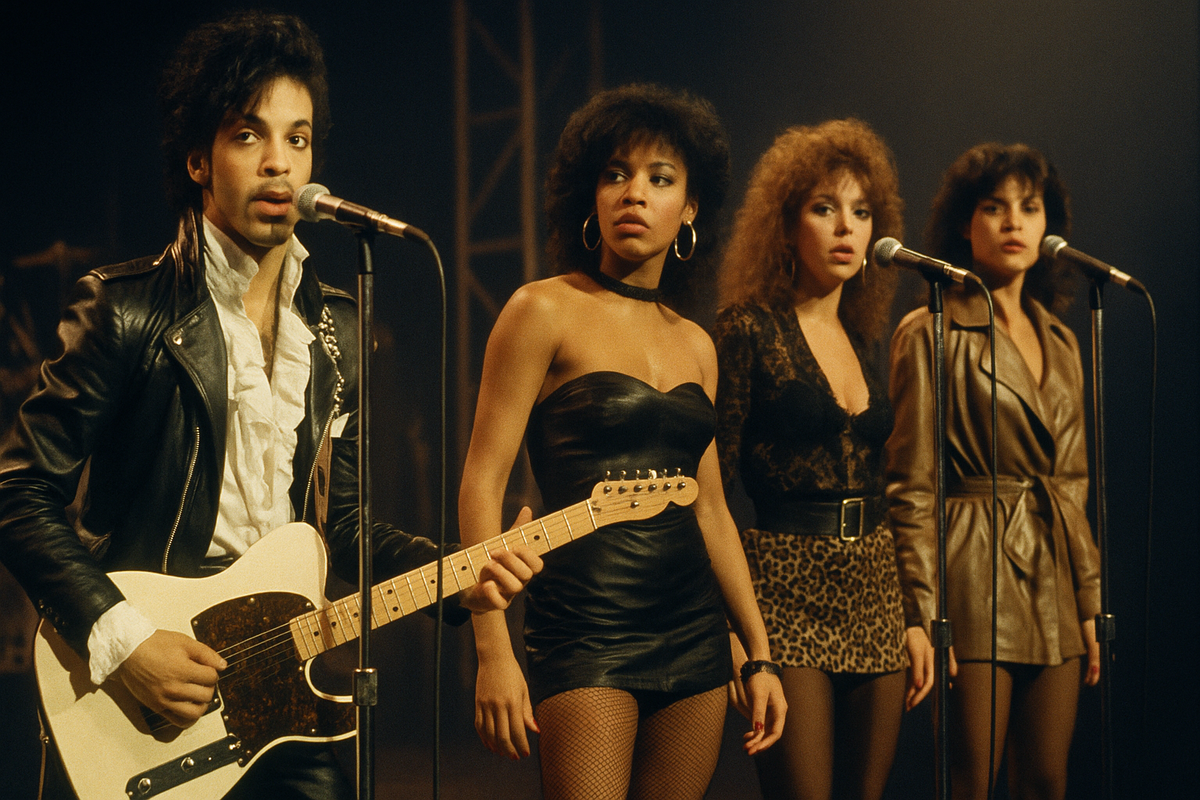
Not dangerous in the protest-march sense—this was a different kind of provocation. That week, the pocket-sized chronicle of Black American life placed three women in lingerie on its cover and dared its readers to look away. Vanity, Brenda, and Susan—collectively known as Vanity 6—stared back from newsstands with a message that made church-going grandmothers clutch their pearls and teenage daughters hide copies under their mattresses. The headline read: "Vanity 6 Lives Out Daring Fantasies On Stage."
This wasn't entertainment news. This was a declaration.
When Prince Handed Three Women a Grenade
By early 1983, Prince Rogers Nelson had already proven himself a genre-defying force—funk colliding with rock, R&B infused with new wave, Minneapolis challenging both Motown and the mainstream. But Vanity 6 represented something else entirely: a deliberate experiment in Black female sexuality as public spectacle.
Prince assembled the trio with surgical precision. Vanity (19 years old), Brenda Bennett (21), and Susan Moonsie (just 16) became vessels for fantasies that polite society refused to speak aloud. Their songs—"Nasty Girl," "Drive Me Wild"—didn't hint or suggest. They announced. These women sang about desire without apology, performed in lace and lingerie without shame, and challenged every unwritten rule about what Black female entertainers were permitted to express.
The shock wasn't just the content. It was the visibility. And Jet chose to amplify it.
Archive Details
Featured Artists: Vanity 6 (Vanity, Brenda Bennett, Susan Moonsie)
Issue Date: January 24, 1983
Publication: Jet Magazine
Cultural Context: Early 1980s Black sexuality and performance
Headline: "Vanity 6 Lives Out Daring Fantasies On Stage"
Why This Issue Mattered—And Still Does
Jet Magazine had spent three decades earning its position as the authoritative voice of Black cultural life. While mainstream outlets offered sanitized celebrity coverage, Jet documented civil rights battles, political breakthroughs, and entertainment moments that reflected the full spectrum of African American experience. Its weekly arrival in millions of households carried weight.
The decision to feature Vanity 6 so prominently was calculated. Jet wasn't merely reporting on a pop act—it was validating a conversation about Black women's autonomy over their own sexuality. This mattered because Black female performers had historically faced a brutal double bind: marginalized in mainstream media, yet judged harshly when they claimed sexual agency.
The magazine's coverage struck a delicate balance. The photography was bold—performance shots showed the trio on stage in their signature lingerie, backstage images captured their camaraderie—but the framing treated them as cultural figures worthy of serious attention. Jet documented without sensationalizing, shocked without exploiting.
What the Feature Revealed
Fantasy as Craft
The women insisted their explicit lyrics reflected stage personas, not personal lives. They understood the distinction between performance and identity, even if audiences didn't.
Rejecting Competition
Despite Prince's creative control and romantic entanglements with members of the group, Vanity 6 claimed to avoid jealousy. Whether this was truth or savvy PR, the message mattered—women supporting women, even in compromising circumstances.
The Age Question
Susan Moonsie's presence at 16 adds uncomfortable context today. In 1983, her youth was framed as bringing "innocence" to the group, a descriptor that now reads differently given the overtly sexual material.
Prince's Shadow
He loomed over every frame, the architect who built these women into his vision. The article acknowledged his influence without fully interrogating the power dynamics at play.
Challenging Respectability Politics: Most significantly, Vanity 6 represented a generation of Black female performers rejecting the burden of representing the race with dignity and restraint. They chose provocation instead.
Beyond Entertainment: The Archival Imperative
These magazines function as time capsules in ways that digital media never can. They preserve not only images and text, but the physical experience of encountering this content in 1983—the texture of the paper, the advertisements alongside the articles, the sense of discovery when you pulled this issue from the mailbox or spotted it at the newsstand.
Jet provided a Black perspective often absent from mainstream archives. While other publications documented American culture from a white gaze, Jet recorded how Black Americans saw themselves and debated their own cultural shifts. This issue didn't just report on Vanity 6—it showed how Black readers were invited to process them.
For families who kept these issues on bookshelves or in boxes, they became reference points. You could pull out this Vanity 6 feature years later and remember exactly where you were when you first saw it, what your mother said, whether your father disapproved, how your friends reacted.
That's the power of physical media: it doesn't just document history, it was history.
The Collector's Angle: Why This Issue Commands Attention
Perfect Timing
Captures Prince at the precise moment he was reshaping popular music, just before Purple Rain would make him a global phenomenon.
Primary Documentation
One of the earliest mainstream features on Vanity 6, documenting the group before their story became legend and tragedy.
Cultural Context
Unlike other publications, Jet embedded Vanity 6 within the broader narrative of Black cultural evolution—ethnography in real time.
High Demand
Issues featuring Prince, Michael Jackson, and related acts consistently draw collector interest, but this stands apart as a specific cultural inflection point.
The Lasting Image
The January 24, 1983 issue of Jet Magazine remains a flashpoint—the moment when Black female sexuality in mainstream entertainment became something that could be featured, debated, and preserved on its own terms. Vanity, Brenda, and Susan may have been performing Prince's vision, but Jet gave them legitimacy beyond the stage.
For collectors and historians, this isn't just an entertainment piece. It's evidence of a conversation that Black America was having with itself about pleasure, power, and the price of visibility. Holding it today is like eavesdropping on 1983—a year when the rules were being rewritten, one provocative performance at a time.
Build Your Archive
From the 1950s through the 2000s, Jet documented decades of African American culture, leadership, and creativity. Collecting these issues means preserving a living archive of Black history.
Browse Jet Magazine Collection