
When W.A.S.P. Became America's Most Dangerous Band
The chainsaw was real. So was the blood—or at least, the stage prop variety that splattered across Randy Piper's guitar as he revved the motor and sent shrieks through another sold-out arena. In the spring of 1986, W.A.S.P. wasn't just touring—they were under siege. Parents demanded boycotts. Politicians called for bans. San Antonio police blocked their shows entirely. And in the middle of it all, Circus Magazine did something radical: they gave the band a megaphone.
When readers opened the March 31, 1986 issue of Circus, they found Moira McCormick's explosive feature: "W.A.S.P. carry controversy to the next stage." It wasn't journalism as damage control. It was journalism as amplifier. At a moment when network news portrayed heavy metal as a moral threat and the Parents Music Resource Center was lobbying Congress for warning labels, Circus offered something the mainstream couldn't—or wouldn't—provide: a platform that understood shock rock wasn't corruption. It was theater.
This single issue captures the exact flashpoint where American rock rebellion collided with conservative panic, where freedom of expression met the politics of outrage. It remains one of the most significant artifacts from the culture wars of the 1980s.
Archive Details
Publication: Circus Magazine
Issue Date: March 31, 1986
Featured Article: "W.A.S.P. carry controversy to the next stage" by Moira McCormick
Historical Context: Published during peak PMRC censorship campaign
The Censorship Machine Targets Metal
By 1986, heavy metal had achieved something unprecedented: mainstream dominance without mainstream approval. MTV rotated Mötley Crüe and Twisted Sister alongside pop acts. Arena tours sold out in hours. Magazines like Circus moved serious newsstand volume. Yet the genre's success triggered a backlash that would shape music politics for a generation.
The Parents Music Resource Center, co-founded by Tipper Gore in 1985, targeted what it called dangerous content in popular music. The organization's "Filthy Fifteen" list of objectionable songs included W.A.S.P.'s "Animal (F*** Like a Beast)"—a track so controversial that many retailers refused to stock it. The PMRC pushed for warning labels, Senate hearings, and voluntary industry compliance. What started as a parent advocacy group quickly became a national censorship campaign.
W.A.S.P. found themselves at ground zero. Their stage show featured Blackie Lawless wielding a skull that appeared to bleed, codpieces designed for maximum shock value, and the now-infamous chainsaw guitar stunt. Cities canceled shows. Venues caved to pressure. The band wasn't just controversial—they were being systematically targeted for erasure.
And Circus leaned in.
The Magazine That Refused to Panic
Circus had built its reputation on bringing readers closer to the gods of rock than television or newspapers ever could. While mainstream outlets clutched pearls, Circus delivered full-color spreads, unfiltered quotes, and backstage access. The March 31, 1986 issue exemplified this approach perfectly.
Moira McCormick's feature didn't soften W.A.S.P.'s edges or apologize for their content. Instead, it positioned them as deliberate provocateurs who understood exactly what they were doing. Blackie Lawless offered no apologies: "If you don't want to hear the song, don't buy a ticket." The message was clear—this wasn't accidental offense. It was calculated rebellion.
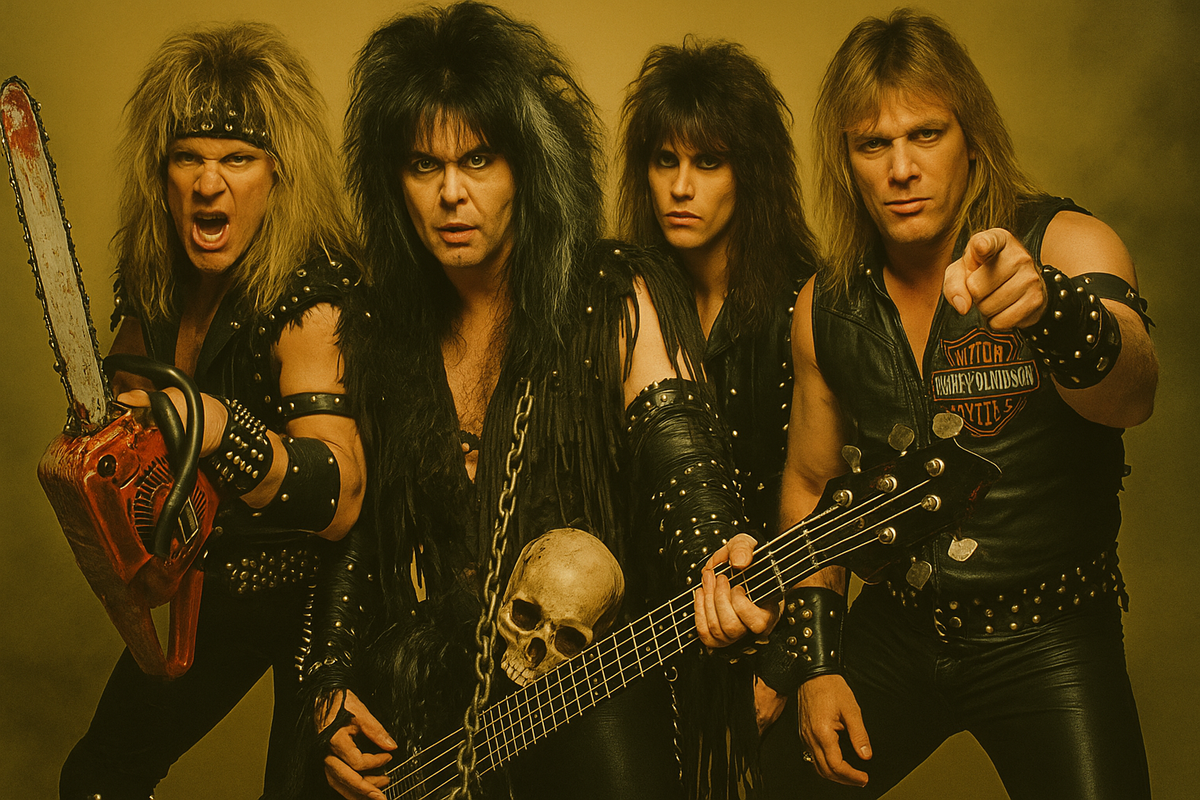
The article chronicled the band's confrontations with authority, their international tours (including performances in the Soviet Union, where Western rock remained heavily restricted), and their refusal to compromise. Randy Piper's chainsaw guitar wasn't presented as juvenile stunt work but as spectacle in the tradition of Alice Cooper and KISS. Chris Holmes, photographed in full Harley-Davidson regalia pointing directly at readers, looked less like a musician and more like a dare.
Circus gave W.A.S.P. what no other major publication would: legitimacy. Not respectability—legitimacy. There's a difference.
Visual Language of Rebellion
The photography in this issue tells its own story. Against a stark yellow backdrop, the band glares in full costume—leather, studs, chains, feathers, theatrical menace frozen in glossy color. These weren't candid shots. They were declarations of war.
The action photography captured what made W.A.S.P.'s live show legendary: Piper mid-chainsaw assault, Lawless drenched in stage lighting clutching his skull guitar, Holmes in full biker armor. While television news crews shot protest footage outside venues, Circus was inside documenting the spectacle that terrified Middle America.
This visual approach separated rock magazines from mainstream media coverage. Where newspapers printed grainy protest signs and concerned parent interviews, Circus delivered the full sensory assault of shock rock in vivid color. For teenage fans, these pages weren't just documentation—they were contraband.
The Cultural Coordinates of Shock Rock
The W.A.S.P. feature arrived at a precise cultural moment that amplified its significance. MTV had transformed music into a visual medium, making image inseparable from sound. Shock rock, pioneered by Alice Cooper in the early 1970s and refined by KISS, had evolved into something rawer and more explicitly transgressive. W.A.S.P. pushed past Cooper's horror-show theatrics into territory that felt genuinely dangerous.
The 1985 PMRC Senate hearings—where Dee Snider of Twisted Sister testified before Congress—had established the battleground. But by 1986, the fight had moved from Washington to every city where metal bands toured. Local politicians discovered that moral panic played well with voters. W.A.S.P. became a convenient target: visible, unapologetic, and willing to fight back.
The international dimension mattered too. W.A.S.P.'s Soviet performances represented more than tour logistics—they symbolized rock's power to penetrate even authoritarian censorship. If the music could reach audiences behind the Iron Curtain, American attempts at suppression looked both hypocritical and futile.
The Rise of Shock Rock
W.A.S.P. carried forward traditions set by Alice Cooper and KISS, pushing them into even bloodier and raunchier territory that defined 1980s metal excess.
The MTV Generation
With music videos as a central marketing tool, image mattered more than ever. Visual shock value became inseparable from musical identity.
Censorship vs. Freedom
The PMRC hearings in 1985 had set the stage for a national debate about artistic expression, parental authority, and government intervention.
Global Reach of Metal
W.A.S.P. toured internationally, including in the Soviet Union, where Western music was still heavily restricted—proving rock's universal appeal.
Why This Issue Endures
Collectors and historians seek the March 31, 1986 Circus for reasons that transcend nostalgia. This issue functions as primary source material for understanding how the 1980s censorship debates actually unfolded—not through sanitized retrospectives but through journalism that participated in the conflict as it happened.
The timing makes it invaluable. Published at the peak of PMRC influence, it captures the exact moment when shock rock bands realized they were fighting for their careers. The quotes from Blackie Lawless and other band members represent their real-time response to existential threats, not carefully crafted legacy-building decades later.
The photography preserves visual language that defined an era. These images of chainsaws, skulls, leather, and defiance represent glam metal at its most unapologetically excessive—before the genre softened, before the backlash neutered it, before nostalgia made it safe.
For anyone studying the intersection of popular culture, censorship, and youth rebellion in Reagan-era America, this magazine isn't supplementary material. It's essential evidence.
The Magazine as Weapon
Circus and publications like it didn't just report on rock—they armed fans for cultural combat. When parents and politicians condemned metal as dangerous, magazines proved them right in the best possible way. They made Blackie Lawless look like a rebellious hero precisely because he offended authority. PMRC outrage became proof that readers were part of something forbidden and vital.
Where mainstream coverage saw moral decay, Circus saw artistry and spectacle. Where newspapers quoted concerned parents, Circus quoted the bands telling those parents to stay home. This wasn't balanced journalism—it was advocacy. For millions of teenagers, these magazines weren't entertainment guides. They were survival tools.
The legacy of this approach outlasted the 1980s. Every moral panic over music—from gangsta rap to Marilyn Manson to modern controversies—echoes these same dynamics. The side that controls youth culture's narrative wins the war. Circus understood that in 1986. The PMRC learned it too late.
Holding History
The March 31, 1986 issue of Circus Magazine crystallizes a cultural moment that shaped how America argues about art, freedom, and corruption. It captures shock rock at its commercial and controversial peak, documents a band under genuine threat, and preserves the voice of a youth culture that refused silencing.
These pages contain more than band interviews and concert photos. They contain evidence of how censorship campaigns actually function, how media shapes public perception of threat, and how rebellion gets commodified, celebrated, and ultimately absorbed. For collectors, owning this issue means possessing a piece of the battlefield.
For those seeking to understand or reclaim that era—whether as historians, collectors, or fans who remember blasting metal cassettes in defiance—original issues like this one offer something digital archives cannot: the weight of the artifact itself, the smell of aging newsprint, the tactile experience of holding history.
Collector Significance
Historical Timing
Published at the peak of the PMRC debates, this issue serves as a historical artifact from the censorship wars that defined 1980s music culture.
Iconic Feature
The W.A.S.P. article captured the band's most notorious period, with unfiltered quotes from Blackie Lawless and Chris Holmes during their most controversial era.
Visual Documentation
Vivid images of chainsaws, skulls, and leather outfits represent quintessential glam metal aesthetics frozen at their peak excess.
Cultural Evidence
This magazine documents how media shaped public perception during moral panics—essential reading for understanding music censorship battles.
Explore the Archive
Each issue represents more than nostalgia. It's documentation of the moments when music mattered enough to terrify authority—and that terror, as Blackie Lawless understood perfectly, was proof that rock and roll still meant something dangerous.
Browse Circus Magazine CollectionBecause as Blackie Lawless said then, and as the magazine proved: "Rock & roll is about rebellion—and controversy sells."