
When Americans Opened Life Magazine and Saw Hitler's Germany Unfiltered
The January 8, 1940 issue that tore down the propaganda curtain and revealed the uncensored reality of wartime Nazi Germany
On January 8, 1940, Americans reached into their mailboxes and pulled out something dangerous: the truth.
Less than five months into World War II, with Europe ablaze and the United States clinging to neutrality, Life Magazine published what no other American outlet dared to print—uncensored dispatches from inside Nazi Germany. The feature, "Wartime Germany: Uncensored Letters from Life's Correspondent in Berlin," written by William D. Bayles, bypassed the Reich's propaganda machine entirely. What emerged was not the triumphant Germania of Leni Riefenstahl's newsreels, but a society buckling under rationing, surveillance, and the grinding mechanics of total war.
For readers accustomed to sanitized wire reports and Hitler's carefully staged rallies, Bayles' reporting landed like contraband. Here was Germany with its mask off—not heroic, not invincible, but desperate.
Archive Details
Correspondent: William D. Bayles
Issue Date: January 8, 1940
Historical Context: Published less than five months after Germany's invasion of Poland, during the early months of World War II
Significance: One of the first uncensored accounts of daily life in Nazi Germany available to American readers
The Propaganda Curtain, Torn Open
By January 1940, Joseph Goebbels controlled nearly every word published about the Reich. Foreign correspondents faced expulsion for unflattering reports. Newspapers were censored. Radio broadcasts were scripted. The Nazi state had perfected the art of information control, flooding the world with images of strength while concealing the rot beneath.
Bayles slipped through. His letters—printed without alteration by Life—revealed what propaganda concealed: Germans standing in line for rationed soap, one cake per month. Women yanked from city life and dumped onto farms to replace conscripted men. Children evacuated en masse to overcrowded camps. Jewish businesses seized and resold to Aryans at fire-sale prices. Gasoline so scarce that cars sat abandoned on Berlin streets like metal skeletons.
This was not warfare as spectacle. This was warfare as exhaustion.
The Details That Damn
Bayles wrote with precision, and Life printed every uncomfortable fact:
Each detail, stacked atop the next, constructed a portrait of a regime that had weaponized daily life.
Photography as Evidence
Life had revolutionized American journalism by proving that photographs could do more than illustrate—they could accuse. The "Wartime Germany" feature deployed this power ruthlessly.
Images showed:
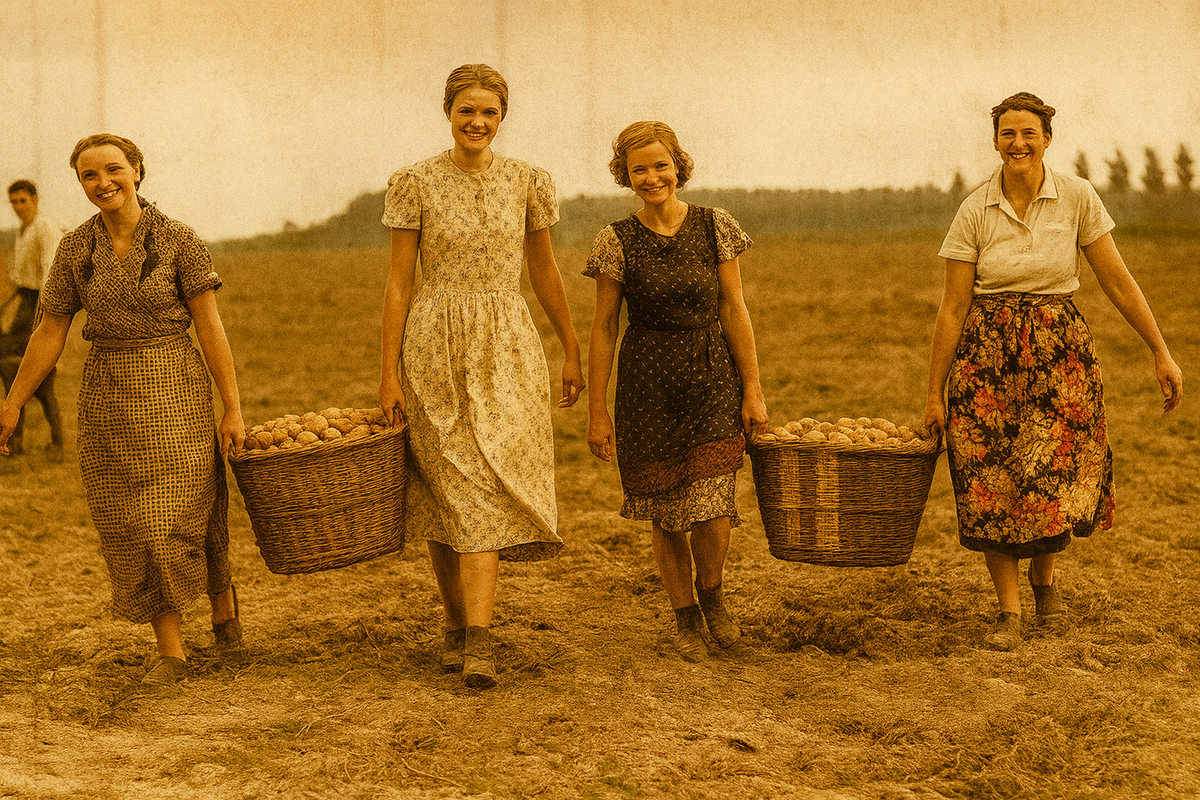
Berlin cafés lit only by candlelight during blackout drills, patrons eating in near-darkness. City women bent over potato fields, their posture betraying exhaustion and resentment. Deserted automobiles lining Berlin streets, immobilized by gasoline rationing. Crowds pressed against newspaper office windows, desperate for war updates during the Polish invasion. Factory workers manning anti-aircraft guns, civilians transformed into soldiers. Stormtroopers patrolling streets during blackouts, the architecture of obedience made visible.
These were not propaganda photos. They were autopsy photos, documenting a society being consumed by its own ambitions.
Where newsreels showed parades and speeches, Life showed lines and shortages. Where Goebbels broadcast strength, Bayles photographed weariness. The cumulative effect was devastating: Germany was not the invincible Reich of Nazi mythology, but a nation cannibalizing itself to fuel Hitler's war machine.
The Cover That Wasn't
The January 8, 1940 cover featured two American college students at Bowdoin's winter house parties—young, carefree, laughing. The juxtaposition was editorial violence. Turn the page from American leisure, and you encountered German deprivation. The contrast required no caption.
This was Life's genius: it understood that context shapes meaning. The magazine forced readers to confront the distance between their own lives and the unfolding catastrophe in Europe. It made neutrality uncomfortable.
The Permanence of Print
Digital media evaporates. Websites vanish. Social platforms delete archives. But Life Magazine, printed on physical paper, bound and distributed to millions of American homes, survives. These issues are time capsules—not metaphorically, but literally. The ink, the photographs, the advertisements for Camel cigarettes and Chevrolet sedans, all frozen in January 1940.
For historians, these magazines are primary sources. For collectors, they are tangible connections to the 20th century's defining conflict. For anyone who values evidence over memory, they are proof.
Why This Issue Endures
Eighty-five years later, the January 8, 1940 Life Magazine remains one of the most important artifacts of early World War II journalism. Not because it predicted the Holocaust or D-Day, but because it captured something rarer: the texture of daily life under fascism before the world fully understood what fascism would become.
Historical Primacy
Published only months after Germany invaded Poland, it documents the war's opening chapter in real time—no hindsight, no revision.
Uncensored Testimony
Bayles' dispatches are among the few uncensored accounts of wartime Germany available to American readers. European press was muzzled; American correspondents faced expulsion. Life printed what others could not.
Visual Archive
The photographs preserve scenes that Nazi authorities tried to erase—rationing, dispossession, militarization of civilians. These images exist because Life's photographers documented them before the Reich could.
Cultural Snapshot
For families whose grandparents lived through the 1940s, this issue shows what Americans knew, when they knew it, and how they learned it. It is a record of American consciousness at a turning point.
Market Demand
World War II-era Life magazines command premium prices among collectors, and first-year issues documenting the conflict's outbreak are exceptionally rare. This issue combines scarcity with significance.
The Last Word
William D. Bayles' reporting in the January 8, 1940 Life Magazine accomplished what propaganda could not tolerate: it told the truth. Not the truth of battlefield strategy or diplomatic cables, but the truth of exhausted women in potato fields, abandoned cars on Berlin streets, and Jewish shops looted in broad daylight.
That truth, printed on paper and preserved for 85 years, remains readable. Remains collectible. Remains vital.
Wars are not fought only with tanks and bombers. They are fought in kitchens, in lines outside shops, in the rationing of soap and the evacuation of children. Life Magazine understood this. Its photographers documented it. And now, decades later, we can hold that documentation in our hands.
This is why we collect.
Collect the Archive
If you want to understand the 20th century—not as a list of dates and treaties, but as a lived experience documented in real time—vintage Life magazines are indispensable. From the opening days of World War II through the space race, from the Civil Rights Movement through Watergate, Life was there, camera in hand.
Whether you're building an institutional archive, preserving family history, or assembling a personal collection of 20th-century journalism, these magazines offer something digital facsimiles cannot: authenticity.
Browse Life Magazine Collection