
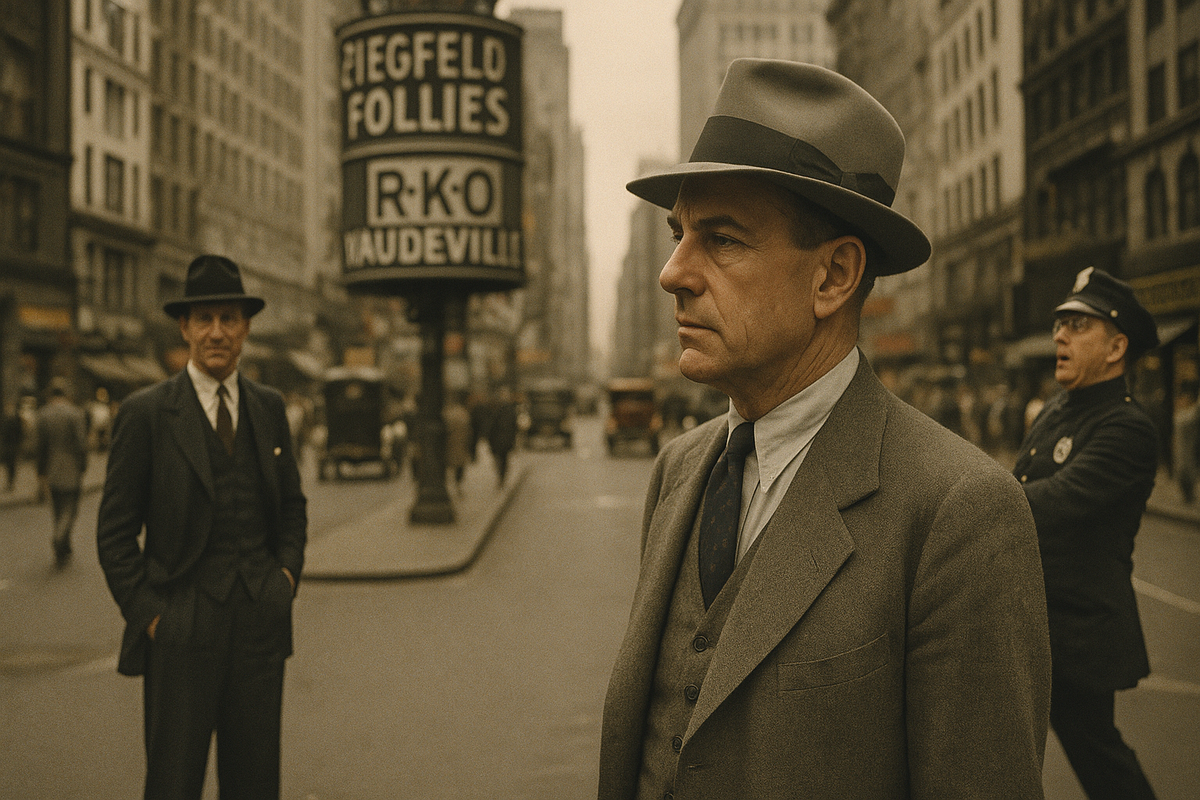
The Pulse of Jazz Age Manhattan
Inside The New Yorker's October 22, 1927 "Talk of the Town"
On a crisp autumn morning in 1927, New Yorkers unfolded their copies of The New Yorker and turned, as ritual dictated, to "The Talk of the Town." What they found wasn't journalism in any conventional sense. It was something rarer: the city's own voice, captured mid-wink.
Mayor James J. Walker's latest pronouncement—water-wagon trials for city services—received the treatment it deserved. Not outrage. Not applause. Just the arch observation that political theater and actual governance had, once again, parted ways. A few columns over, Madison Square Garden's military tournaments earned their own dissection: all pomp, all pageantry, all choreographed spectacle. War as entertainment. Governance as performance art.
This was The New Yorker at full strength—urbane, skeptical, and utterly alert to the absurdities hiding in plain sight.
Historical Context
Issue Date: October 22, 1927
Featured Figure: Mayor James J. "Beau James" Walker
Signature Feature: "The Talk of the Town"
Archive Source: Original New Yorker Magazine Collection
The City That Consumed Itself as Spectacle
Nineteen twenty-seven marked the apex of the Roaring Twenties. Prohibition had transformed New York's nightlife into an underground empire of speakeasies and jazz clubs. Broadway glittered with new productions. The Harlem Renaissance was rewriting the rules of American literature and music. Beneath the sequins and champagne, however, the machinery of the city ground on—corrupt, chaotic, undeniably alive.
Mayor Walker embodied the contradictions. "Beau James," they called him—a figure so dapper, so charming, that his lack of seriousness became part of the appeal. His administration ran on style over substance, bluster over reform. When he announced tests for water wagons or new civic initiatives, the proposals read less like policy and more like scripts awaiting satire.
The New Yorker needed only to quote him.
Military exhibitions at Madison Square Garden followed a similar logic. Horses, flags, martial choreography—these events packaged war as urban amusement, transforming soldiers into performers for an audience that expected grandeur on demand. The city didn't just tolerate spectacle. It demanded it, consumed it, and forgot it by morning.
Into this landscape of high glamour and casual dysfunction, The New Yorker inserted its voice: knowing, detached, and incapable of being impressed.
How a Magazine Found Its Voice
By October 1927, The New Yorker had already separated itself from the pack. Newspapers delivered facts. Literary journals aimed for gravitas. This magazine offered a third option: conversational prose that assumed you were sophisticated enough to catch the joke without a diagram.
The formula was deceptively simple. Take Mayor Walker's water-wagon tests—a mundane bureaucratic announcement—and reveal the comic distance between political performance and actual infrastructure. Cover the military tournaments with equal parts admiration and irony, acknowledging the spectacle while questioning the appetite for it. Treat high culture and low gossip with identical wit, signaling that nothing was too sacred (or too trivial) for scrutiny.
The prose itself mattered as much as the subject. Where other publications announced, The New Yorker commented—casually, as if overheard at a cocktail party on Fifth Avenue. The accompanying illustrations and line drawings reinforced the tone: whimsical, sharp, designed to pair with prose rather than merely decorate it.
This was performance in print. The city as theater, observed by an audience of one million who all believed themselves to be insiders.
What the October 22, 1927 Issue Reveals
Walker's Civic Theater
The mayor's announcements became fodder for mockery not because they were malicious, but because they were absurd—lofty rhetoric masking everyday incompetence. The disconnect wasn't scandal. It was comedy.
Spectacle as Infrastructure
Military tournaments at Madison Square Garden represented something larger: a city that had learned to package even war as entertainment. The staging, the choreography, the audience's hunger for grandeur—all of it revealed New York's insatiable appetite for theater in every form.
The Bureaucratic Absurd
From water wagons to civic projects, the column mined humor from the driest corners of governance. The message was clear: if you looked closely enough at any official pronouncement, you'd find material for satire.
Cultural Diagnosis
Together, these observations didn't just document the city. They diagnosed it—brilliant, dysfunctional, endlessly theatrical. The New Yorker captured New York thinking about itself with merciless clarity.
The Endurance of Irony
Much like Life's wartime photography or Esquire's literary journalism, The New Yorker's Jazz Age editions function as time capsules of tone. They remind us that American irony—urbane, skeptical, quietly devastating—didn't emerge from cable news or social media. It was refined in these columns, perfected over cocktails and speakeasy gossip, and published every week for readers who demanded wit as a baseline requirement.
When satire moved to television and then to digital platforms, something was lost: the physical artifact, the tangible proof that a specific city, at a specific moment, saw itself with this particular clarity.
The October 22, 1927 issue preserves that clarity. It holds Mayor Walker's bluster, Madison Square Garden's choreographed patriotism, and the city's endless capacity for self-mythologizing—all rendered in prose sharp enough to cut a century later.
Why Collectors Pursue Early New Yorker Issues
The Birth of a Voice
Early "Talk of the Town" columns show The New Yorker discovering the tone that would define American satire for decades—skeptical of authority, alert to absurdity, allergic to sentimentality.
Jazz Age Evidence
These pages preserve not just what people discussed in 1927, but how they preferred to discuss it: lightly, cleverly, with understated sophistication. The voice itself is the artifact.
Literary and Visual Heritage
The covers, cartoons, and prose from this era carry the DNA of what became one of the most influential cultural publications of the 20th century. Early issues document the magazine's evolution in real time.
Rarity and Demand
Issues from the 1920s are scarce. Those capturing pivotal moments in politics or culture—rendered in The New Yorker's signature style—command particular interest among collectors, historians, and institutions.
Explore the Archive
Thousands of original New Yorker magazines—from the 1920s through the present—are available in our collection. Trace the magazine's evolution across nearly a century of literature, politics, satire, and art.
Browse The New Yorker Magazine Collection