📖 About this Collection
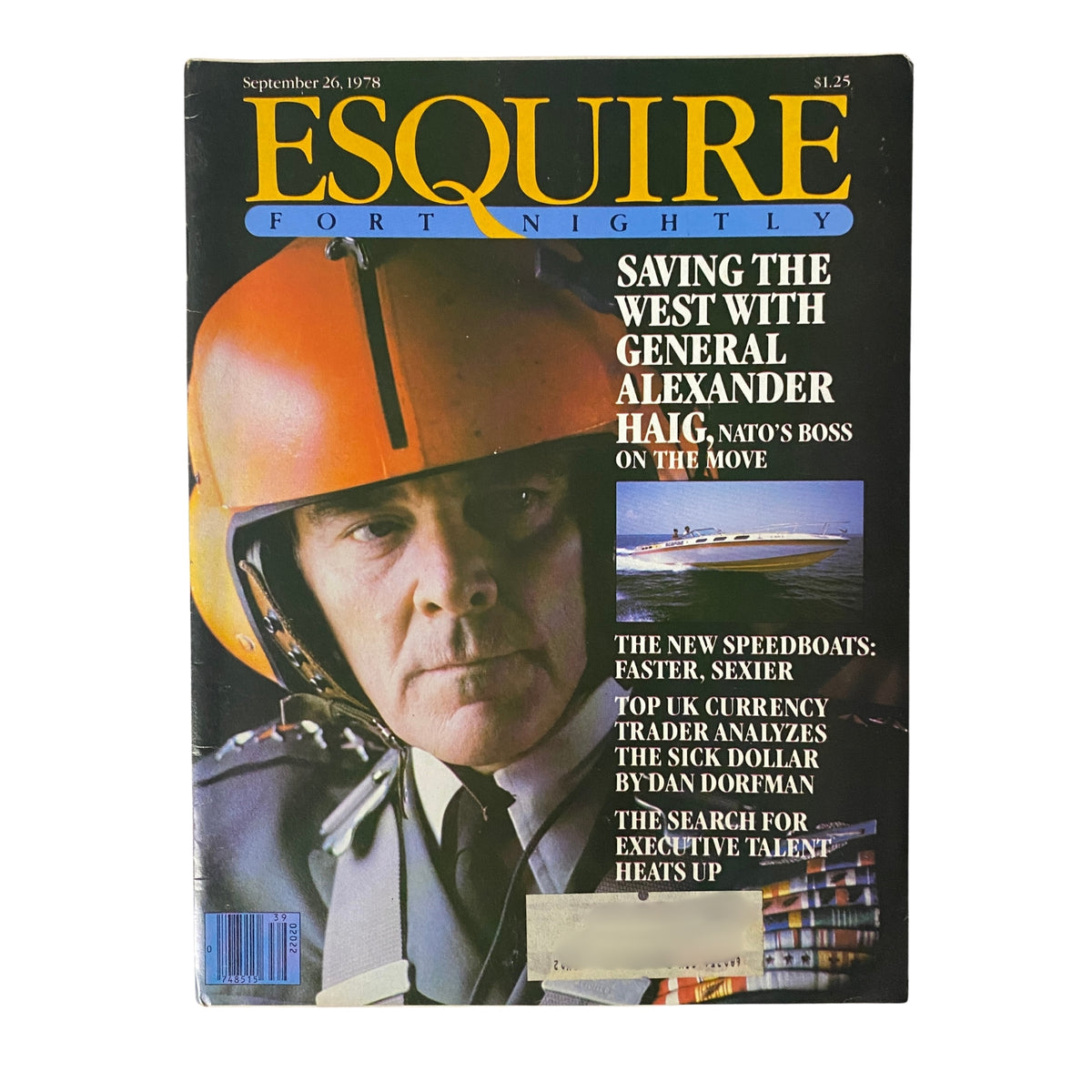
Alexander Haig: The Iron General Who Commanded History's Stage
The Legend & The Legacy
Few figures of the late twentieth century embodied the intersection of military authority, Cold War brinkmanship, and political theater quite like Alexander Haig. A decorated combat veteran of Korea and Vietnam, a quiet architect of Nixon's final days in the Oval Office, and a Secretary of State who famously stepped before the microphones on the day Reagan was shot and declared — with steely composure — "I am in control here," Haig was the kind of man who seemed to materialize precisely where history was being made. His career was not merely a sequence of prestigious postings — it was a continuous collision with the defining crises of an era: the fall of a presidency, the management of détente, the volatile first years of the Reagan revolution. In an era before cable news chyrons and social media threads, the American public processed these seismic moments through the weight of a magazine in their hands — a weekly or monthly dispatch that framed the general, the statesman, and the controversialist in ink, image, and carefully considered editorial prose. Readers did not scroll past his story; they sat with it, turned its pages, and absorbed the full weight of a photograph chosen by an editor who understood that a single image of this ramrod-straight soldier-diplomat could speak volumes about American power at its most confident and most conflicted.
Inside the Archive
Vintage magazine coverage of Haig is a masterclass in the visual grammar of Cold War-era power portraiture. Photographers captured him in the rigid geometry of military dress uniform, behind the broad mahogany of State Department desks, or mid-gesture at a podium — images that communicated authority before a single caption was read. Time magazine, which made a near-ritual of placing America's most consequential men on its cover, documented his rise through the Nixon White House and his tenure under Reagan with the gravitas the newsweeklies reserved for men who shaped geopolitics. Newsweek offered a more contested editorial lens, frequently probing the controversies that clung to his career — his role during Watergate's twilight hours, his abrupt resignation from the Reagan cabinet, and the persistent questions about where civilian authority ended and military instinct began. Meanwhile, U.S. News & World Report treated him as a recurring subject of serious foreign policy analysis, reflecting the magazine's appetite for the architecture of American statecraft. For European coverage, particularly during his NATO command years, publications like Der Spiegel and Paris Match examined him through the lens of a continent living under the long shadow of Soviet power. Taken together, these publications form a mosaic of a man perpetually at the center of the frame — sometimes celebrated, sometimes scrutinized, but never ignored.
Curator's Checklist: Highlights Often Include
- Watergate & the Nixon White House — Issues from 1973–1974 in which the general appears as the enigmatic Chief of Staff steering a presidency through its final, historic unraveling, with editorial commentary that ranged from reverence to deep suspicion about the extent of his behind-the-scenes influence
- NATO Supreme Commander coverage — European and American publications from the early-to-mid 1970s documenting his command of Allied Forces at the height of Cold War tensions, often accompanied by sweeping photographic spreads of military exercises and summit diplomacy
- The Reagan Shooting, March 1981 — Newsweekly issues from that pivotal week, featuring analysis of his "I am in control" declaration and the constitutional firestorm it ignited, representing some of the most historically charged single issues of the entire decade
- Secretary of State tenure, 1981–1982 — In-depth political magazine features covering his volatile relationship with the Reagan inner circle, his hardline stance toward the Soviet Union, and his ultimate resignation — a dramatic exit that generated weeks of follow-up coverage
- The 1988 Presidential Campaign — Profiles and political coverage from outlets tracking his short-lived but telling bid for the Republican nomination, offering a revealing late-career portrait of a man who never quite relinquished his appetite for the commanding heights of power
The Collector's Value
There is something irreplaceable about holding a copy of Time or Newsweek from the week the world was watching — the slightly rough tooth of the paper stock, the particular density of mid-century coated pages, the faint, familiar perfume of decades-old ink mingling with the full-page advertisements for American automobiles and whiskey that bracket the urgent journalism within. These objects are not mere reading material; they are primary source artifacts, capturing not only the man himself but the precise cultural mood in which his actions were received, debated, and judged. Each surviving copy carries with it the invisible fingerprints of the household that once received it — the suburban living room, the Senate waiting room, the university common area — places where ordinary citizens first made sense of extraordinary events. The surrounding advertisements alone serve as a time capsule: a window into the consumer culture, design aesthetics, and commercial landscape of an America that no longer exists except in these preserved pages. For collectors of Cold War political history, American military memorabilia, or presidential-era ephemera, these publications offer something no digital archive can replicate — the unmediated, tactile experience of news as it was first delivered, before the noise of retrospection set in. Each issue is a singular artifact, a frozen moment of public consciousness that reminds us how history felt before it became history. Browse the current selection of available originals below and find the piece of history waiting to join your collection.