📖 About this Collection
Anthony Hopkins: The Mask, The Method, and the Man Behind the Eyes
The Legend & The Legacy
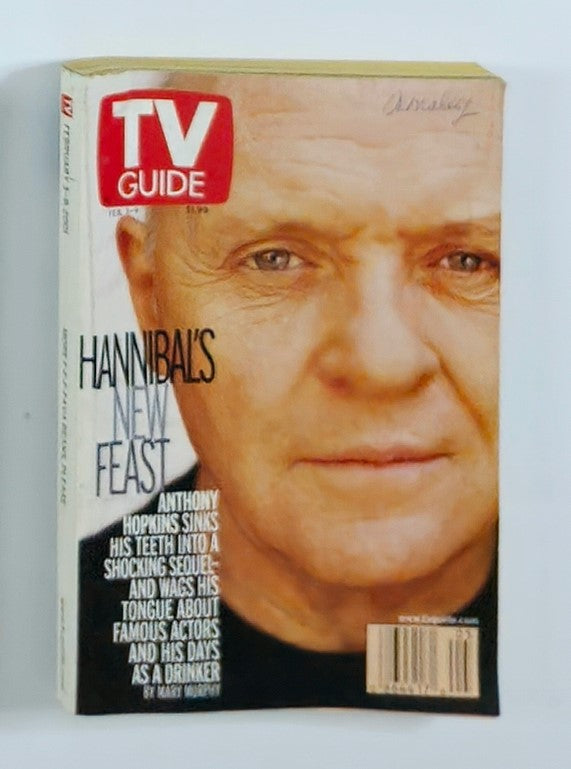
Few careers in the history of dramatic arts trace as haunting and triumphant an arc as that of Sir Anthony Hopkins. Born in Port Talbot, Wales, in 1937, he emerged from the rigorous traditions of the British stage — shaped by the Royal National Theatre and the towering shadow of Laurence Olivier — before becoming one of cinema's most electrifying and unpredictable presences. For decades, audiences encountered him first through the printed page: a brooding profile in a weekend supplement, a theatrical review in a broadsheet, or a breathless feature following his 1991 transformation into Dr. Hannibal Lecter — a performance so psychologically complete that it permanently altered the public's understanding of what screen acting could achieve. In an era before streaming and social media, the magazine rack was where reputations were built and legends were confirmed. His journey from stage-trained Welsh character actor to Academy Award-winning icon — punctuated by periods of personal struggle, sobriety, and creative reinvention — unfolded in real time across the glossy and literary pages of the 20th century's most beloved publications.
Inside the Archive
Vintage magazine coverage of Sir Anthony traces the full dramatic sweep of a life lived at full intensity. In his early theatrical years, British publications such as The Stage and cultural weeklies documented his classical work with reverence, framing him within the grand lineage of Welsh and British acting talent. As his film career accelerated through the 1970s and 1980s — anchored by celebrated performances in The Elephant Man, The Bounty, and his towering television portrayal of Adolf Hitler in The Bunker — international arts and entertainment magazines began to take serious notice. Time magazine granted him the kind of cerebral, analytical coverage befitting a serious dramatic artist, while Premiere and Empire captured the cinematic world's fascination with his method and intensity in richly photographed, long-form profiles. Following his Oscar triumph for The Silence of the Lambs, People and Vanity Fair brought his story to its widest audience yet — featuring stark, commanding portrait photography that leaned into his penetrating gaze and granite stillness, the visual language of a man who had mastered the art of stillness as power. The editorial tone across these decades shifted from respectful admiration to something closer to awe.
Curator's Checklist: Highlights Often Include
- Post-Silence of the Lambs cover features (1991–1993): Our archive often surfaces issues from the extraordinary cultural moment following his Oscar win, when editors worldwide scrambled to profile the Welsh actor who had made the world afraid to eat fava beans — frequently pairing dramatic close-up portraiture with deep career retrospectives.
- British theatrical and arts press from the 1960s–1970s: Collectors often look for early-career documentation of his National Theatre period and his complex relationship with — and eventual departure from — the British stage establishment, offering a rare window into his formative artistic identity.
- Television landmark coverage: The critical and popular response to his BBC and American television work, including War and Peace and The Bunker, was extensively covered in weekly entertainment guides and arts supplements — issues that now serve as primary documents of a transitional moment in prestige television history.
- Personal reinvention narratives (1970s–1980s): Coverage of this era frequently includes remarkably candid interviews in which the Welsh actor discussed his struggles with alcoholism and his hard-won sobriety — a story that resonated deeply with readers and was handled with unusual journalistic gravity by publications of the period.
- Late-career renaissance features (1990s–2000s): Following The Remains of the Day, Nixon, and Amistad, serious literary and cultural magazines explored his extraordinary late-prime productivity, with collectors often finding multi-page analyses that placed him alongside the greatest screen actors of the 20th century.
The Collector's Value
To hold one of these original issues is to hold something that no digital archive can replicate — the particular weight of a 1992 glossy, its cover ink still vivid, its pages carrying that faintly sweet, slightly woody perfume of decades-old paper stock that serious collectors recognize instantly. The vintage advertisements surrounding these features are themselves a time capsule: cologne brands, automobile spreads, and cigarette campaigns that frame Sir Anthony's story within the full texture of the era in which it was told. There is no algorithm between you and the original editorial vision — only the exact pages that readers turned in barbershops, waiting rooms, and living rooms across Britain, America, and beyond. For collectors of classic cinema memorabilia, British cultural history, or the golden age of Hollywood character acting, these publications offer an irreplaceable primary source — journalism, portraiture, and cultural memory fused into a single, holdable object. Explore our current rotating inventory below and discover which rare originals are available today.