📖 About this Collection
Anwar Sadat: Architect of Peace, Martyr of History
The Legend & The Legacy
In an era before rolling news alerts and social media, the world learned about Anwar Sadat through the weight of a printed page. The Egyptian president who dared to stand before the Israeli Knesset in 1977, who shook hands with Menachem Begin on the White House lawn, and who paid for that courage with his life in 1981 — his story unfolded issue by issue, edition by edition, in the hands of millions of readers across the globe. He was at once a soldier, a statesman, a Nobel laureate, and a deeply polarizing figure whose every gesture carried the trembling possibility of either war or peace. At a time when the Cold War cast long shadows over the Middle East and the Arab world was fractured by ideology and pride, this former revolutionary from the banks of the Nile stepped onto the world stage with a theatrical audacity that mesmerized journalists, frightened generals, and quietly gave hope to ordinary people who had known nothing but conflict. To hold a magazine from that era is to hold the suspended breath of an entire civilization.
Inside the Archive
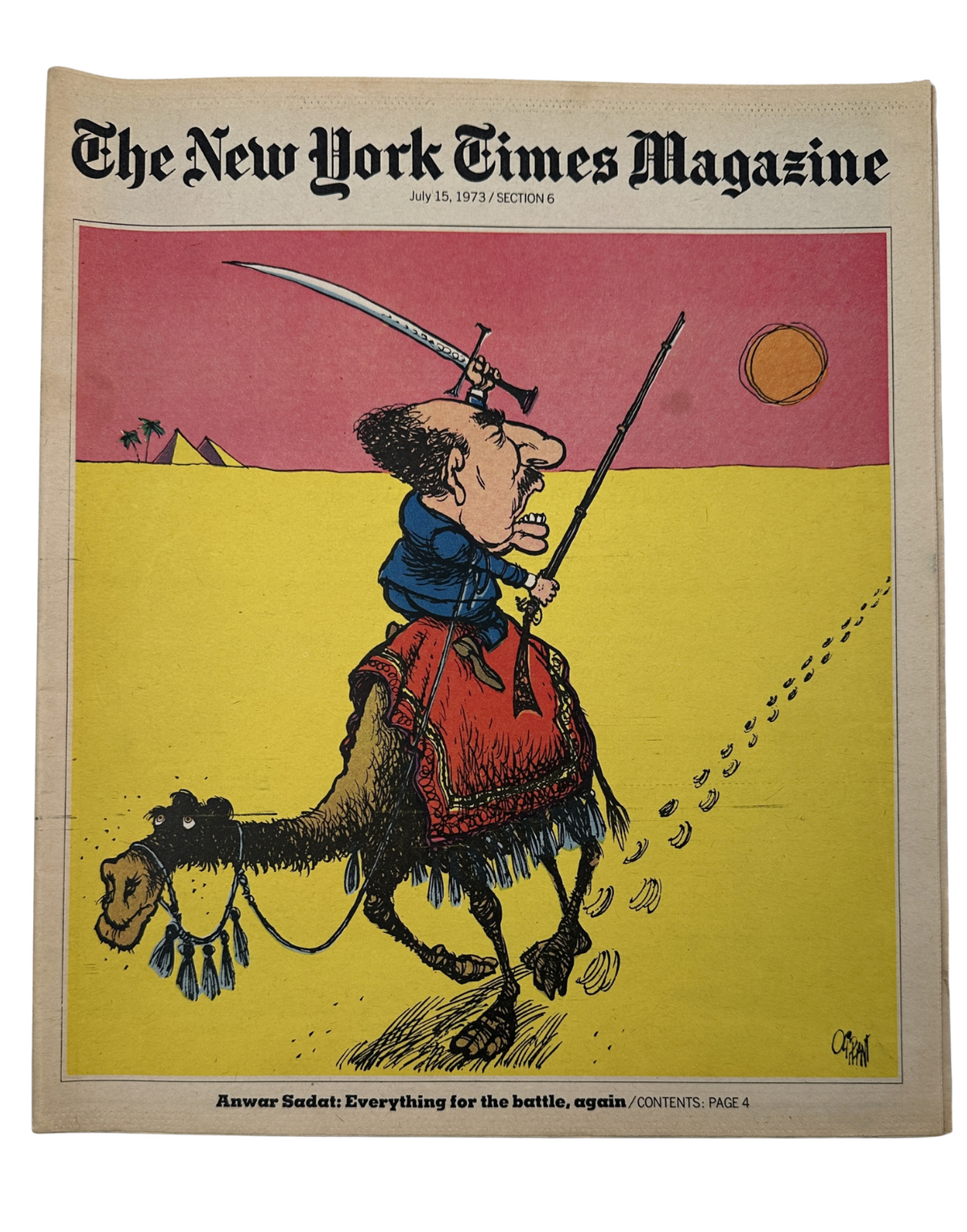
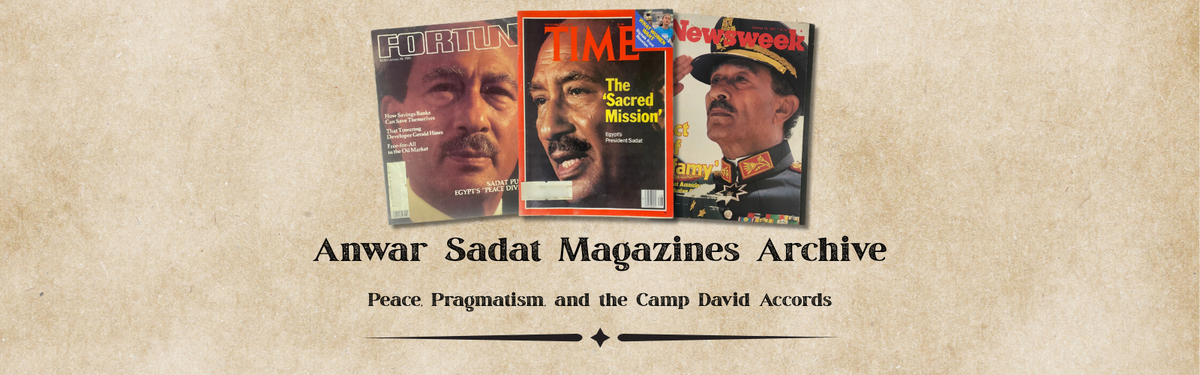
Vintage publications of the late 1970s and early 1980s treated the Egyptian president with the visual gravitas befitting a man reshaping the map of the Middle East. Editorial photographers captured him in the full iconography of power — the Marshal's uniform adorned with medals, the signature pipe clenched thoughtfully between his fingers, the dignified profile that spoke of both ancient pharaonic lineage and modern geopolitical drama. TIME magazine, perhaps more than any other publication, chronicled his ascent and his contradictions with unflinching depth, famously naming him among the most consequential figures of his age and featuring him across multiple landmark covers throughout the Camp David era. Paris Match, with its uniquely European eye for historic pageantry, brought French and international readers sweeping photographic essays on the Camp David Accords and the scenes of somber ceremony following his assassination. Newsweek, its foreign affairs coverage at its absolute zenith during this period, offered readers incisive long-form analysis of the peace process alongside striking portraiture — treating the man not merely as a news subject, but as a historical actor whose decisions would echo for generations. Together, these publications form an irreplaceable visual and editorial record of one of the twentieth century's most consequential diplomatic chapters.
Curator's Checklist: Highlights Often Include
- The Jerusalem Moment, November 1977 — Coverage of his landmark address to the Israeli Knesset, an act so audacious it stunned the Arab world and transfixed Western media; collectors frequently seek out issues that captured the historic imagery of his arrival on Israeli soil
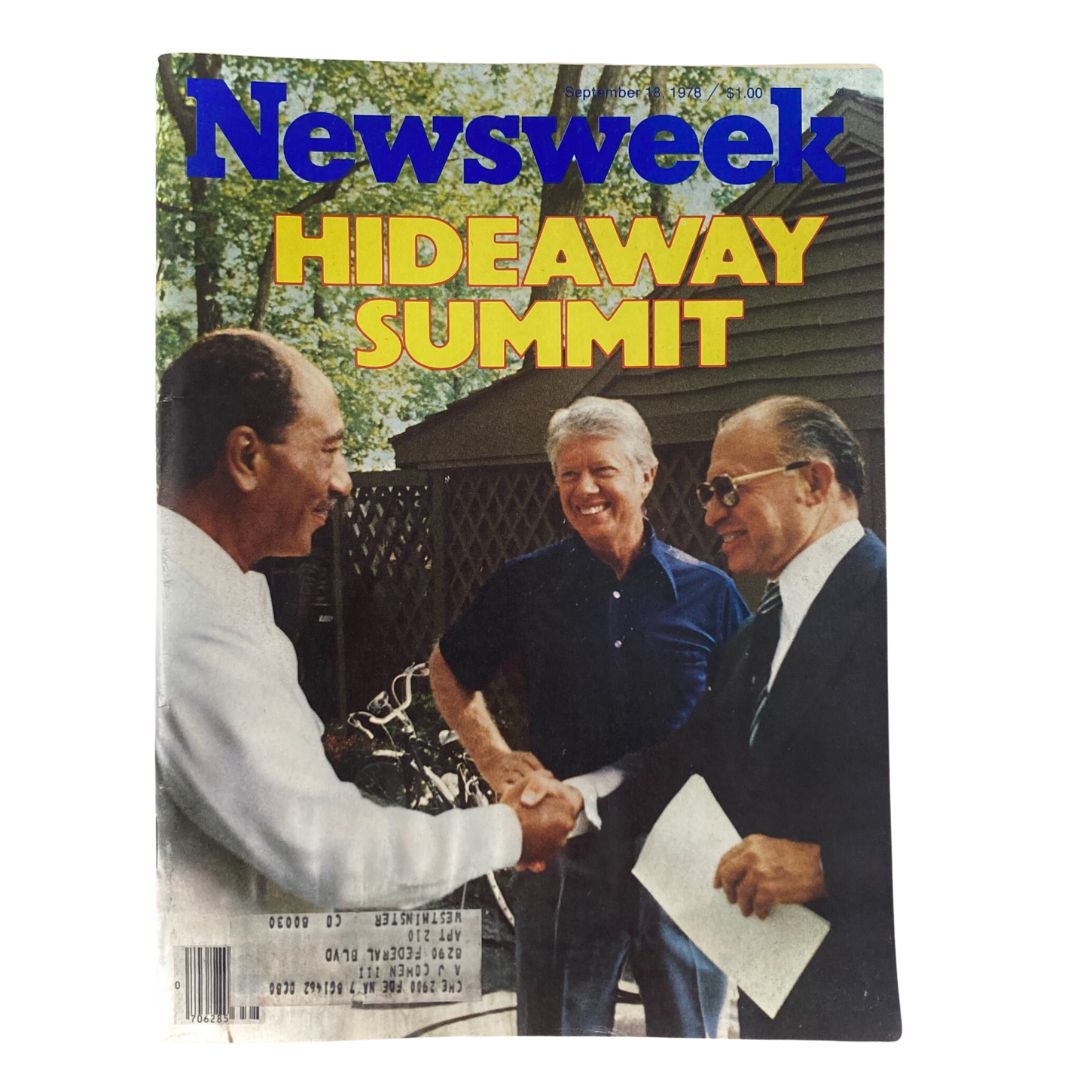
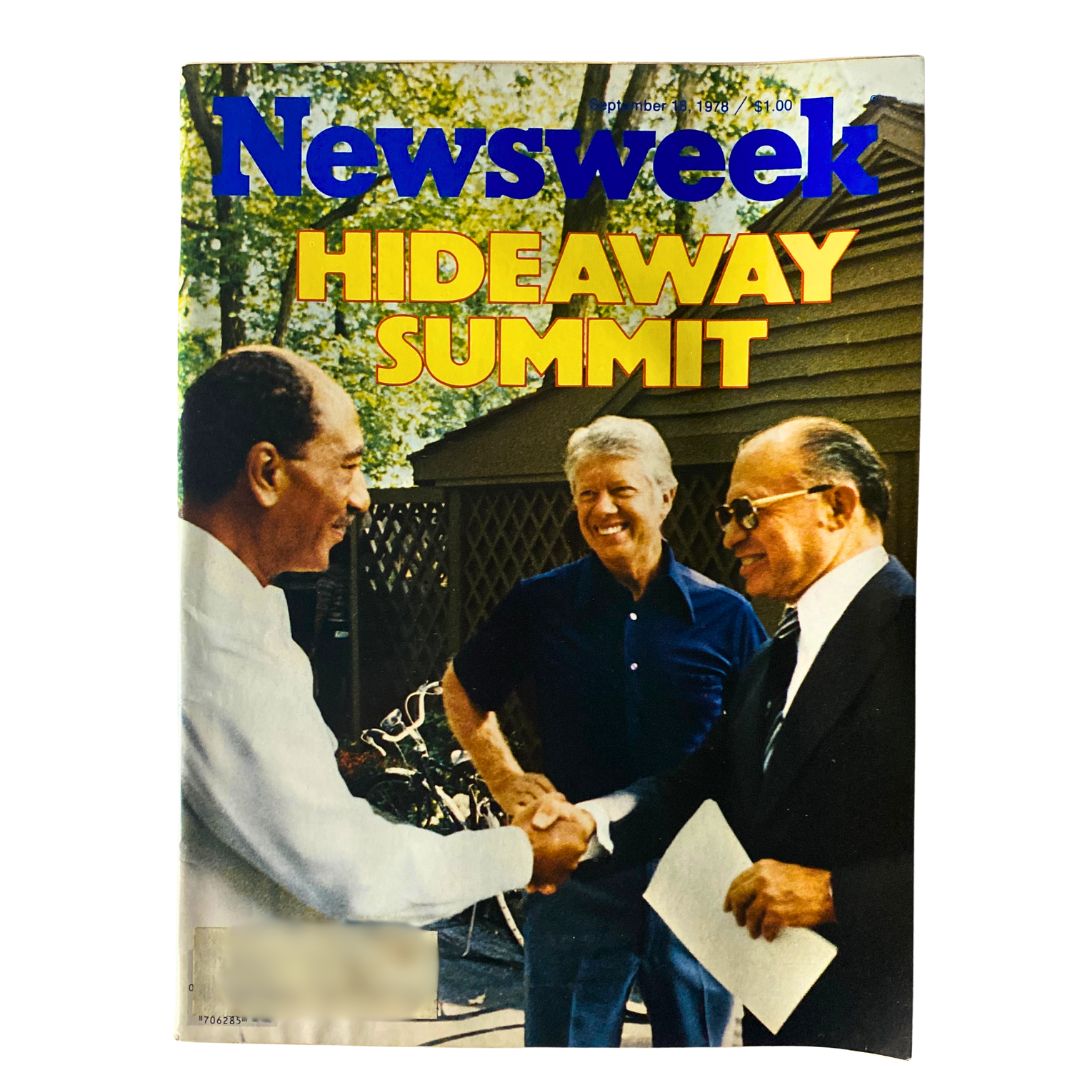
- Camp David Accords, September 1978 — Issues documenting the thirteen-day summit brokered by President Carter, featuring the celebrated three-way handshake that became one of the most reproduced diplomatic photographs of the century
- The Nobel Peace Prize, 1978 — Editorial coverage marking his joint award with Menachem Begin, often accompanied by reflective profiles examining his extraordinary transformation from imprisoned dissident to international peacemaker
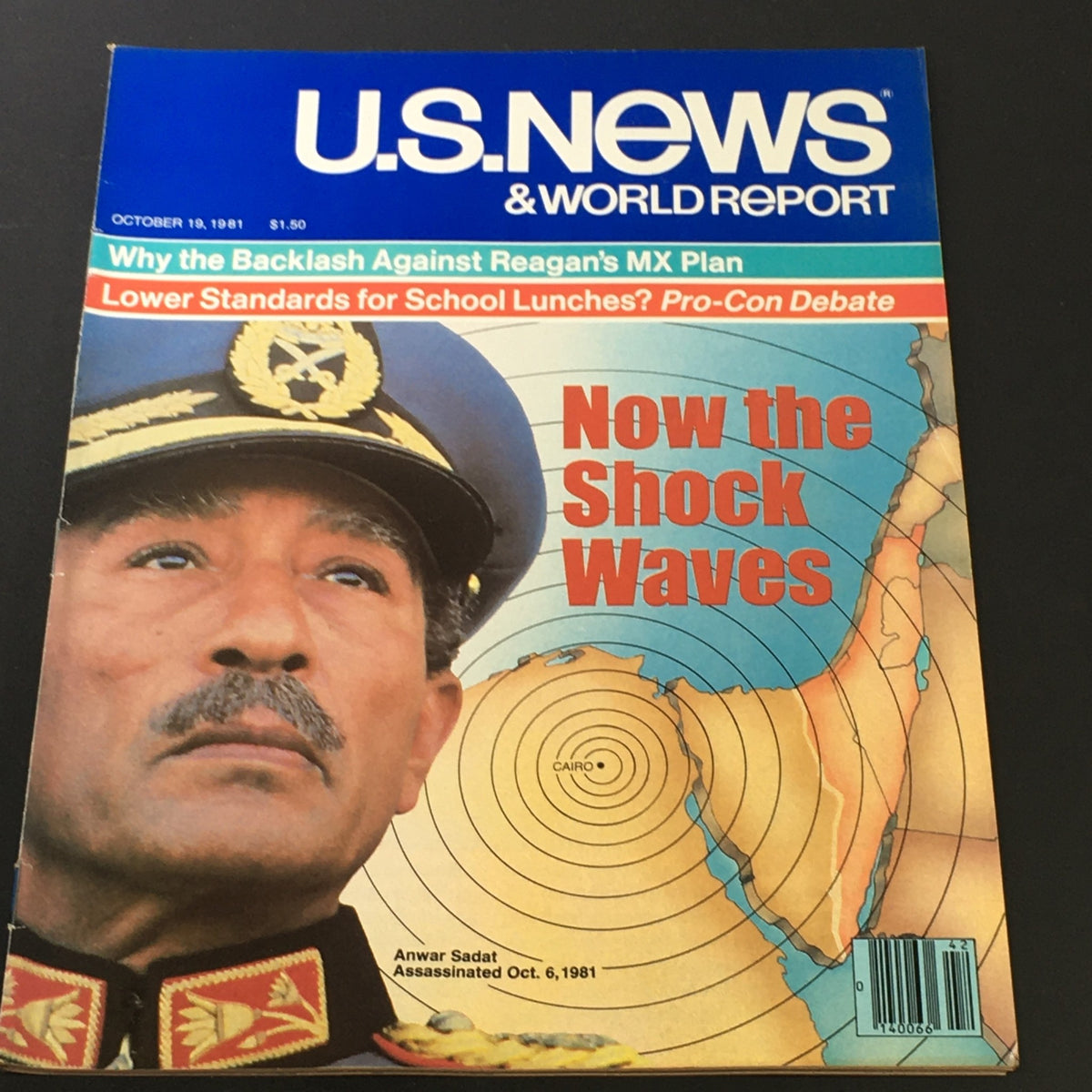
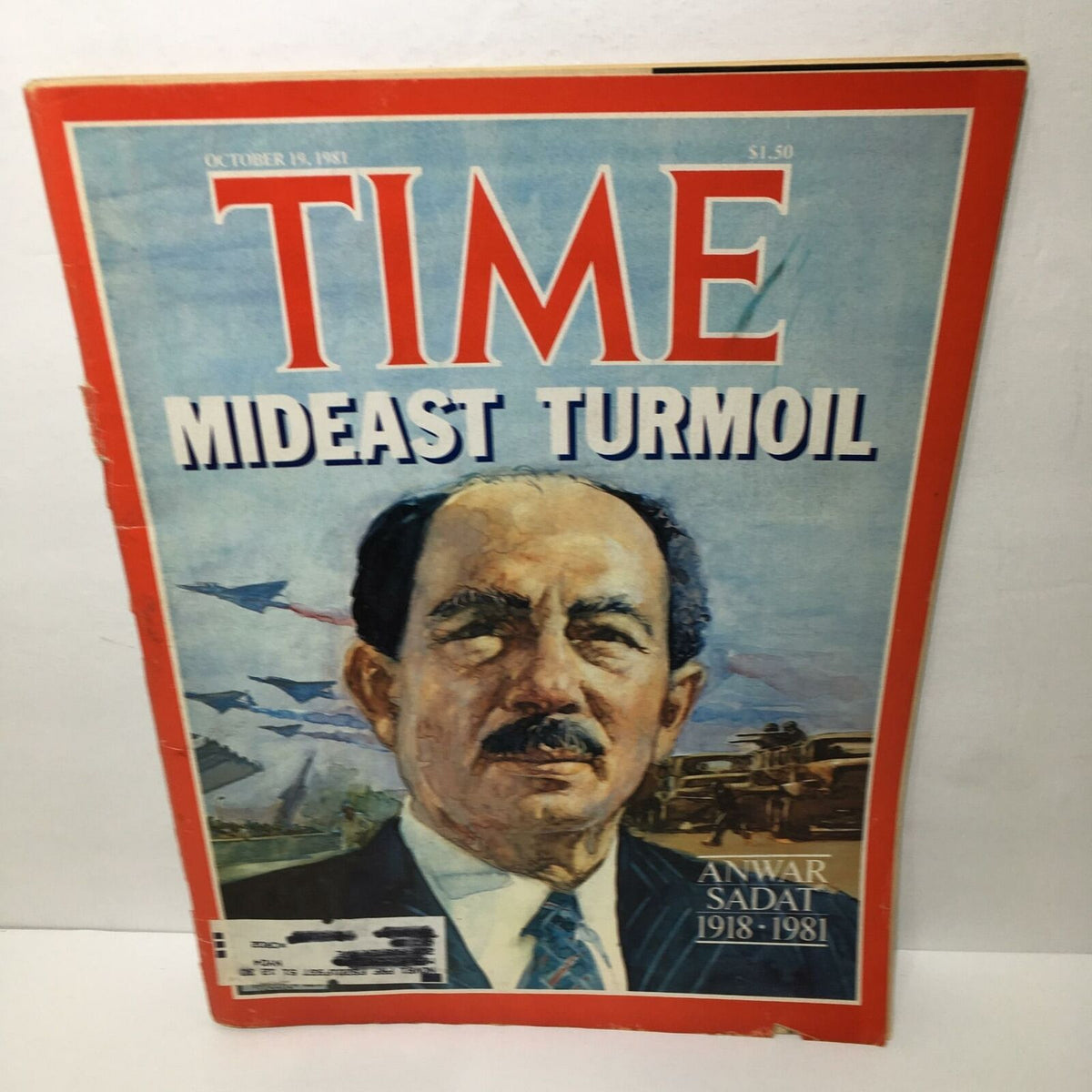
- The Assassination and Its Aftermath, October 1981 — Memorial issues and special editions following his killing during a military parade in Cairo; these somber, historically significant editions — featuring world reactions, funeral processions, and tributes from global leaders — are among the most sought-after by serious collectors
- Cold War and Middle East Geopolitics — Broader foreign affairs issues in which the Egyptian leader figures prominently within the grand strategic chess game between Washington and Moscow, offering rich contextual coverage of the region's volatile realignment during this period
The Collector's Value
There is something irreplaceable about encountering this history not on a glowing screen, but through the sensory intimacy of original print — the slight yellowing at the margins of aged newsprint, the dense, slightly waxy feel of a 1970s coated magazine page beneath your fingertips, the faint petroleum sweetness of ink that was set when these events were still unfolding. Surrounding the editorial coverage, the period advertisements tell their own parallel story: airline promotions for Pan Am, luxury watches, American automobile culture — a vivid material world that digital archives strip entirely away. These are not reproductions or retrospectives; they are primary sources, printed in real time, by journalists who did not yet know how the story would end. For collectors of Cold War history, Middle Eastern political history, or twentieth-century diplomatic milestones, these publications offer an unmediated connection to one of the most consequential peace efforts of the modern age — a tactile archive that no documentary or e-book can replicate. Explore the current available inventory below, and discover which pieces of this remarkable chapter in history are waiting to find a home in your collection.