📖 About this Collection
Ariel Sharon: The Iron General Between War and Peace
The Legend & The Legacy
Few figures in modern Middle Eastern history commanded the room — and the front page — quite like Ariel Sharon. From his battlefield audacity during the 1948 Arab-Israeli War to the daring crossing of the Suez Canal in 1973 that turned the tide of the Yom Kippur War, and from the political firestorms of the 1982 Lebanon War to his seismic, late-career reinvention as the architect of the 2005 Gaza disengagement, Sharon's life unfolded across more than five decades of geopolitical consequence. In an era before rolling news chyrons and social media alerts, the world processed his contradictions — warrior, statesman, provocateur, peacemaker — through ink on paper. Readers in Tel Aviv, Paris, London, and New York tore open their weekly magazines to find his weathered face staring back from the cover, each issue a dispatch from the epicenter of one of history's most contested regions. He was a man who seemed to materialize at every hinge point of Israeli history, as though the nation's most consequential moments could not occur without him present — either as their architect or their most volatile participant. He was never a figure of quiet corners; he belonged to the bold, saturated cover stock of the great print era. To read his story through the magazines of his time is to read the unfiltered first draft of history itself — urgent, opinionated, and magnificently unresolved.
Inside the Archive
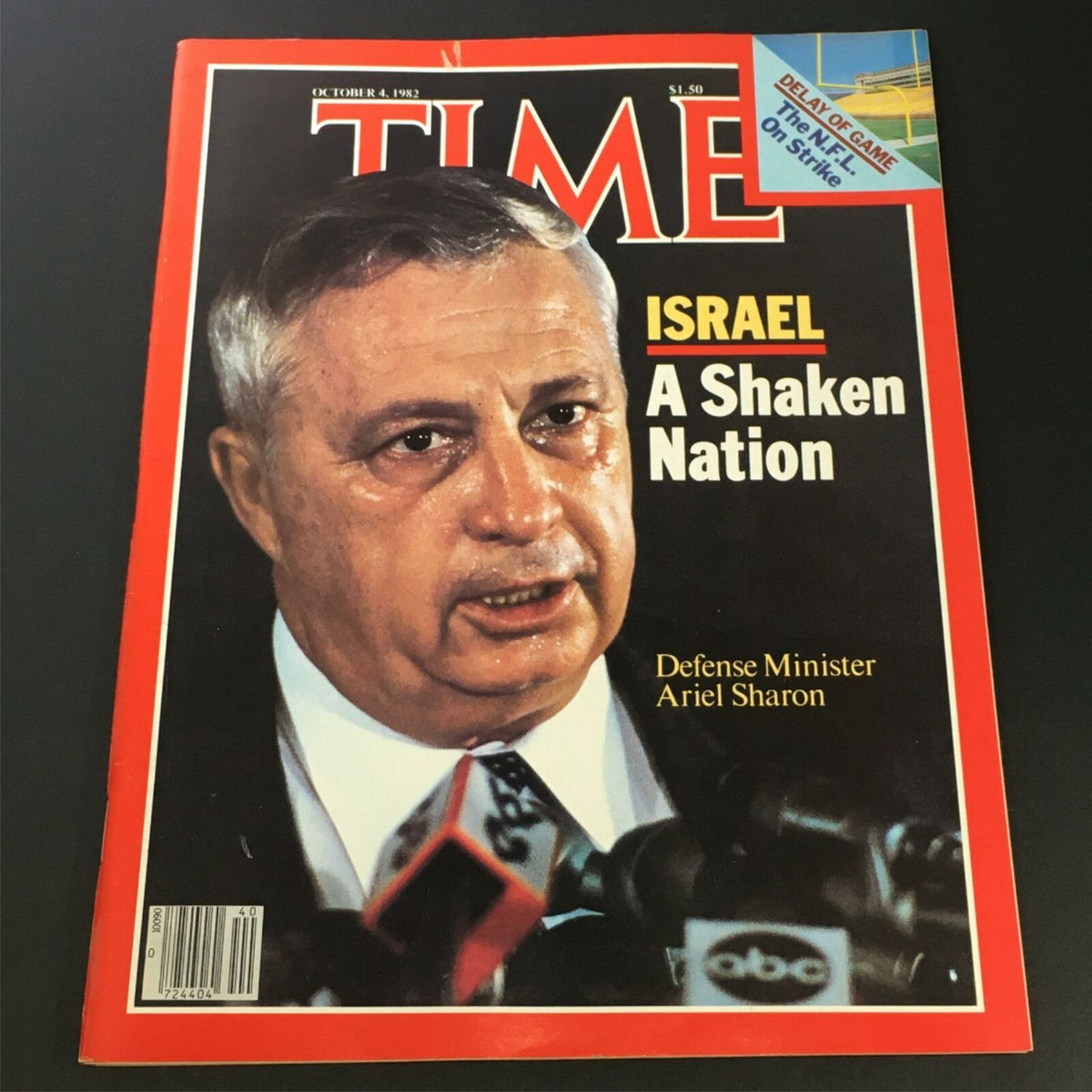
The press coverage of Sharon across his peak decades was as layered and contested as the man himself. International news weeklies favored dramatic, high-contrast photography — Sharon in military fatigues on the front lines of the Sinai, or later, in the tailored suit of a cabinet minister navigating the labyrinthine politics of the Knesset. Time magazine returned to him repeatedly, treating him as an indispensable lens through which to examine the Israeli-Palestinian conflict, running in-depth profiles during the 1982 Lebanon War and again during the Second Intifada. Newsweek offered pointed, often critical analysis of his military campaigns alongside striking portrait photography that captured his bullish physicality and unreadable resolve. Meanwhile, the French weekly Paris Match, with its unrivaled tradition of photographically driven geopolitical storytelling, brought the human drama of the Middle East wars to European readership with Sharon frequently at the narrative center. Israeli publications such as Bamahane, the Israel Defense Forces' storied military magazine, covered his battlefield career from the inside — offering a domestic perspective rarely accessible to Western collectors — while broader Hebrew-language news magazines documented his political ascent with an intimacy that transcended the international wire. British publications including The Economist and New Statesman brought their characteristically measured, analytical tone to bear on his most controversial decisions, situating him within the broader Cold War geopolitical chessboard in ways that American weeklies seldom attempted. Across all of these outlets, one constant remained: no editor could resist him. He was, in the truest sense of the word, a cover story — decade after decade, crisis after crisis, reinvention after reinvention.
Curator's Checklist: Highlights Often Include
-
Yom Kippur War coverage (1973): Issues from October and November 1973 frequently feature Sharon's celebrated — and controversial — crossing of the Suez Canal, with maps, battlefield photography, and heated analysis of his defiance of military orders in the pursuit of victory. Some issues from this period include rare color photography from the front lines, making them among the most visually dramatic of the entire Arab-Israeli conflict archive.
-
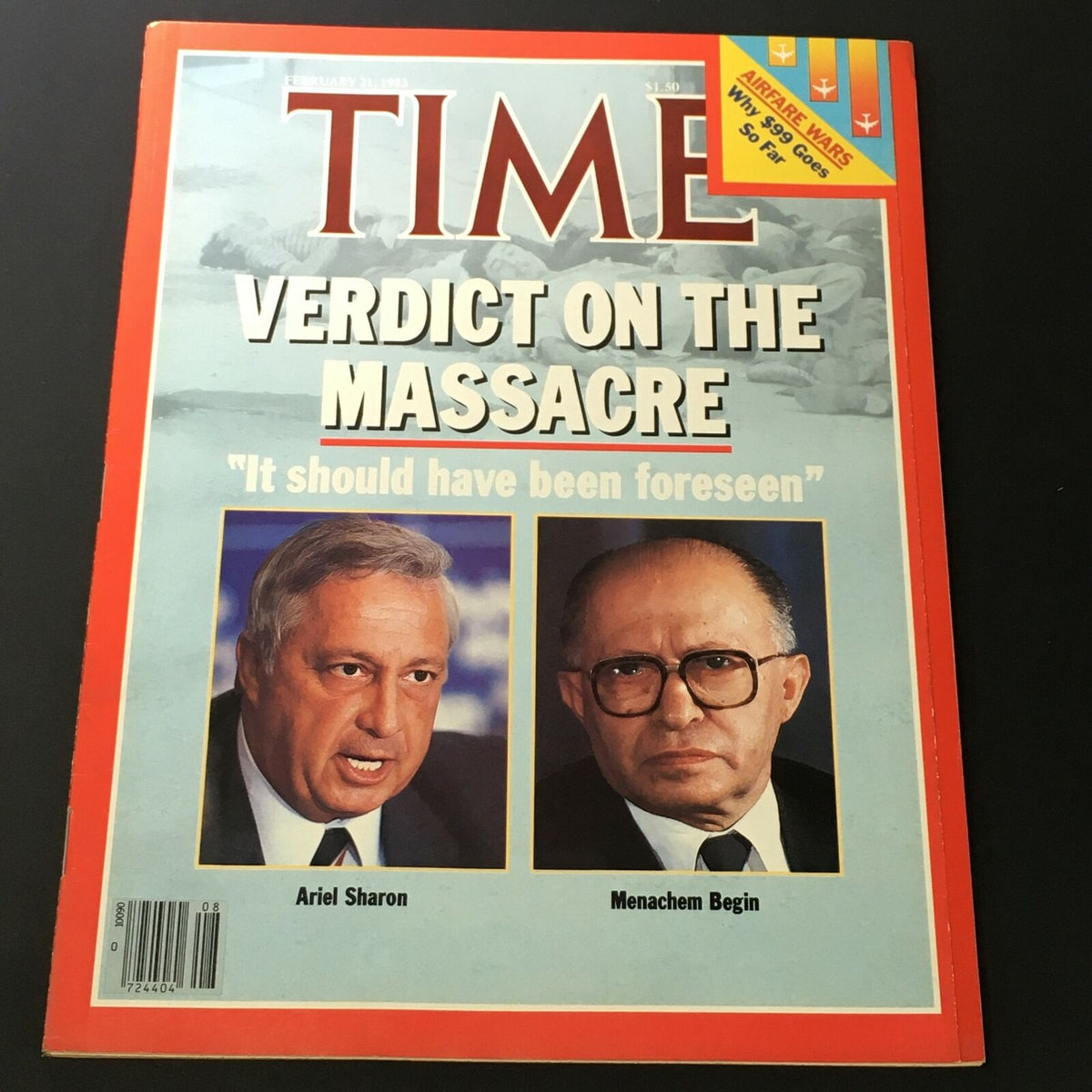
Lebanon War and the Sabra and Shatila aftermath (1982): Editorial coverage from this period tends to be among the most intense of his career, with international magazines publishing investigations, opinion pieces, and the findings of the Kahan Commission that would reshape his political standing for years. Issues from late 1982 and early 1983 often capture the global moral reckoning that followed, reflecting a press corps grappling openly with questions of military command, accountability, and the limits of wartime justification.
-
The "Bulldozer" in power — Sharon as Defense Minister and Prime Minister: Profile-driven issues documenting his political resurrection through the late 1990s and 2000s, often featuring the iconic imagery of a heavyset, white-haired elder statesman who somehow retained the aura of the general. Coverage from this era frequently wrestles with the central paradox of his late career — that the man long considered an obstacle to peace had, seemingly against all expectation, chosen to dismantle settlements and redraw the map unilaterally.
-
The Gaza Disengagement (2005): A defining late-chapter story covered extensively across world affairs publications — the unilateral withdrawal that stunned allies and enemies alike and reframed his legacy in real time. Collectors seeking issues from this period often find rich editorial photography of the settler evacuations alongside probing long-form journalism that attempted to decode the motivations of a man who had spent a lifetime defying easy interpretation.
-
The stroke and its aftermath (2006): A quieter but historically significant chapter, with thoughtful retrospective and biographical issues examining the abrupt end of his active life and the outpouring of reflection from world leaders. Many publications used the occasion to publish sweeping career retrospectives, making issues from early 2006 unexpectedly rich in archival photography and historiographical reflection — a remarkable and melancholy monument to a life interrupted at its most intriguing chapter.
The Collector's Value
To hold a vintage magazine featuring Ariel Sharon is to hold a primary source document from one of the most turbulent theaters of twentieth-century history. These are not reprints or digital facsimiles — they are original artifacts printed under the urgency of breaking news, their paper stock now warmly aged to that unmistakable ivory, the ink carrying a faint, irreplaceable mustiness that no screen can replicate. Run your fingers across a 1973 Time cover and you feel the grain of an era when print was the authority, the arbiter, the town square. The advertisements nestled between the editorial pages — for whiskeys, automobiles, and airlines long since transformed — complete the time capsule, grounding each political headline in the texture of daily life as it was actually lived. There is something profoundly different about reading an editorial written in the heat of a crisis — before the verdicts of history were handed down, before the retrospectives were written — and these magazines preserve that rawness with perfect fidelity. The photographs, too, carry a weight that digital archives cannot replicate: full-bleed, richly printed on the glossy stock of the great mid-century weeklies, they freeze expressions, landscapes, and moments that defined a half-century of conflict with an immediacy that still arrests the eye today. For collectors of Cold War and Middle Eastern geopolitical history, Israeli military and statehood memorabilia, or vintage international news and photojournalism, these publications offer an irreplaceable window into a life that shaped borders, sparked wars, and ultimately defied every easy categorization history tried to impose upon it. Each issue is simultaneously a collectors' object, a research document, and a deeply human artifact — proof that history was not inevitable, but lived, reported, and argued over in real time. Explore the current issues available in our archive below, and find the piece of history that belongs in your collection.