📖 About this Collection
Barry White: The Velvet Archive — Printed Testaments to the Maestro of Love
The Legend & The Legacy
Long before streaming algorithms curated romance and digital playlists set the mood, there was one voice — rich as mahogany, deep as the ocean floor — that the world turned to for intimacy. Barry White didn't simply make music; he architected an entire emotional universe, one orchestral swell at a time. Rising from the streets of South Central Los Angeles, he transformed personal hardship into symphonic opulence, becoming the unlikely sovereign of soul and orchestral funk throughout the 1970s and into the decades that followed. His Love Unlimited Orchestra brought cinematic grandeur to R&B at a moment when American culture was desperately hungry for glamour and feeling. Magazines of the era didn't merely report on his success — they grappled with it, marveled at it, and ultimately celebrated him as a phenomenon that defied easy categorization. In an age when a single cover placement in the right publication could define a career, Barry White graced the pages of print with the same effortless authority he brought to the recording studio.
Inside the Archive
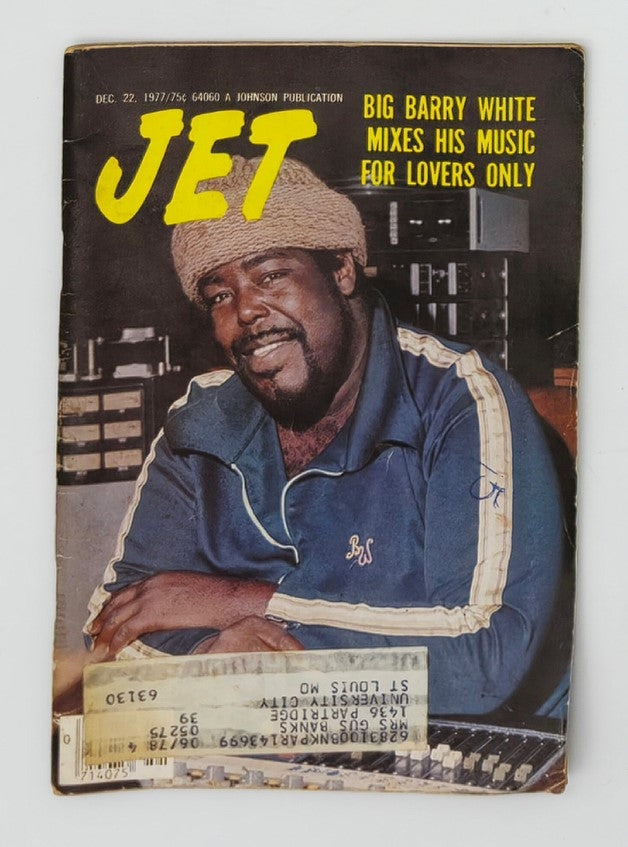
Vintage magazine coverage of the Maestro was as lush and considered as the man himself. Editorial photography from his peak years — the mid-1970s through the early 1980s — favored opulent settings: velvet, candlelight, fur, and the kind of studio portraiture that communicated wealth, sensuality, and artistic seriousness in equal measure. Ebony and Jet, the twin pillars of Black American cultural journalism, covered him with particular reverence and depth, contextualizing his artistry within the broader landscape of Black excellence and the evolving soul music movement. Rolling Stone approached him through the lens of crossover cultural phenomenon, wrestling thoughtfully with how a Black artist from Los Angeles had conquered both pop charts and adult contemporary radio simultaneously. Meanwhile, international publications — particularly in the United Kingdom and continental Europe, where his orchestral soul found devoted audiences — offered a fascinatingly different perspective, treating him with the kind of serious artistic regard that European music press routinely extended to American soul and funk artists of the period.
Curator's Checklist: Highlights Often Include
- Peak-era soul and R&B features from the mid-1970s, covering the explosive commercial success of Can't Get Enough and Just Another Way to Say I Love You, often accompanied by richly styled studio photography
- Love Unlimited Orchestra profiles exploring his role as composer, arranger, and producer — a creative visionary behind one of the most distinctive sounds of the decade
- Crossover cultural coverage from mainstream pop and entertainment weeklies documenting his remarkable appeal across racial, generational, and geographic audiences
- International and European music press features, particularly from British publications, that treated him as a serious orchestral artist deserving of critical analysis beyond the bedroom-music caricature
- Career retrospective and comeback coverage from the late 1980s and 1990s, including renewed critical attention following collaborations and his celebrated cultural resurgence
The Collector's Value
To hold one of these original issues is to hold a moment in time that no digital archive can authentically replicate — the slightly coarse texture of period newsprint beneath your fingertips, the faintly sweet oxidized scent of decades-old ink, the vivid yet subtly aged color saturation of photographs printed before the pixel ever existed. Surrounding the Maestro's features, you will find the full cultural panorama of his era: advertisements for vinyl records, luxury automobiles, and fashion labels that transport you instantly back to the decade that made him a legend. These are primary source documents — editorial voices speaking in real time about an artist whose impact they were only beginning to measure. For collectors of vintage soul and R&B memorabilia, 1970s popular culture, or the golden era of orchestral funk, these publications offer an irreplaceable window into the world that crowned Barry White its uncontested king of romantic music — evidence, printed on paper, that the love was always real. Explore the current available inventory below and find your piece of the archive.