📖 About this Collection
Bob Gibson: The Arm That Rewrote the Rules of Fear
The Legend & The Legacy
In an era when baseball was both America's pastime and its cultural mirror, Bob Gibson stood apart — not merely as a pitcher, but as a force of nature that the sport had never quite encountered before. Through the turbulent 1960s and into the early 1970s, the St. Louis Cardinals' ace dominated the national conversation with a ferocity that transcended box scores. His legendary 1968 season — a 1.12 ERA so historically aberrant that Major League Baseball lowered the pitcher's mound in direct response — became front-page news across the country, debated in barbershops, living rooms, and editorial boardrooms alike. In those pre-internet decades, fans did not have highlight reels or instant replays; they had the printed page. A glossy magazine photograph of Gibson in his windup — eyes locked, jaw set, the Cardinals red blazing against the diamond green — was as close as most Americans ever got to the sheer, controlled fury of facing him from sixty feet, six inches away. He was more than an athlete. He was a statement.
Inside the Archive
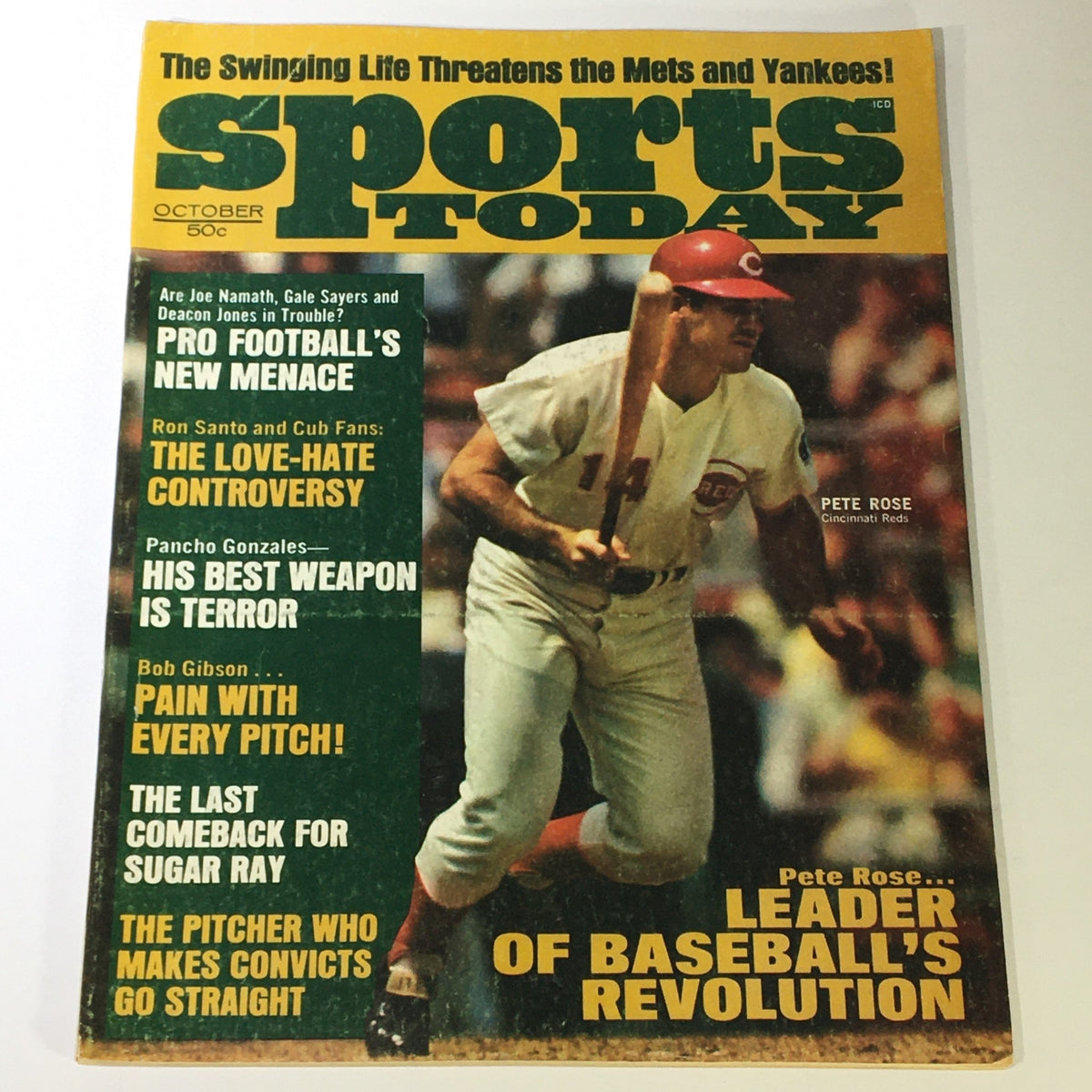
Vintage magazines of the 1960s and 1970s captured Gibson with an editorial intensity befitting a man who seemed to intimidate the camera itself. Sports Illustrated returned to him repeatedly, devoting long-form features to both his on-field dominance and his famously unapologetic competitive philosophy — photographers catching him in moments of coiled readiness that felt less like sport and more like theater. Ebony and Jet covered the Gibson story with particular depth and cultural resonance, contextualizing his ferocity and pride within the broader narrative of Black excellence in an America still wrestling with its own contradictions — his refusal to coddle batters a metaphor many readers understood extended well beyond baseball. Life magazine, with its sweeping photographic ambition, occasionally trained its lens on the Cardinals dynasty of that era, and Gibson — looming, dominant, impossible to ignore — was never far from the frame. The photography of the period leaned into drama: tight close-ups of that legendary glare, action sequences that conveyed velocity even in still images, and candid clubhouse portraits that humanized the myth just enough to make the myth all the more compelling.
Curator's Checklist: Highlights Often Include
- The 1968 Season Coverage — Features and retrospectives on what many call the greatest single pitching season in baseball history, with statistical deep-dives and profiles published in the immediate aftermath of that extraordinary year
- World Series Issues — Gibson led the Cardinals to World Series appearances in 1964, 1967, and 1968, and championship-era issues from those autumns are among the most sought-after by collectors of the period
- Civil Rights Era Profiles — Coverage exploring Gibson's identity as a proud, uncompromising Black athlete during the height of the Civil Rights Movement, particularly in African American press publications that situated him within that larger history
- Rivalry & Pitching Duel Features — Editorial spreads examining his legendary confrontations with the era's greatest hitters — Hank Aaron, Willie Mays, Frank Robinson — framed with the dramatic language of gladiatorial contest
- Post-Career Retrospectives & Hall of Fame Induction (1981) — Sports weeklies and monthly publications marking his entry into Cooperstown, with reflective long-form essays reassessing his place among the all-time greats
The Collector's Value
There is something irreplaceable about holding a magazine from 1968 that covered Gibson's historic season while the ink was still, in a sense, fresh with disbelief — the slightly waxy resistance of the coated stock beneath your fingers, the faint, familiar musk of mid-century print, and the added wonder of the surrounding advertisements: Chevrolet, Schlitz, Gillette, a world perfectly preserved in amber around a man who was rewriting history in real time. These are not reprints or digital scans. They are primary source documents — journalism produced by writers who watched him pitch, photographers who stood in the same stadium air. For collectors of vintage baseball memorabilia, African American cultural history, or 1960s Americana, these publications offer an unmediated window into a era that shaped modern sport and modern America in equal measure, told through the visual and editorial language of its own time. Explore the current available inventory below and discover which pieces of that irreplaceable past are waiting to find a new home.