📖 About this Collection
Bob Marley: The Rhythm of a Revolution, Pressed in Ink
The Legend & The Legacy
Few figures of the twentieth century crossed borders — geographic, cultural, and spiritual — with the effortless grace of Robert Nesta Marley. Rising from the zinc-roofed yards of Trench Town, Jamaica, he carried an entire philosophy of liberation into the global consciousness, transforming reggae from a regional sound into a universal language of resistance, love, and redemption. In an era before streaming and social media, his story reached the world through the printed page — through journalists who traveled to Kingston to document a prophet in motion, through concert photographers who captured the coiling dreadlocks and the ecstatic upturned face mid-performance, and through editors who sensed, rightly, that they were recording history. When Exodus was named Album of the Century by Time magazine, it was the culmination of decades of print culture slowly, insistently telling the world: this man matters. Long before algorithms could measure influence, magazines were the instrument by which his legend was calibrated and confirmed.
Inside the Archive
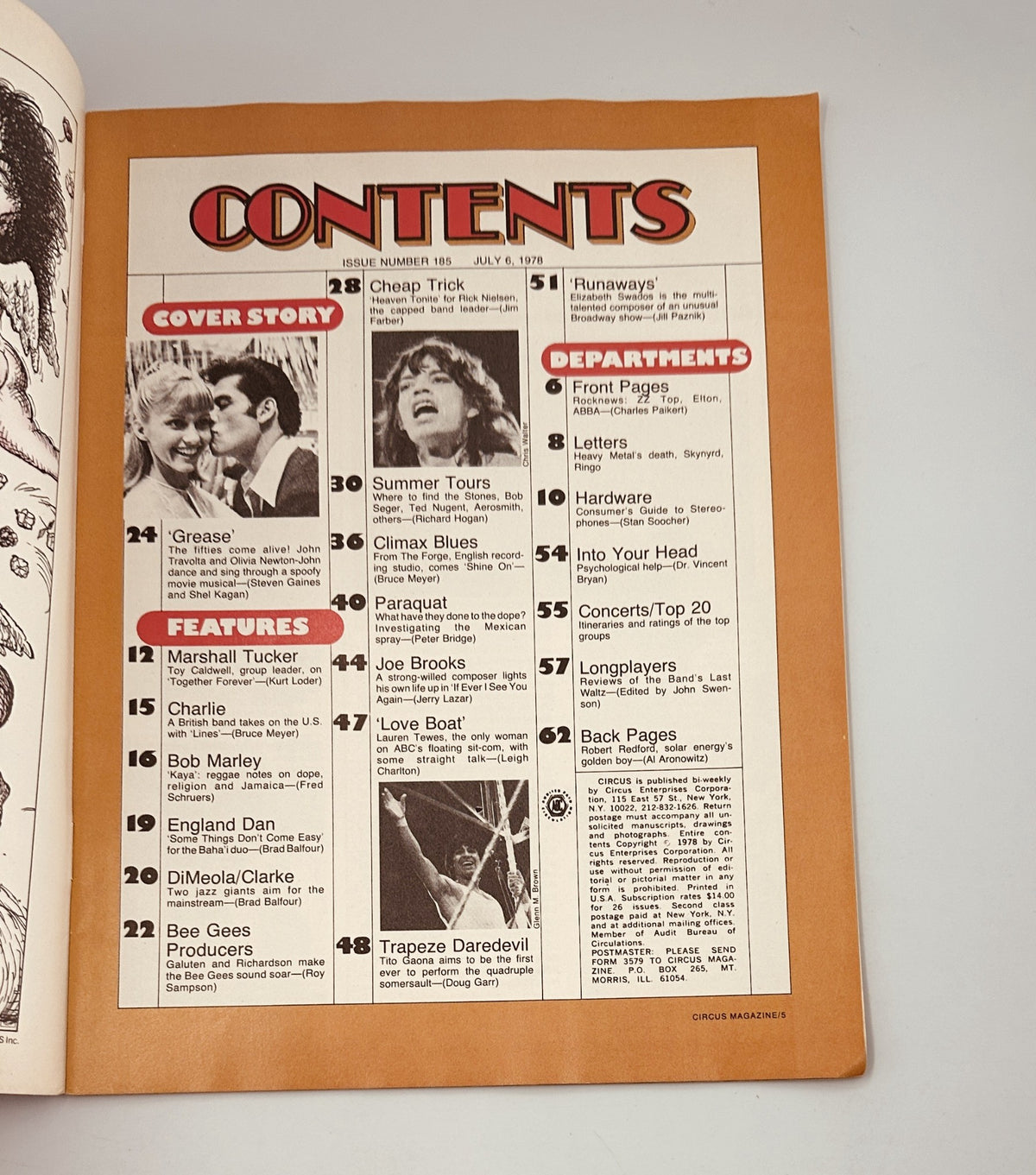
Vintage magazine coverage of the reggae icon occupies a fascinating editorial spectrum — from the counterculture music press that embraced him earliest, to the mainstream glossies that eventually recognized his transcendent crossover appeal. Publications like Rolling Stone documented his rise through intimate, often politically charged profiles, capturing both the mystic and the militant in their long-form journalism of the 1970s. Melody Maker and NME in the United Kingdom were among the first to grant him serious critical space, reflecting Britain's deep Caribbean diaspora and the explosion of reggae in the London music scene — their spreads often featuring stark, luminous concert photography drenched in stage smoke and spotlight. Ebony, meanwhile, approached his story through the lens of the Black global experience, framing his message of unity and resistance within a broader narrative of African identity and post-colonial pride. Photography across these publications tended toward the visceral and the devotional — images of him barefoot in a recording studio, wreathed in smoke, or commanding a stadium of thousands — lending the printed page the weight of a sacred document.
Curator's Checklist: Highlights Often Include
- Concert & Tour Coverage — Feature spreads and live photography from landmark performances, including the historic 1978 One Love Peace Concert in Kingston and legs of the Exodus and Survival world tours, where photographers captured him at the absolute height of his stage presence
- Album Release Features — Editorial coverage tied to seminal records such as Natty Dread, Rastaman Vibration, Exodus, and Uprising, with reviews and artist interviews that reveal how critics were processing his evolving artistry in real time
- Political & Cultural Profiles — Pieces exploring his role in Jamaican politics, his Rastafarian faith, and his broader Pan-African vision, often written during periods of heightened global interest following events like the attempted assassination in 1976
- International & Third World Press — Coverage from African, Caribbean, and European publications reflecting his extraordinary reach across the developing world, where he was received not merely as a musician but as a symbol of sovereignty and self-determination
- Posthumous Memorial Issues — Following his passing in May 1981, numerous publications issued tribute editions and retrospective features, representing some of the most emotionally resonant and collectible documents in this entire category
The Collector's Value
To hold an original vintage magazine featuring Bob Marley is to hold something the internet cannot replicate — a physical artifact from the moment the world was still learning his name. The slightly yellowed pages carry a warmth that modern paper never achieves; the ink has a depth and grain that speaks of an older, more deliberate craft; and the surrounding advertisements — for turntables, cigarettes, denim, and long-defunct record labels — place the reader irrevocably inside a specific, irretrievable moment in time. These are primary sources in the truest sense: not curated retrospectives or digital recreations, but the actual, unmediated response of editors and photographers and writers encountering a living legend. For collectors of reggae and music history, Rastafarian and Caribbean cultural heritage, or 1970s counterculture and social justice movements, these publications offer an irreplaceable window into both an era and an icon — tangible proof that the revolution was, in fact, printed. Browse the current available inventory below and discover which piece of that history is waiting to find a home with you.