📖 About this Collection
Douglas MacArthur: Supreme Commander of the American Century
The Legend & The Legacy
Few figures cast as long a shadow across the twentieth century as Douglas MacArthur — the imperious, corncob-pipe-wielding general whose career spanned three of America's defining conflicts and whose public persona became inseparable from the mythology of American military power itself. From the muddy trenches of the Western Front to the sun-scorched beaches of the Pacific, from the formal surrender ceremony aboard the USS Missouri to the frozen hills of Korea, the General's story unfolded in real time before a global audience that followed it almost entirely through the pages of print. In an era before television dominated the living room and long before the internet collapsed the distance between event and audience, newspapers and magazines were the theater in which MacArthur staged his grandest performances — and in which his fiercest controversies were tried. His dramatic return to the Philippines, his administration of occupied Japan, and his very public dismissal by President Truman in 1951 were all consumed by millions of Americans over breakfast tables and in barbershop waiting rooms, the ink still fresh, the emotion still raw. He was, in many ways, a figure made by print media — a commander who understood instinctively that the war for public perception was fought on the page as surely as any battle was fought on the beach. Editors knew his name sold copies; readers knew his dispatches shaped the world. No other American military figure of his era so completely fused the identity of soldier and symbol, and the magazines of his time reflect that fusion on every carefully composed cover and every breathlessly written inside spread.
Inside the Archive
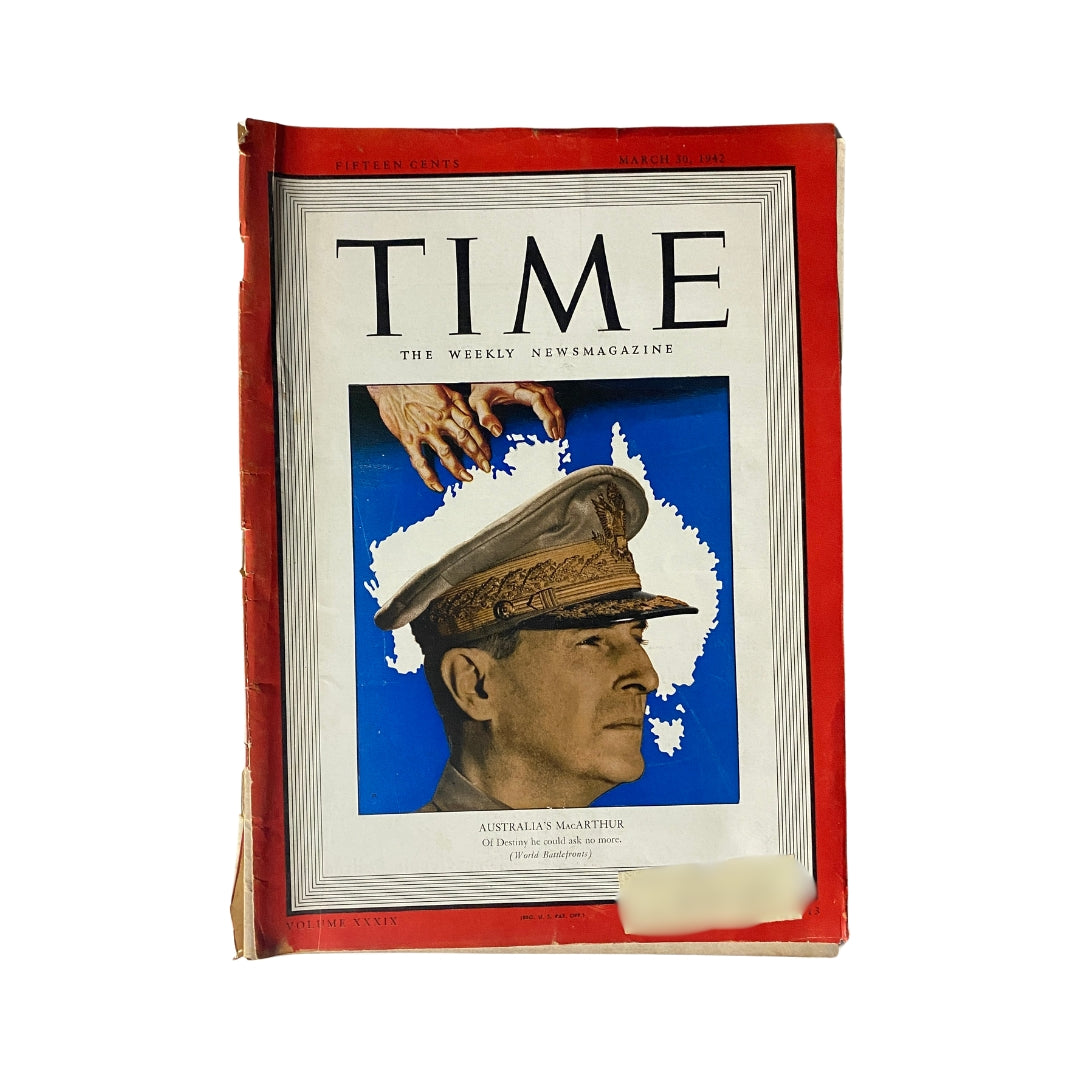
The visual drama of MacArthur's life made him irresistible to the great photo-editorial magazines of the mid-century, and their coverage of the Supreme Commander ranged from reverential portraiture to front-page controversy. Life magazine, the pre-eminent visual chronicle of the American experience, returned to him repeatedly — capturing the theatrical gravitas of his aviator sunglasses, his gold-braided cap, and the deliberate staging of his own image with a showman's instinct for the camera. Time magazine placed him on its cover multiple times across four decades, framing him alternately as savior, sovereign, and lightning rod, its editorial prose oscillating between admiration and unease as his relationship with civilian authority grew ever more combustible. International titles, too, took measure of the man: publications across the Pacific Rim documented his sweeping authority over postwar Japan, where he governed a nation of eighty million people with near-imperial power, an extraordinary chapter that foreign press treated with a mixture of fascination and skepticism entirely absent from the domestic lionization. Newsweek, a fierce rival to Time in the battle for the informed American reader, offered its own sustained and often contrarian coverage — particularly during the Korean crisis — providing collectors today with a rich plurality of editorial voices on the same unfolding events. The photography across these publications tends toward the monumental — low angles, strong shadow, the General posed against flags, aircraft, or the smoking ruins of history itself — images constructed to communicate command. Yet occasionally, a candid frame slips through: a quieter moment on a transport aircraft, a rare unguarded expression amid the ruins of Manila — and it is in those images that the full, complicated humanity behind the legend becomes briefly, thrillingly visible.
Curator's Checklist: Highlights Often Include
-
Pacific Theater command coverage (1942–1945): Wartime issues documenting the island-hopping campaign, the liberation of the Philippines, and the dramatic Japanese surrender aboard the Missouri — among the most iconic news images of the entire war. Issues from this period capture a nation simultaneously gripped by anxiety and surging with pride, and the General's face became as recognizable to American readers as any film star of the age.
-
Occupation of Japan (1945–1951): Rare and deeply sought coverage of MacArthur's unprecedented civilian-military governance of postwar Japan, including his reforms to the constitution, land redistribution, and his quasi-imperial daily routine in Tokyo. This chapter of his career remains one of the most remarkable exercises of personal authority in modern history, and the magazine coverage from this period is distinguished by its extraordinary access — photographers and journalists granted an intimacy with the occupation administration that would be inconceivable under modern press protocols.
-
The Truman Dismissal (April 1951): Issues from the immediate weeks surrounding his firing represent some of the most charged political print media of the Cold War era — editorial cartoons, opinion essays, and ticker-tape parade photographs from his return to an electrified New York. The national debate that erupted in the press was raw, immediate, and deeply revealing of postwar America's anxieties about civilian control, military ambition, and the cost of containing communism without provoking a third world war.
-
Korean War dispatches: Front-line photojournalism and command portraits from the early, perilous phase of the conflict, including coverage of the audacious Inchon landing — widely considered his tactical masterpiece. The magazines of this period carry a particular urgency in their layouts and headlines, reflecting a public that had barely exhaled from one global war and now found itself staring down another conflict on the far side of the world, with the same familiar general once again at the helm.
-
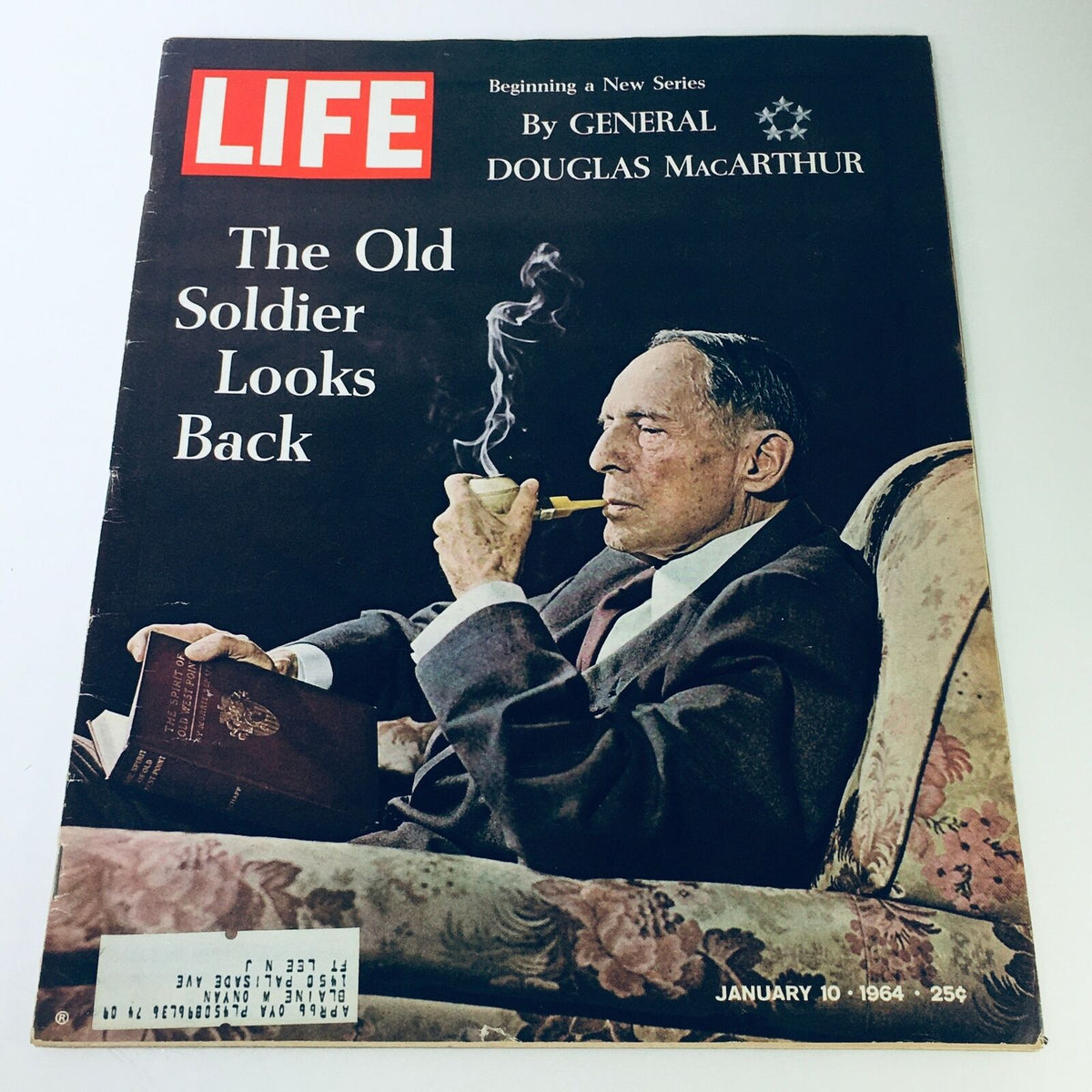
Retirement, legacy, and the 1962 West Point farewell address: Later-era coverage capturing the elegiac, statesman-like final chapter of his public life, including tributes printed at the time of his death in 1964. These issues offer a different and equally powerful register of the archive — the nation pausing to take stock of a figure who had been present at so many of its defining moments, the prose in the obituary columns rising, almost involuntarily, to match the scale of the life being remembered.
The Collector's Value
To hold one of these original issues is to close a circuit with history that no digital archive — however high its resolution — can replicate. The particular weight of mid-century coated magazine stock, the slight amber warmth that time lends to the page margins, the smell of decades-old ink that rises when you turn a leaf — these are not incidental qualities but the very medium through which millions of Americans first understood the magnitude of what their generation had witnessed. The surrounding advertisements are their own time capsule: postwar automobiles, victory-era cigarette brands, and appliance manufacturers flush with the optimism of a nation rebuilding — all of it conspiring to return you, completely, to the moment these words were first set in type. There is something irreplaceable, too, about the editorial context in which these stories first appeared — the letters to the editor on the facing page, the competing headlines jostling for space in the table of contents, the sense of a world processing extraordinary events in real time without the benefit of hindsight or historical consensus. Each issue is, in the truest sense, a primary source: not an interpretation of history, but history itself, still warm from the press. For collectors of World War II militaria, Cold War political history, or American command and leadership studies, these publications offer something no biography or documentary can: the unmediated, contemporary record of how the world saw the General while history was still happening. Whether you are building a research library, furnishing a study with objects of genuine historical gravity, or searching for a singular gift for the discerning history enthusiast in your life, these pages reward the investment with every reading. Explore our current available inventory below and discover which pieces of this extraordinary archive are waiting to find their next careful custodian.