📖 About this Collection
Earl Warren: The Scales of a Nation — Justice, Power, and the Conscience of an Era
The Legend & The Legacy
Few figures in twentieth-century American life occupied as many contradictory chapters as Earl Warren — the California governor who authorized the Japanese American internment, and the Chief Justice who dismantled segregation. When he ascended to the Supreme Court in 1953, appointed by Eisenhower in what the president would later call "the biggest damn-fool mistake I ever made," Warren became the quiet earthquake beneath postwar American democracy. In an age before cable news or viral moments, the public absorbed his story through ink and paper — through the weighty spreads of weekly newsmagazines piled on living room coffee tables, through law journal columns debated in university halls, and through front-page stories folded into briefcases on morning commutes. The landmark decisions of the Warren Court — Brown v. Board of Education, Miranda v. Arizona, Reynolds v. Sims — did not trend online; they reverberated slowly, powerfully, through the printed word, shaping public consciousness one headline at a time.
Inside the Archive
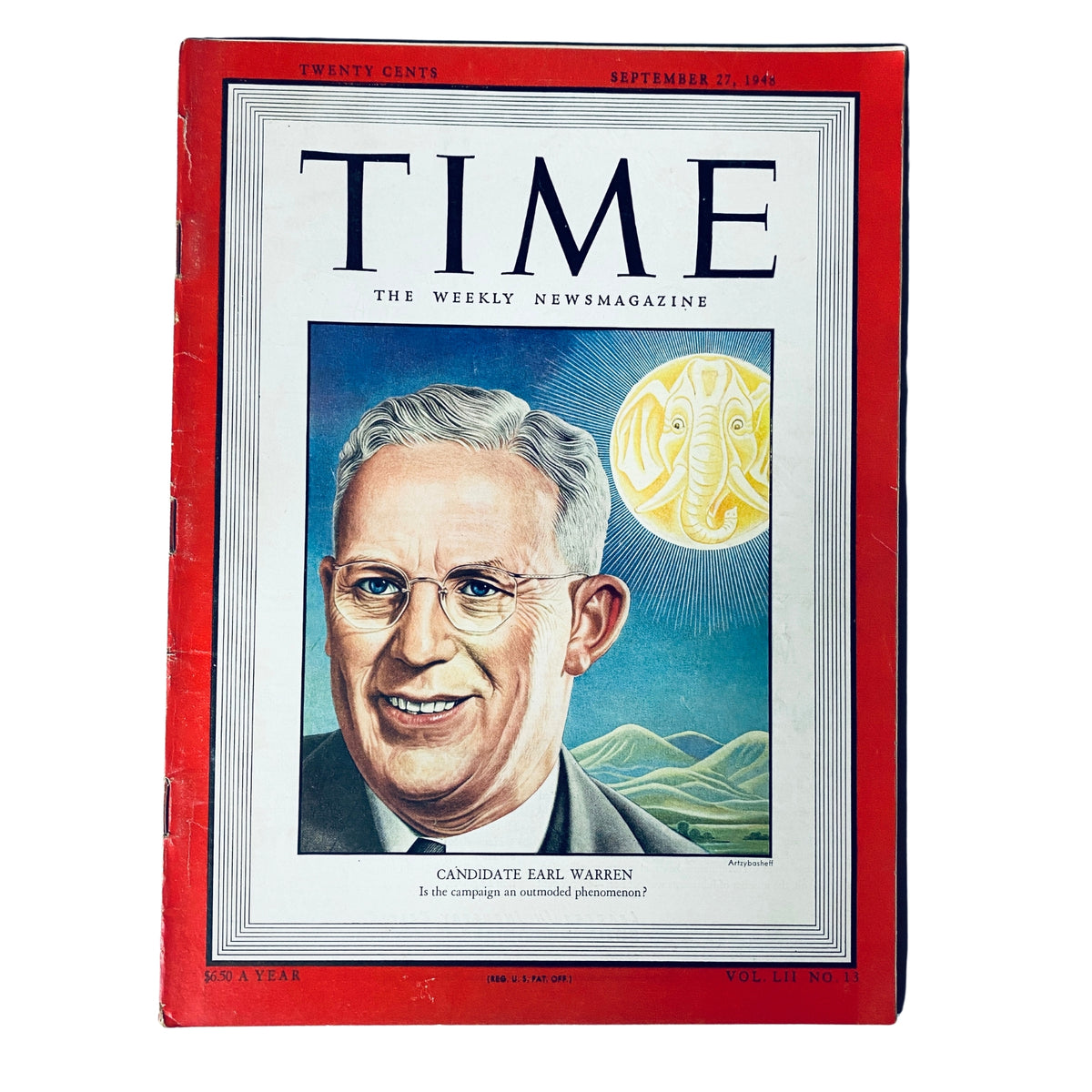
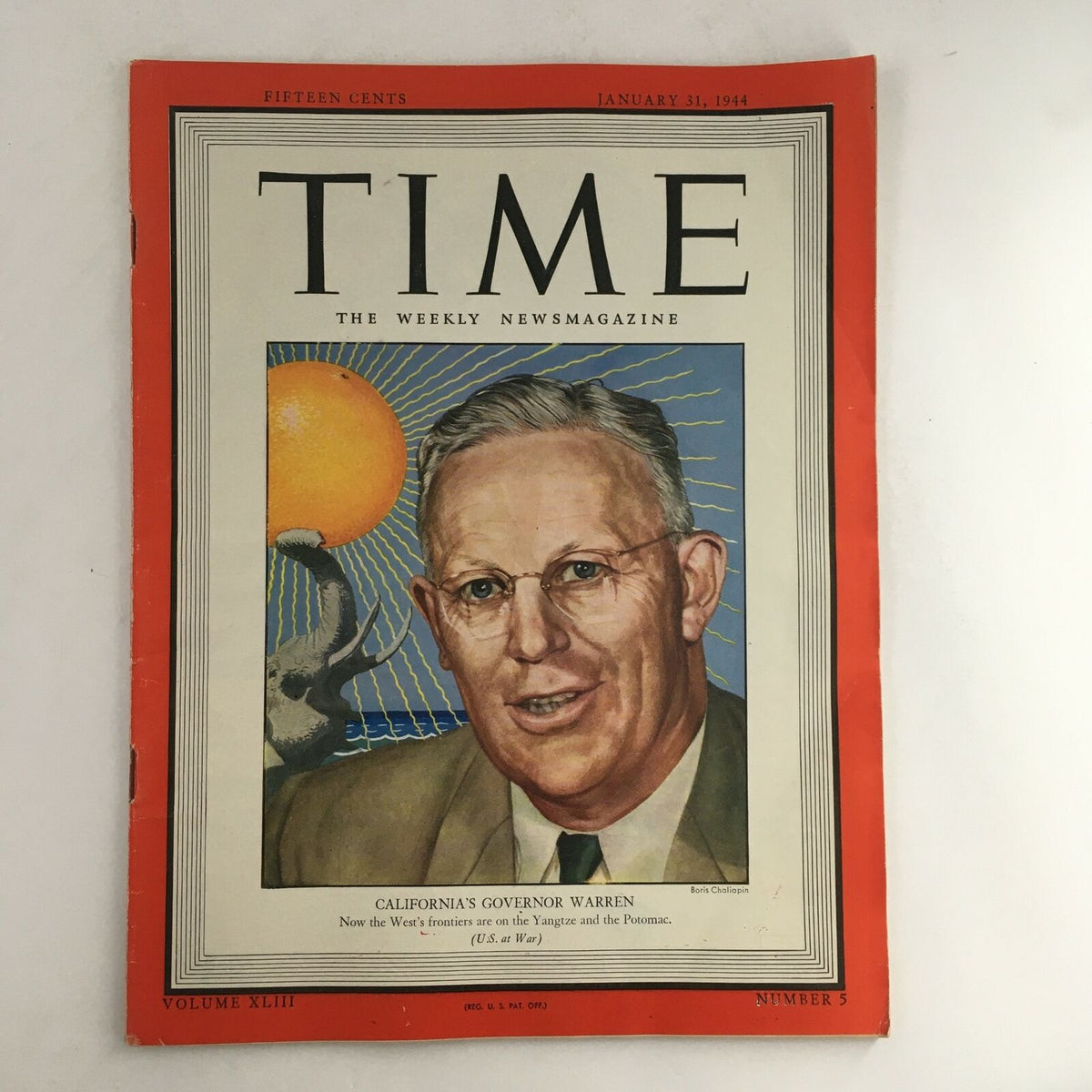
Vintage magazine coverage of Warren reflects the full arc of his complicated public life — from powerful political operator to the nation's most consequential jurist. During his gubernatorial years and his 1948 vice-presidential campaign alongside Thomas Dewey, publications like Time and Life presented him as a rugged, photogenic symbol of Western American pragmatism, their editorial tone measured and admiring, their photography capturing a broad-shouldered statesman radiating authority in wood-paneled offices and sun-drenched California settings. As Chief Justice, the tone grew more charged and historically serious — Newsweek devoted multiple cover stories to the Warren Court's seismic rulings, while U.S. News & World Report frequently offered point-counterpoint spreads debating the reach of judicial activism. International publications such as Paris Match and the Illustrated London News also tracked Warren's career with fascination, framing his Court's civil rights decisions as a referendum on American democracy itself — premium photojournalism meeting the gravity of constitutional history.
Curator's Checklist: Highlights Often Include
- Civil Rights Landmark Coverage — Issues documenting the immediate public reaction to Brown v. Board of Education (1954), often featuring Warren's portrait alongside photographs of newly integrated schools and the faces of a changing nation
- Warren Commission Features — In-depth magazine spreads from 1963–1964 covering Warren's appointment to lead the investigation into President Kennedy's assassination, a story that commanded extraordinary newsstand attention across both mainstream and political publications
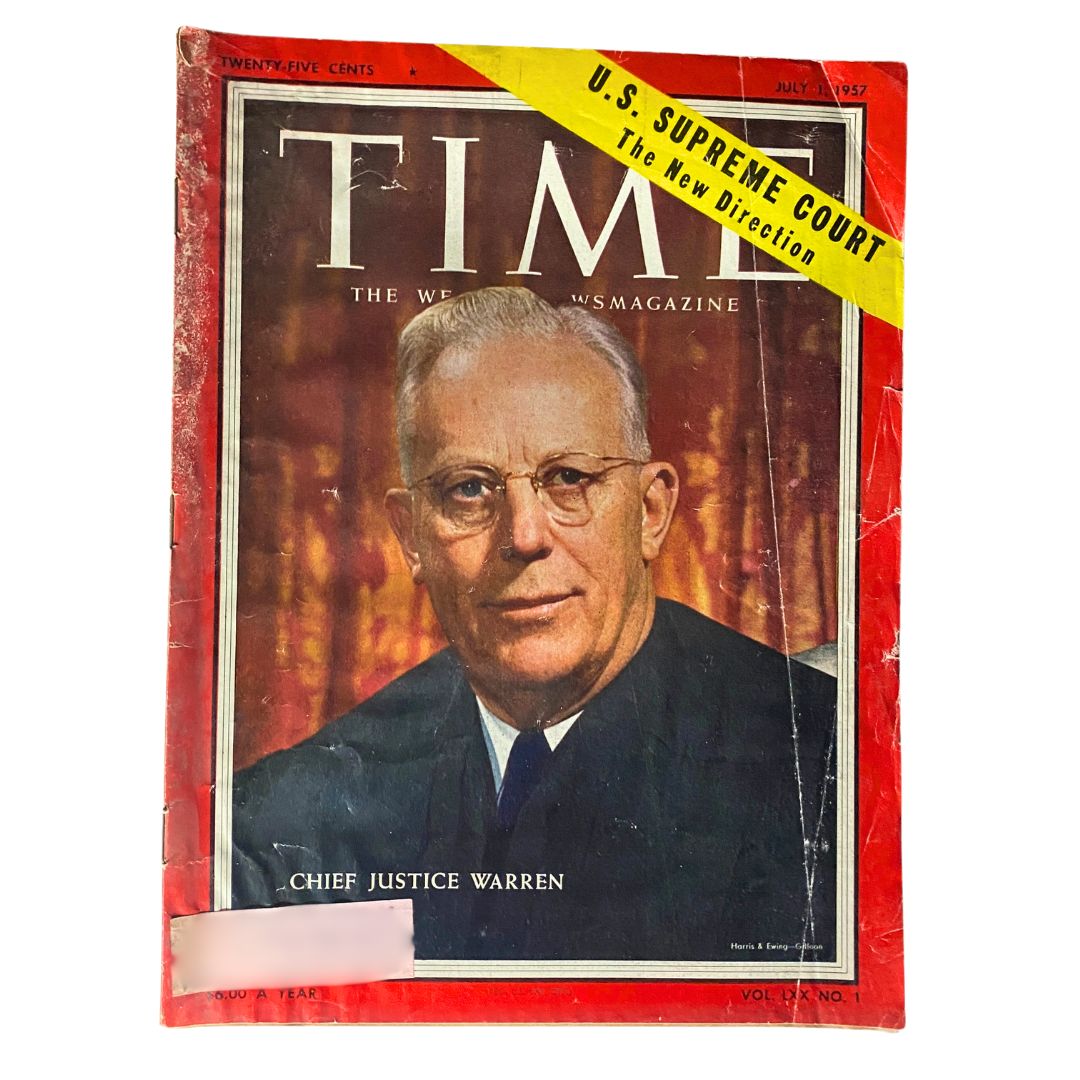
- Cover Appearances on Major Weeklies — Time and Newsweek covers from the 1940s through the 1960s, where the Chief Justice appeared in the stern, classical portraiture style characteristic of mid-century American editorial illustration and photography
- California Political Era Issues — Domestic publications from the early-to-mid 1940s covering his tenure as California's governor and his role in the controversial Japanese American internment policy — historically essential, uncomfortable primary sources
- Impeachment Campaign Press — Niche political and conservative periodicals from the late 1950s and 1960s, reflecting the "Impeach Earl Warren" movement, offering a striking counternarrative to mainstream coverage and invaluable insight into the era's culture wars
The Collector's Value
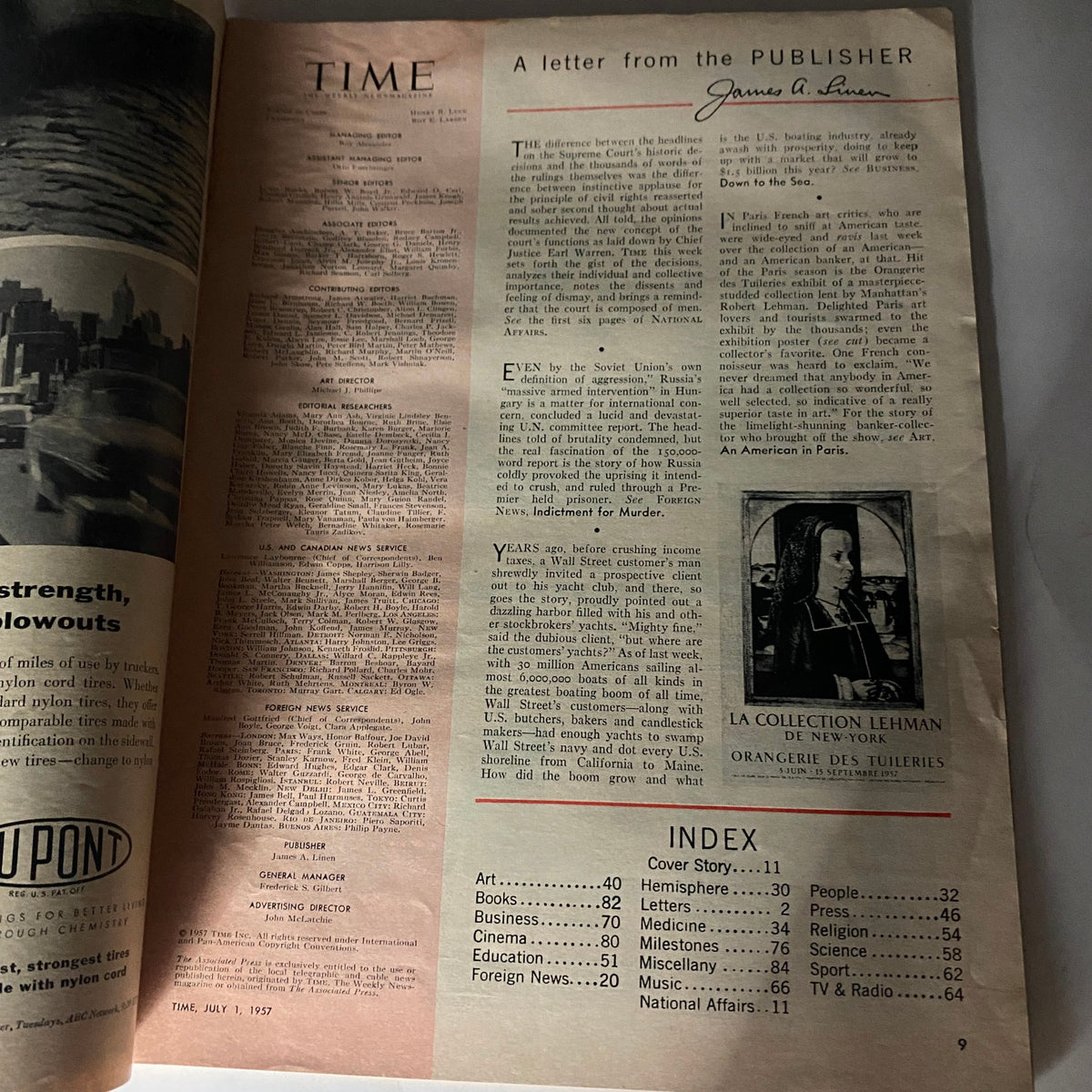
There is something irreplaceable about holding a copy of Time from 1954, its ink slightly oxidized, its paper carrying the particular dry warmth of decades past, a Warren Court headline anchoring the cover while advertisements for Studebakers and Lucky Strike cigarettes frame the world he inhabited. These are not reproductions or digital scans — they are breathing artifacts, primary sources in the truest sense, carrying the unfiltered editorial voice of the moment history was being made. The surrounding advertisements, the typography, the letters to the editor pages bristling with citizen outrage or praise — all of it reconstructs a vanished America in ways no textbook can replicate. For collectors of Supreme Court history, mid-century American political memorabilia, or Cold War–era civil rights documentation, these publications offer an unmediated window into one of the most transformative legal minds the republic has ever produced. Explore the current available inventory below, and discover which pieces of this remarkable legacy are waiting to find their next keeper.