📖 About this Collection
Eugene McCarthy: The Poet Who Challenged Power
The Legend & The Legacy
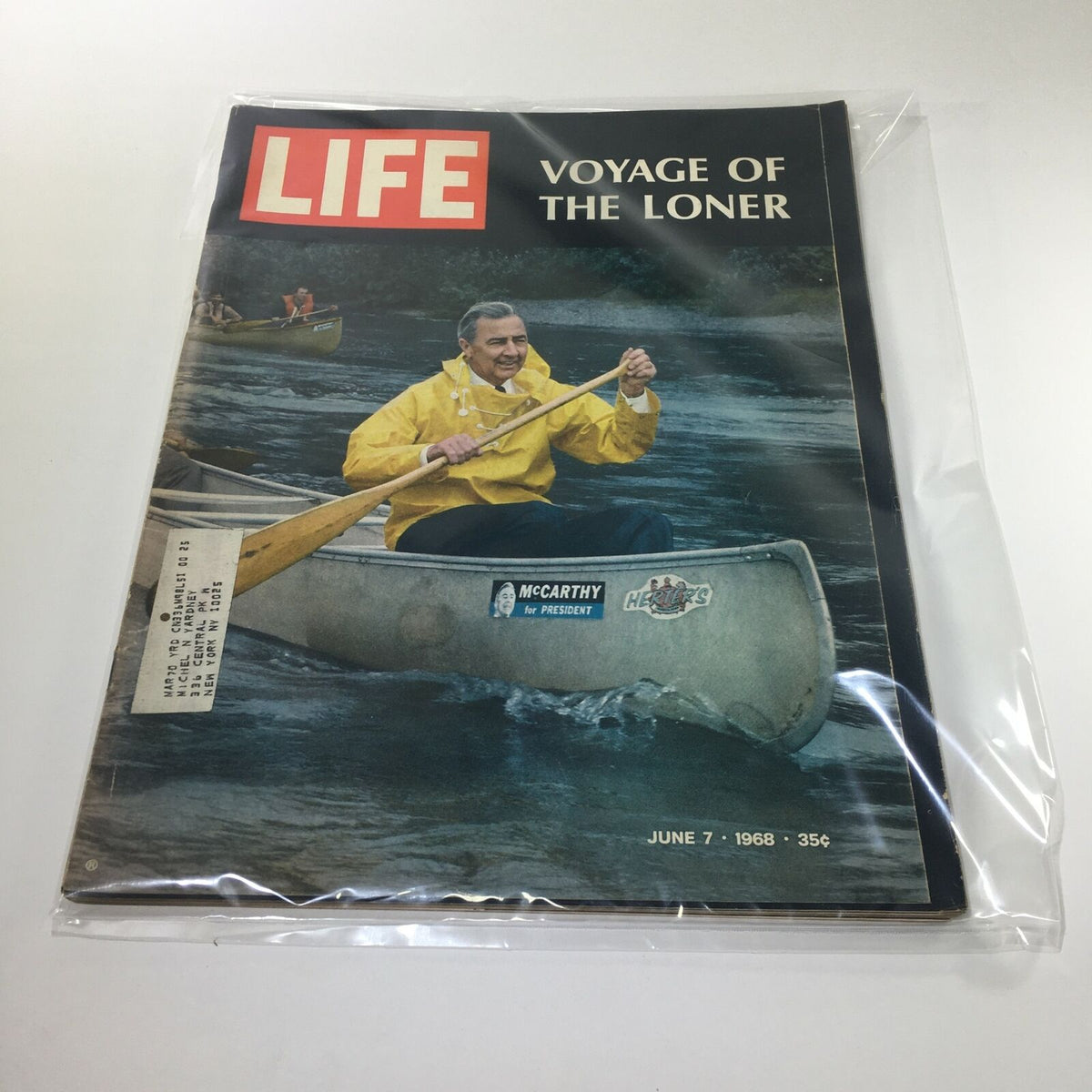
In the fractured, electric landscape of 1960s America, Eugene McCarthy did something that career politicians considered either extraordinarily brave or politically suicidal — he said what he believed. When the junior senator from Minnesota stepped forward in 1967 to challenge a sitting president of his own party over the Vietnam War, he ignited one of the most dramatic anti-establishment campaigns in American electoral history. His 1968 presidential run didn't just reshape the Democratic primary; it mobilized an entire generation of young Americans into political life, drove Lyndon B. Johnson from the race, and cracked open the fault lines of a nation at war with itself. He was, in the truest sense, an unlikely revolutionary — a former academic, a Catholic intellectual, a man who seemed more at home with Yeats than with ward bosses, yet who somehow became the vessel for millions of Americans desperate for a politics of conscience. In an era before cable news or social media, Americans followed this quiet, bookish, sonnet-writing senator almost entirely through the printed word — through the weekly ritual of a new Life or Look arriving in the mailbox, through newsstand magazines that carried his face alongside headlines that felt, to many readers, like dispatches from the edge of history. His story was consumed in living rooms and barbershops and college dormitories, page by page, issue by issue, in real time — and the magazines that documented his rise remain among the most vivid records of an America in the process of reinventing itself.
Inside the Archive
The press of the late 1960s and early 1970s found in McCarthy a subject of genuine editorial fascination — not the fire-and-brimstone demagogue, but the reluctant insurgent, the intellectual in a rumpled suit who quoted Robert Lowell on the campaign trail. Photography from this period tends to capture him in candid, contemplative moments: on the stump in New Hampshire snows, surrounded by the legendary "Clean for Gene" student volunteers, or locked in the charged atmosphere of the 1968 Chicago Democratic Convention, one of the most violent and consequential gatherings in modern American political history. Editors of the era seemed to understand intuitively that his story was as much a cultural phenomenon as a political one, and the resulting layouts — long, immersive photo essays paired with deeply reported text — reflect a standard of print journalism that feels almost impossibly ambitious by contemporary measures. Life magazine, the era's preeminent chronicle of American public life, devoted significant coverage to his insurgent campaign and the youth movement that powered it, its large-format pages giving photographers the canvas to capture both the grandeur and the exhaustion of a campaign run on idealism. Time and Newsweek — dueling bibles of the politically engaged middle class — tracked his candidacy with a mix of skepticism and awe, their covers and centerfolds documenting the unraveling of the Democratic establishment in real time. Meanwhile, publications like Ramparts, the radical San Francisco journal of the New Left, framed the McCarthy campaign within the broader cultural revolt against the Vietnam War, offering a sharper, more ideologically charged lens on the senator and his significance. International outlets, too, took notice — European magazines and journals followed the American political crisis with intense interest, recognizing that the fate of the most powerful democracy on earth was being contested, in part, by a mild-mannered poet from the Midwest.
Curator's Checklist: Highlights Often Include
-
The 1968 New Hampshire Primary — Coverage of his stunning near-upset against an incumbent president, widely regarded as one of the most shocking results in primary election history, frequently surfaces in newsweeklies and political journals from early 1968; look for issues that capture the raw shock of establishment Washington confronting the possibility that its consensus had collapsed overnight
-
The Chicago Convention & Its Aftermath — Collector favorites include issues documenting the chaotic August 1968 Democratic National Convention, where street clashes between protesters and police unfolded in full view of the press, with McCarthy's candidacy at the moral center of the storm; some of the most powerful photojournalism of the entire decade appeared in magazines published in the weeks immediately following those events
-
The Anti-Vietnam Movement — Broader peace movement coverage in magazines such as The Nation, Ramparts, and counterculture periodicals that positioned him as the intellectual conscience of a generation opposed to the war; these issues frequently pair political reportage with poetry, manifestos, and cultural criticism that reveal the full texture of the era's dissent
-
Robert Kennedy's Entry & Assassination — Issues from spring 1968 often capture the triangular drama between McCarthy, Kennedy, and the shadow of LBJ, culminating in the June assassination that reshuffled the entire political landscape; the editorial anguish in these pages is palpable, a nation processing grief and political chaos simultaneously in real time
-
Post-Campaign Reflection Pieces — Long-form profiles from the early 1970s reassessing his legacy, his poetry, his political independence, and his enduring influence on grassroots campaign organizing in America; these retrospective issues offer a cooler, more measured appraisal of the man and often include rare interviews in which he speaks with characteristic candor about power, conscience, and the cost of conviction
The Collector's Value
To hold one of these original issues is to hold the unmediated anxiety and idealism of 1968 itself — a year so seismic that historians still reach for superlatives. The paper stock of a decades-old Newsweek has a particular weight and warmth to it, its slightly yellowed pages carrying the faint mineral scent of aged ink, the whole object framed by period advertisements for automobiles, cigarettes, and household appliances that place you, instantly and viscerally, inside the world that produced them. These are not reprints or digital facsimiles; they are primary documents, artifacts of a moment when the printed page was the primary medium through which a democracy argued with itself. Turning each page is an act of genuine historical immersion — the typefaces, the graphic design conventions, the editorial sensibilities all speak in the unmistakable visual language of their moment, a language no digital reproduction has ever fully translated. The advertisements alone serve as a remarkable cultural time capsule, surrounding serious political journalism with the consumer dreams and social textures of a society on the verge of profound transformation. For collectors of American political history, Vietnam War-era ephemera, or 1960s counterculture and social movements, these publications offer an irreplaceable window into one of the twentieth century's most turbulent chapters — complete with the editorial voice, graphic design, and cultural texture that no archive photograph or Wikipedia entry can replicate. Each issue is, in its own quiet way, a monument to the lost art of long-form print journalism and to the belief, fiercely held in that era, that ideas and moral courage could alter the course of history. Explore the current available inventory below and discover which pieces of this extraordinary era are waiting to find their next curator.