📖 About this Collection
Fidel Castro: The Commander in Ink — How the World's Press Chronicled a Revolution
The Legend & The Legacy
Few figures of the twentieth century commanded the attention of the global press with quite the same magnetic intensity as Fidel Castro. From the moment he descended from the Sierra Maestra in January 1959 to claim Havana, the world's editors scrambled to make sense of the bearded revolutionary who had defied the most powerful nation on earth from a Caribbean island of just eleven million souls. In an era before satellite feeds and rolling news cycles, the magazine was the definitive medium through which the public formed its understanding of Castro and the Cuban Revolution — a slow-burning, beautifully illustrated reckoning delivered to doorsteps and newsstands in weekly and monthly installments. His marathon speeches, his combat fatigues, his Cohiba cigar, and his unnerving willingness to stare down American presidents became the iconography of an age, processed and debated entirely through the printed page.
Inside the Archive
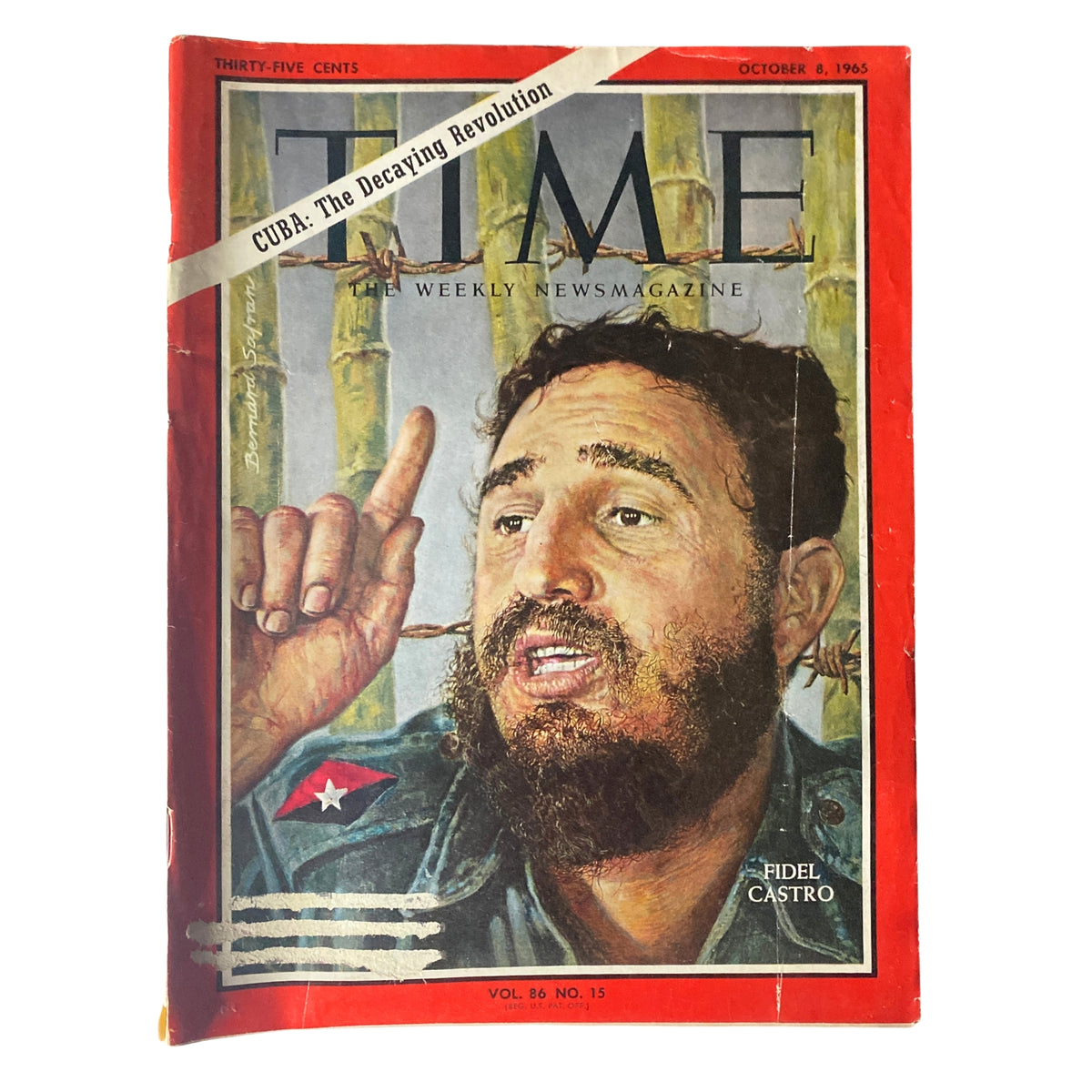
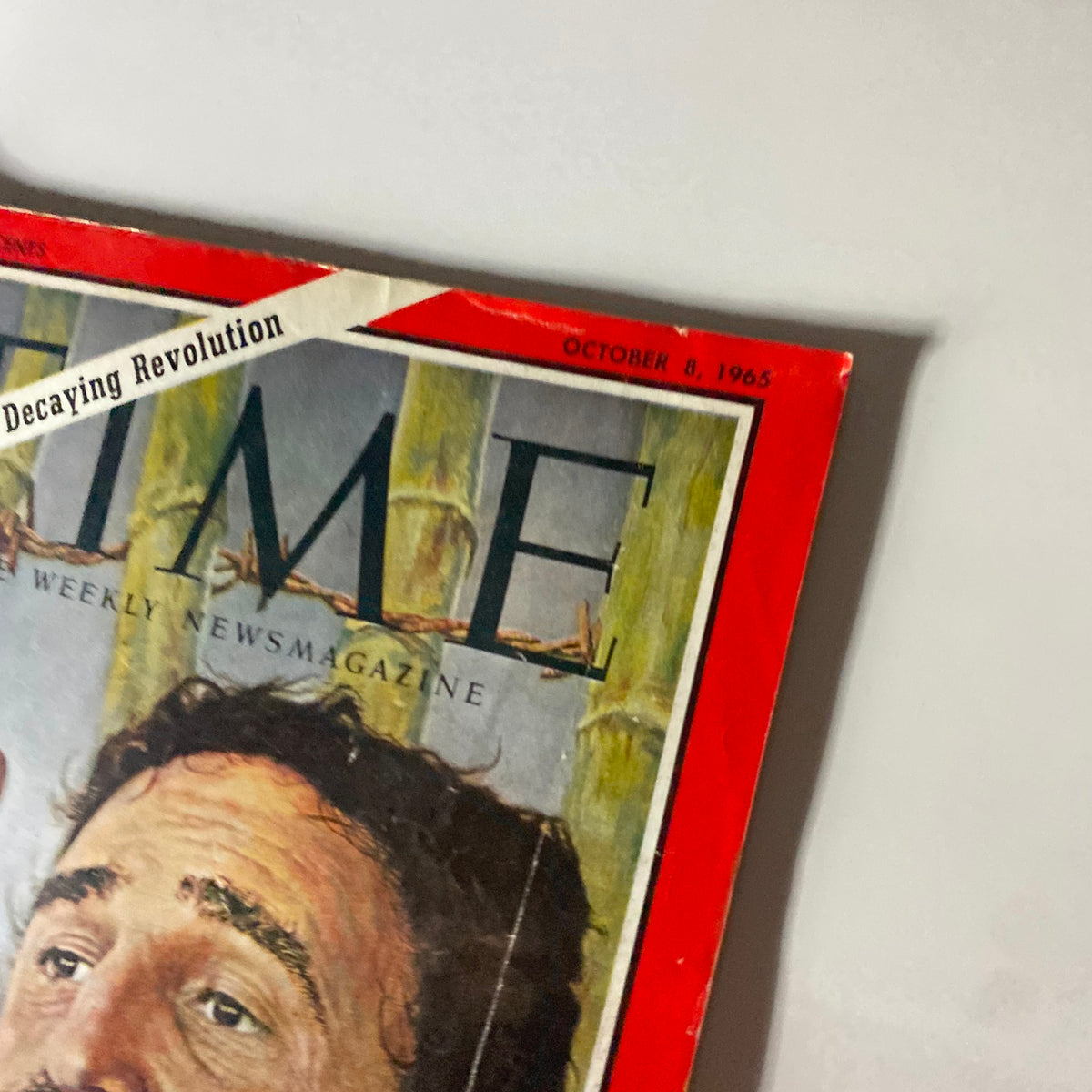
The photographic coverage of the Cuban leader was among the most dramatic and stylistically varied of any political figure of the Cold War era. In the early years, Life magazine dispatched its finest photographers to Havana, producing sprawling, black-and-white portrait essays that captured the revolutionary government's chaotic energy — images of the comandante addressing vast crowds in the Plaza de la Revolución, or leaning over maps with his lieutenants with the quiet intensity of a chess grandmaster. Time chronicled his decades-long ideological duel with Washington, placing him on its cover with a frequency reserved for only the most consequential world leaders, its editorial tone oscillating between alarm and a grudging fascination. Meanwhile, the French press — most notably Paris Match — brought a distinctly European sensibility to their coverage, framing him not merely as a geopolitical threat but as a romantic, almost cinematic archetype: the guerrilla intellectual, the tropical Marxist, the man who made the Cold War feel like literature. Across the Latin American press, he was covered with a reverence bordering on mythology.
Curator's Checklist: Highlights Often Include
- Cold War flashpoint coverage — issues from the early 1960s frequently include dramatic reporting on the Bay of Pigs invasion and the Cuban Missile Crisis of October 1962, when the world held its breath and every major publication cleared its pages for wall-to-wall analysis
- Revolutionary portraiture — striking photography essays from the early years of the revolution, often featuring the iconic imagery of Castro in olive-green fatigues alongside Che Guevara and Camilo Cienfuegos, shot in the raw, high-contrast style that defined mid-century photojournalism
- Cold War political cartoons and editorial illustration — American newsweeklies of the 1960s and 70s frequently featured pointed caricatures and illustrated op-ed covers placing him in direct symbolic confrontation with successive U.S. presidents, from Eisenhower through Nixon
- Non-Aligned Movement and Third World solidarity coverage — international and left-leaning publications from Europe, Africa, and Latin America often profiled his role as a figurehead of anti-imperialism, offering a striking counternarrative to the American press consensus
- Late-era retrospectives and transition coverage — publications from the 1990s through the mid-2000s frequently revisited the arc of his rule as the Soviet Union collapsed, producing long-form reassessments that are invaluable as historical primary sources
The Collector's Value
To hold an original magazine from this era is to hold the first draft of history — not as it was later summarized or reinterpreted, but as it landed, raw and immediate, in the hands of readers who genuinely did not know how the story would end. The physical object carries its own testimony: the slight yellowing of newsprint stock, the deep saturation of offset-printed photography that no digital scan can faithfully replicate, the faint ghost of ink that rises from a page opened after sixty years, and the surrounding advertisements — for American automobiles, Cuban rum distributors, Pan Am flights to Havana — that conjure the precise texture of a vanished world. For collectors of Cold War political history, Latin American cultural studies, or vintage photojournalism, these publications offer something no secondary source can provide: the unmediated shock of the contemporary moment, the sense that the world was still making up its mind. Explore our current rotating inventory below and discover which primary sources are available today.