📖 About this Collection
George Peppard: The Cool Precision of a Hollywood Original
The Legend & The Legacy
In the years before entertainment news cycles ran around the clock and celebrity became disposable, George Peppard occupied a particular kind of cultural real estate — the kind built on chiseled restraint, cool authority, and the lingering promise of something dangerous beneath the surface. He arrived in Hollywood at the precise moment American masculinity was being renegotiated on screen: too cerebral for the westerns, too rugged for the drawing rooms, and exactly right for a new kind of hero who thought before he struck. His breakthrough as Paul Varjak opposite Audrey Hepburn in Breakfast at Tiffany's (1961) made him a household name across two continents, and the press — still the great arbiter of stardom in that era — treated him accordingly. Decades later, his reinvention as the inimitable Hannibal Smith in The A-Team introduced him to an entirely new generation, cementing a career arc that spanned the golden age of Hollywood cinema straight through the peak of 1980s network television. All of it was documented, celebrated, and occasionally scrutinized in the pages of print media that served as the only window most fans would ever have into his world.
Inside the Archive
The magazines of Peppard's era were masterful at constructing a particular mythology around their subjects, and the coverage he received reflected both his leading-man status and his reputation as one of Hollywood's more complex, guarded personalities. Life magazine, with its sweeping photographic essays and its unrivaled access to film sets and studio back lots, captured him during his early-sixties prime — the square jaw, the measured gaze, the tailored suit that suggested authority without effort. Photoplay and Movie Mirror, the twin pillars of mid-century fan publishing, offered readers the intimate, aspirational portraiture that defined Hollywood's relationship with its paying audience — profiles that walked the careful line between access and mythology. International publications, particularly those from the United Kingdom such as TV Times and Look-In, covered his A-Team era with enormous enthusiasm, reflecting the show's massive transatlantic audience during the 1980s. The photography across these decades shifted dramatically — from the controlled, studio-lit glamour of the early sixties to the dynamic, on-set candids of his later television work — making a collection spanning his full career a genuinely compelling visual record of how celebrity imagery itself evolved over thirty years.
Curator's Checklist: Highlights Often Include
- Early Hollywood Features (late 1950s–early 1960s): Studio-era profiles and star-making spreads from the period when he was being positioned as one of Hollywood's most promising dramatic leads, often paired with coverage of his stage work and early film roles.
- The Breakfast at Tiffany's Moment: Editorial coverage and promotional features tied to the cultural phenomenon of the 1961 film, including appearances in entertainment digests and general-interest weeklies that treated the picture as a landmark event.
- Behind-the-Wheel & Blue Flame: Features tied to his well-documented passion for motor racing, occasionally covered in automotive and lifestyle publications that captured his off-screen pursuits with the same seriousness afforded to professional drivers.
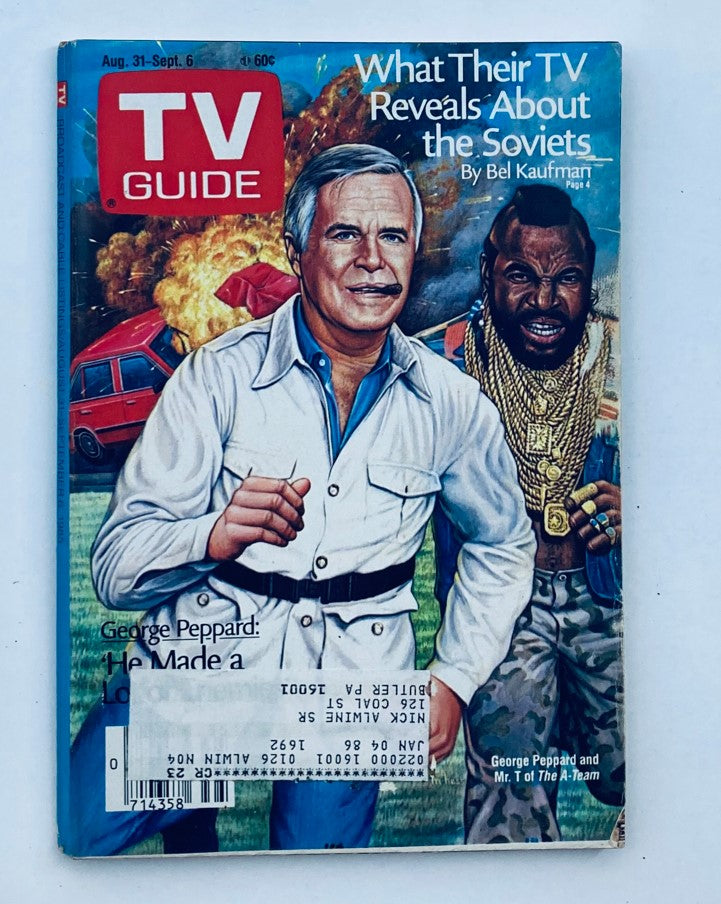
- The A-Team Era (1983–1987): A significant volume of television-focused coverage — from TV Guide to international fan magazines — chronicling one of the most-watched shows on American network television and his commanding presence at its center.
- Later Career Retrospectives: Profiles from the late 1980s and early 1990s that took stock of a career in full, offering reflective, long-form journalism that placed his contributions to both film and television in proper historical context.
The Collector's Value
To hold an original issue featuring George Peppard is to hold something that existed in the world at the same moment he did — printed, pressed, and placed on a newsstand while the ink was still finding its weight in the paper. The magazines of his era were built to a standard that modern publishing abandoned decades ago: heavy, glossy cover stock with a particular resistance beneath the fingertips, interior pages that carry the faint, distinctive scent of aged print and binding glue, surrounded by period advertisements for cigarettes, automobiles, and whiskey that place the entire artifact unmistakably in its time. These are not reproductions or digital archives — they are primary sources, cultural documents that carry the editorial voice, the design sensibility, and the commercial atmosphere of the exact year they were printed. For collectors of classic Hollywood cinema, golden-age television memorabilia, or mid-century Americana, these publications offer an irreplaceable connection to an era when stardom was manufactured with craft and consumed with genuine reverence. Explore the current available inventory below and discover which pieces of this remarkable career are waiting to be reclaimed.