📖 About this Collection
Gregory Peck: The Conscience of Hollywood in Print
The Legend & The Legacy
In an era when the silver screen was the closest thing to myth-making that modern civilization had ever known, Gregory Peck stood apart — not merely as a star, but as a moral compass. From his haunting turn in Gentleman's Agreement (1947) to his indelible portrayal of Atticus Finch in To Kill a Mockingbird (1962), he embodied a particular strain of American idealism at precisely the moment the nation needed it most. His ascent coincided with the golden age of mass-market magazine culture, when millions of households across America and Europe received their understanding of celebrity, culture, and character through the glossy weight of a weekly or monthly publication. There was no streaming service, no social media algorithm, no twenty-four-hour entertainment cycle — there was only the magazine rack, the cover stand at the corner drugstore, and the considered editorial judgment of editors who understood that Gregory Peck on a cover moved copies. His face, solemn and quietly luminous, became a fixture of the American imagination not through pixels, but through ink pressed into paper.
Inside the Archive
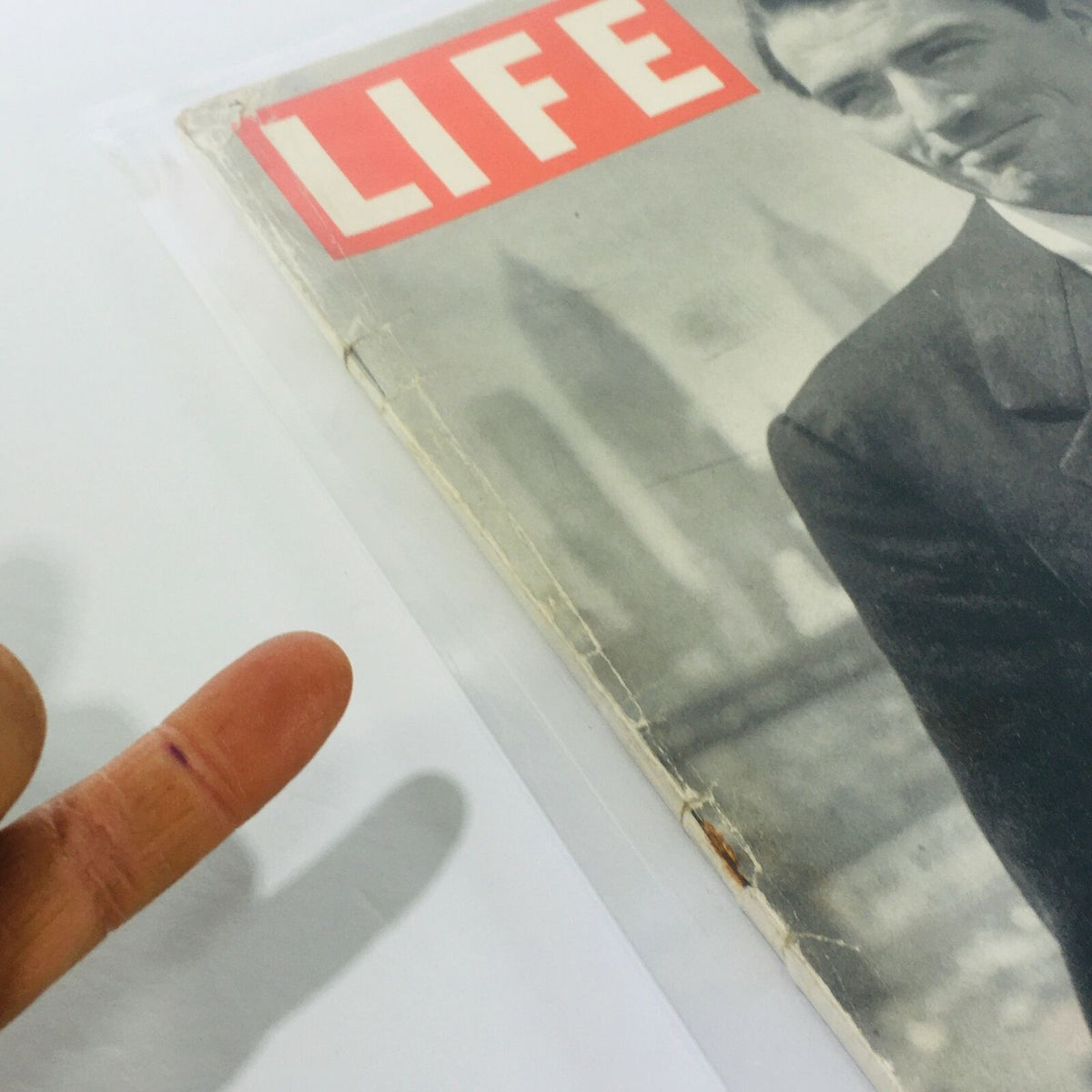
Vintage magazine coverage of this towering figure ranged from the reverential to the intimate, capturing not just the actor but the archetype. Life magazine, the supreme visual chronicle of mid-century America, devoted multiple features to him across the decades — full-bleed photography shot on film sets and in his Bel Air home, with an editorial gravitas that treated him less like a Hollywood commodity and more like a civic institution. Photoplay and Modern Screen, the beloved fan magazines of the 1940s and '50s, offered a warmer, more domestic view: the devoted husband, the doting father, the man behind the legend. Internationally, Paris Match recognized his particular appeal to European audiences — photographed with a cool, Continental elegance that American publications rarely captured — especially during the production of Roman Holiday and his increasing involvement in global humanitarian efforts. The photography throughout these decades tends toward the dramatically lit and compositionally assured, reflecting an era when portrait photography was itself an art taken in deadly earnest.
Curator's Checklist: Highlights Often Include
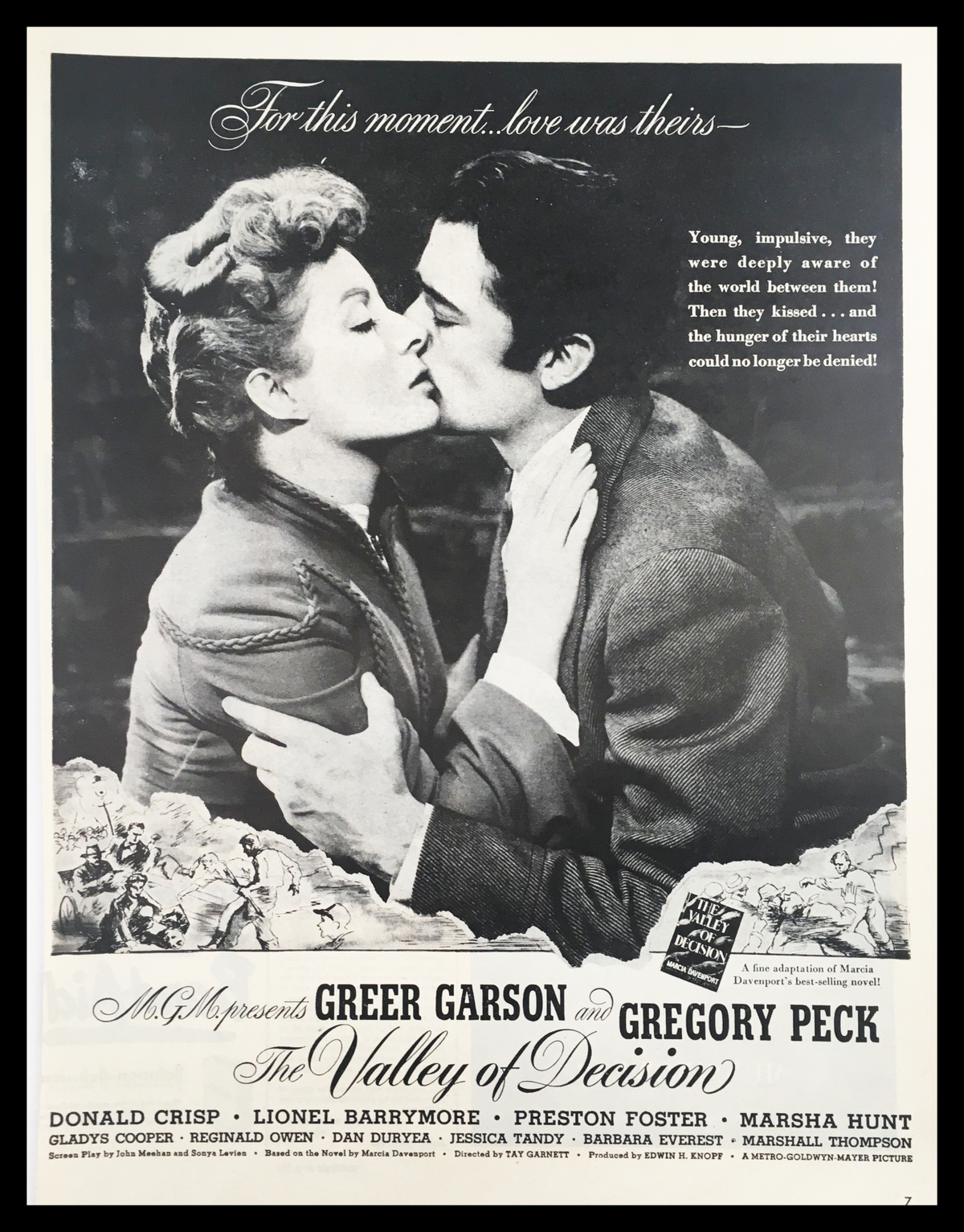
- Wartime and early career features (mid-1940s) — Coverage from his breakout years in Days of Glory and The Keys of the Kingdom, when fan magazines first identified him as a face worth watching and a name worth remembering.
- Academy Award season editorial spreads — The actor received five Oscar nominations across his career, with his win for To Kill a Mockingbird in 1963 generating a wave of celebratory and retrospective coverage in both trade and general-interest publications.
- On-set and international location photography — Features tied to productions filmed abroad, including Roman Holiday (Rome, 1953) and Moby Dick (Ireland and the Canary Islands, 1956), often offering rare, candid imagery unavailable through studio channels.
- Profile pieces on his political and humanitarian activism — As one of Hollywood's most outspoken liberals, his opposition to McCarthyism and later support for Robert F. Kennedy generated editorial coverage well beyond the entertainment press.
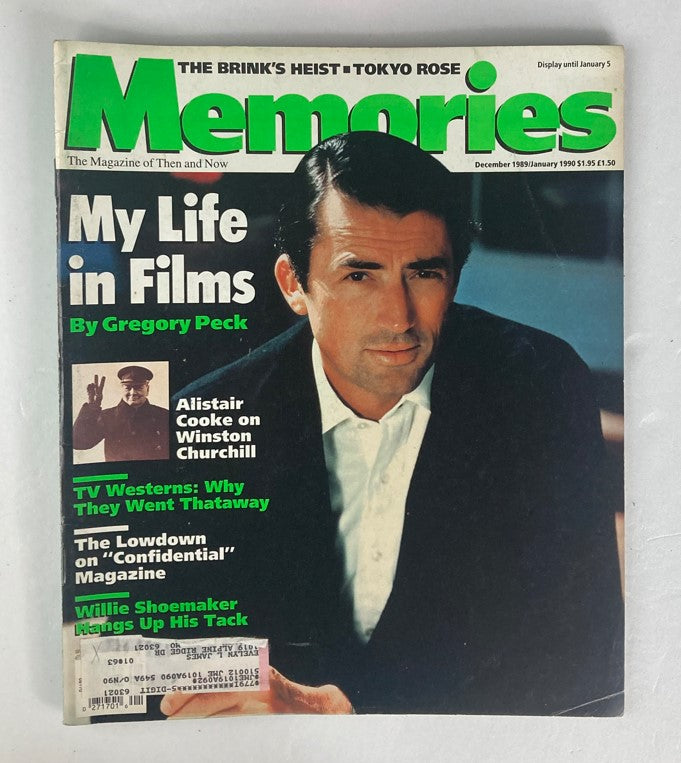
- Retrospectives and lifetime achievement features (1970s–1990s) — Later-career tributes in prestige publications treated him as a living legend, offering a reflective, elegiac tone rarely found in contemporary celebrity coverage.
The Collector's Value
To hold one of these publications is to hold something that time has rendered irreplaceable — the particular cream-yellow of aged newsprint, the slight give of a mid-century coated stock beneath your fingertips, the faint mineral ghost of decades-old ink. These are not reproductions or commemoratives; they are primary sources, artefacts of a cultural moment that existed before nostalgia had a chance to distort it. The surrounding advertisements — for cigarettes, automobiles, nylons, and appliances — place every profile and photograph in an irreducibly specific historical world, one that no retrospective anthology can reconstruct. For collectors of classic Hollywood memorabilia, mid-century American cultural history, or landmark cinema — particularly the golden age of the Academy Awards — these publications offer an unmediated window into how a legend was perceived, discussed, and celebrated in real time, by real readers, in the very years the history was being made. Browse the current available inventory below, and discover which pieces of this extraordinary legacy are waiting to find a new custodian.