📖 About this Collection
Hafez al-Assad: The Iron Sphinx of the Levant
The Legend & The Legacy
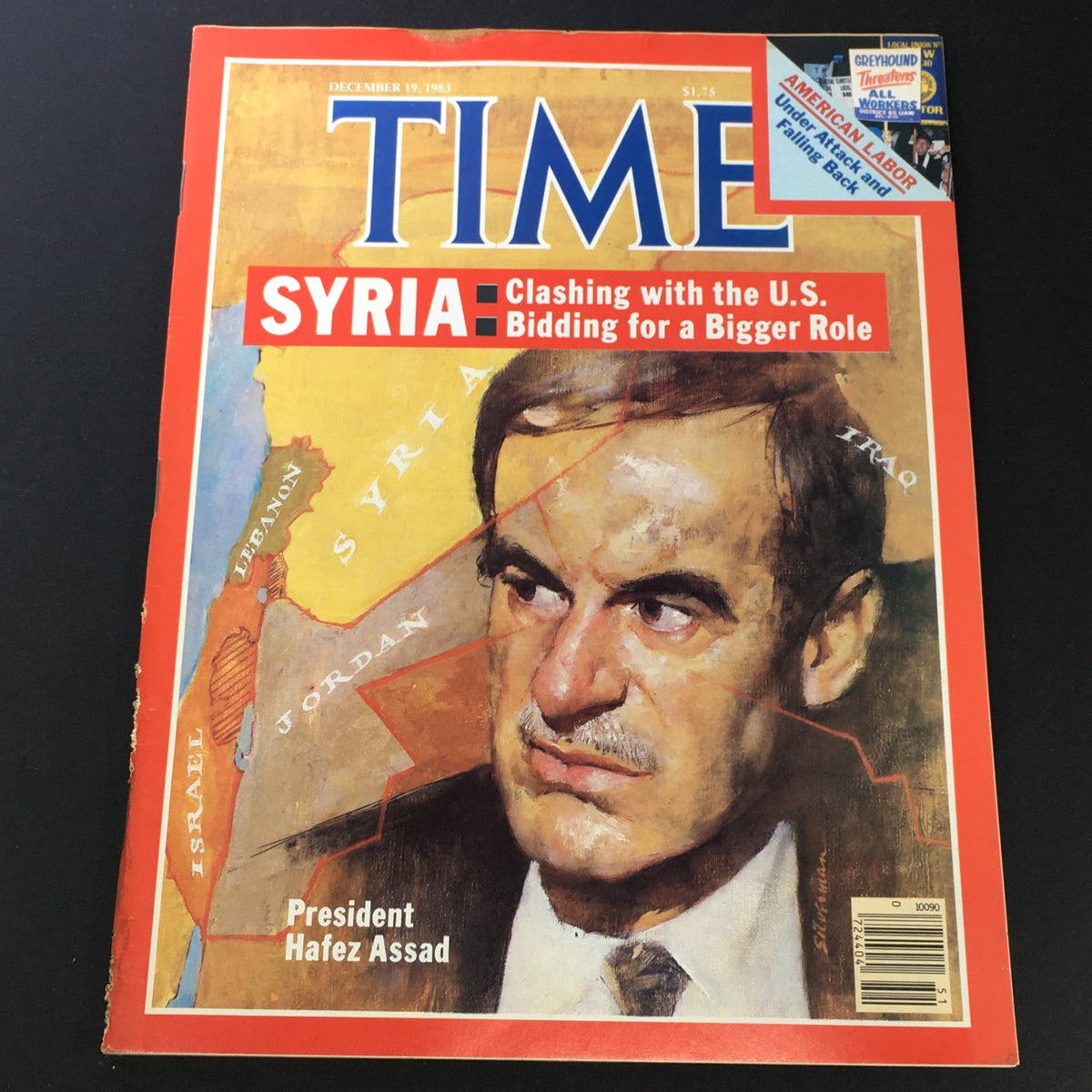
For three decades, Hafez al-Assad ruled Syria with an authority so absolute that his image — stern, watchful, omnipresent — became inseparable from the nation itself. Rising through the ranks of the Ba'athist military to seize power in 1970, the man from the Alawite mountains of Latakia remade an entire state in his own image, forging a regional power from a country that had seen ten coups in as many years. At the height of the Cold War, he became one of the Arab world's most consequential figures — a strategic chess player who navigated Soviet patronage, Arab nationalism, the trauma of the 1973 Yom Kippur War, and the bloody Lebanese civil war with calculating precision. His grip on domestic life was equally total: a cult of personality enforced through monumental portraiture, state media, and an intelligence apparatus that made Syria one of the most surveilled societies of the twentieth century. Yet paradoxically, the outside world regarded him as indispensable — a ruthless pragmatist whose cooperation was essential to any durable settlement in the Middle East. In the age before satellite television and the internet, the world's understanding of this deeply enigmatic leader was filtered almost entirely through the printed page: foreign correspondents filing dispatches from Damascus, photojournalists granted rare access to corridors of power, and editors in New York, Paris, and London wrestling with how to frame a man who defied easy categorization as either villain or statesman. To read those magazines today is to recover something irretrievable — the texture of a world still processing his existence in real time, issue by issue, deadline by deadline.
Inside the Archive
Vintage magazine coverage of Assad reflects the profound complexity of the era he inhabited. Western publications tended toward a tone of wary fascination — portraits of a leader who was simultaneously a key interlocutor for American secretaries of state and a figure accused of extraordinary brutality, most infamously during the 1982 Hama massacre. Time magazine returned to him repeatedly across his three decades in power, its covers and long-form features attempting to decode his strategic calculus for a Cold War readership hungry to understand the Middle Eastern chessboard. Paris Match, with its characteristic blend of geopolitical weight and cinematic photography, covered the Syrian theater of the Arab-Israeli conflict with particular depth, its images capturing the human scale of wars that Assad helped define. Meanwhile, Der Spiegel devoted rigorous investigative spreads to his consolidation of power and Syria's role as a frontline state, lending a European intellectual seriousness to coverage that American outlets sometimes reduced to crisis-of-the-week framing. Arabic-language publications of the period offer an entirely different and equally compelling archive — state-aligned Syrian press organs projecting the iconography of the eternal father-leader, alongside pan-Arab magazines such as Al-Hawadess that grappled more candidly with his regional ambitions and contradictions. Photography of Assad in these pages is characteristically formal and severe — the staged state portrait, the military review, the rare diplomatic handshake — a visual vocabulary that itself tells a story about how power was performed and projected in the pre-digital Arab world. Taken together, the Western and Arab press of this era form a kind of stereoscopic portrait: two very different lenses trained on the same inscrutable face, and the tension between them is visible on every page.
Curator's Checklist: Highlights Often Include
-
Cold War geopolitics features — coverage of Syria's alliance with the Soviet Union, military aid agreements, and Assad's role as a counterweight to Western influence in the Levant, frequently appearing in major weekly newsmagazines throughout the 1970s and 1980s; issues from this period often include broader regional maps and infographics that are striking artifacts of Cold War visual journalism in their own right
-
Arab-Israeli War retrospectives — issues from late 1973 and its aftermath often examine Syria's role in the October War, with detailed battlefield maps, troop movement photography, and profiles of Assad as a military strategist; anniversary issues from 1983 and 1993 revisiting the war are also particularly sought after for their reflective, long-view editorial depth
-
Lebanon conflict coverage — extensive photojournalism and editorial features from the late 1970s through the 1980s documenting Syria's deep and contested involvement in the Lebanese civil war, including coverage of the 1976 Syrian intervention and the turbulent years of occupation that followed, often illustrated with haunting street-level photography from Beirut
-
Diplomatic encounter spreads — collector-sought issues capturing Assad's rare face-to-face meetings with figures such as Henry Kissinger, whose shuttle diplomacy brought the Syrian leader into sharp global focus, and later with Bill Clinton in landmark summit coverage; these issues frequently double as extraordinary time capsules of Cold War and post-Cold War diplomatic stagecraft
-
Succession and legacy features — late 1990s and year-2000 issues reflecting on his aging rule and the question of dynastic succession, offering a reflective, end-of-era tone that makes them particularly resonant as historical documents; coverage from the weeks immediately following his death in June 2000 represents some of the most emotionally charged and historically significant print journalism of the entire Assad era
The Collector's Value
There is something irreplaceable about holding a magazine from the thick of these events — a copy of Time from October 1973 whose paper has mellowed to the color of old ivory, its ink carrying that unmistakable dry, mineral scent of mid-century print, the surrounding advertisements for American automobiles and whiskey brands serving as an accidental time capsule of the world that was reading about Damascus over breakfast. These are not reprints or digital scans; they are primary sources, artifacts of the exact moment in which journalists, editors, and photographers tried to make sense of a shifting world in real time. The editorial choices, the image selections, the very language used to describe the Syrian state — all of it is history unrevised, raw and immediate in a way no retrospective account can replicate. Running your fingers along the spine of a French newsweekly from 1976, its cover image slightly faded but its urgency entirely intact, connects you physically to the readers who first turned those pages in a world that did not yet know how the story would end. Each issue is also, in its way, a document of the publication itself — its editorial courage or its blind spots, its visual ambitions, its assumptions about what its audience needed to understand — making these pieces as valuable to media historians as they are to students of Middle Eastern affairs. For collectors of Cold War political history, Middle Eastern geopolitical archives, or vintage photojournalism and press photography, these publications offer an unmatched window into one of the twentieth century's most consequential and least-understood theaters of power. Explore our current available inventory below, and discover which pieces of this remarkable era are waiting to find a home in your collection.