📖 About this Collection
Harmon Killebrew: The Gentle Giant of the American Game
The Legend & The Legacy
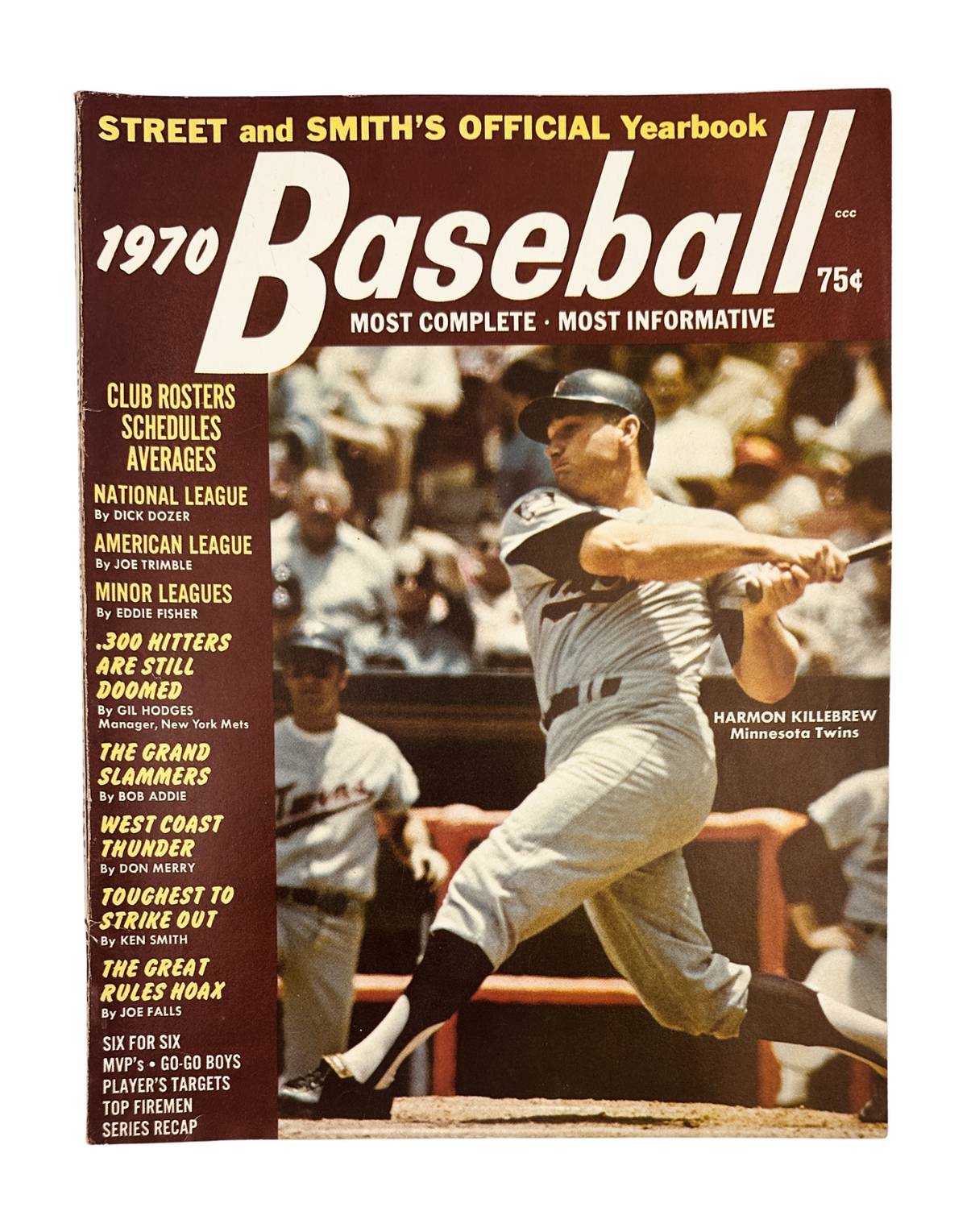
In an era when baseball was the undisputed heartbeat of American leisure, Harmon Killebrew stood apart — not through flash or controversy, but through sheer, awe-inspiring power. From his arrival in Washington with the Senators in 1954 to his legendary seasons with the Minnesota Twins, the Idaho farmboy became one of the most feared hitters in the history of the game, ultimately retiring with 573 home runs and a place among the immortals of the sport. Yet what made his story so compelling to the American public was the man behind the muscle: quiet, gracious, and genuinely beloved in an age that still valued humility in its heroes. Fans followed his ascent through the printed page — through box scores folded into back pockets, through glossy spreads in weekly sports publications, and through the kind of long-form feature writing that took its time to portrait a man fully. In the days before ESPN or Twitter, the magazine rack was where America went to understand its sporting gods.
Inside the Archive
The sporting press of the late 1950s through the 1970s treated Killebrew with the reverence typically reserved for royalty. Sports Illustrated was his most consistent chronicler, running features that paired authoritative statistical analysis with richly composed photography — often capturing the extraordinary torque of his swing mid-arc, or the quiet dignity of the man at rest in the Twins dugout. The Sporting News, then the authoritative weekly bible of American baseball, tracked his career with meticulous devotion, offering collectors a granular, issue-by-issue record of each record approached and surpassed. Beyond the dedicated sports press, general-interest giants like Look magazine brought the Twins slugger to a broader audience during Minnesota's golden baseball era of the 1960s, celebrating him as a symbol of Midwestern authenticity at a time when America was hungry for uncomplicated heroes. The photographic aesthetic of the era leaned into drama and intimacy simultaneously — stadium floodlights catching the pine tar on a bat, a candid smile in the locker room — images that spoke to both the spectacle and the soul of the man.
Curator's Checklist: Highlights Often Include
- Home run milestone coverage — Feature issues and special reports from the seasons in which the Twins' cleanup hitter approached and surpassed landmark figures, including the chase toward 500 career home runs, a threshold that was then synonymous with Hall of Fame destiny
- 1969 AL MVP season spreads — Editorial features and season-in-review issues commemorating his Most Valuable Player award, widely considered the apex season of a storied career, frequently accompanied by bold full-color action photography
- Minnesota Twins dynasty coverage — Multi-player ensemble features from the mid-to-late 1960s, when the Twins contended for American League supremacy and the franchise — and its anchor slugger — dominated regional and national sports press alike
- All-Star Game and World Series adjacent coverage — Collector-favorite issues surrounding October baseball and the Midsummer Classic, where appearances by the big first baseman and third baseman were perennial talking points for sports editors
- Retirement, legacy, and Hall of Fame induction features — Reflective long-form pieces from the late 1970s and early 1980s celebrating his enshrinement in Cooperstown in 1984, a moment that prompted warm, valedictory coverage across the sporting press
The Collector's Value
To hold one of these original issues is to hold something that no digital archive can replicate — the slightly rough texture of mid-century coated stock, the particular weight of a well-printed Sports Illustrated from 1969, the faint, pleasingly musty perfume of decades-old ink that speaks of newsstands and barbershops and living rooms long past. These are primary sources: unfiltered records of how America experienced its sporting culture in real time, complete with the period automobile advertisements, cigarette endorsements, and cultural ephemera that place each issue precisely within its historical moment. The Killebrew issues carry a particular warmth, because they document a man the press and public genuinely loved — and that affection radiates from every headline and caption. For collectors of vintage baseball memorabilia, Minnesota Twins history, or mid-century American sports culture, these publications offer something trophies and trading cards simply cannot — the full, living context of an era, bound between two covers and preserved across half a century. Explore the current available inventory below and find the piece of history waiting to join your collection.