📖 About this Collection
Jack Welch: The Architect of the Modern Corporate Age
The Legend & The Legacy
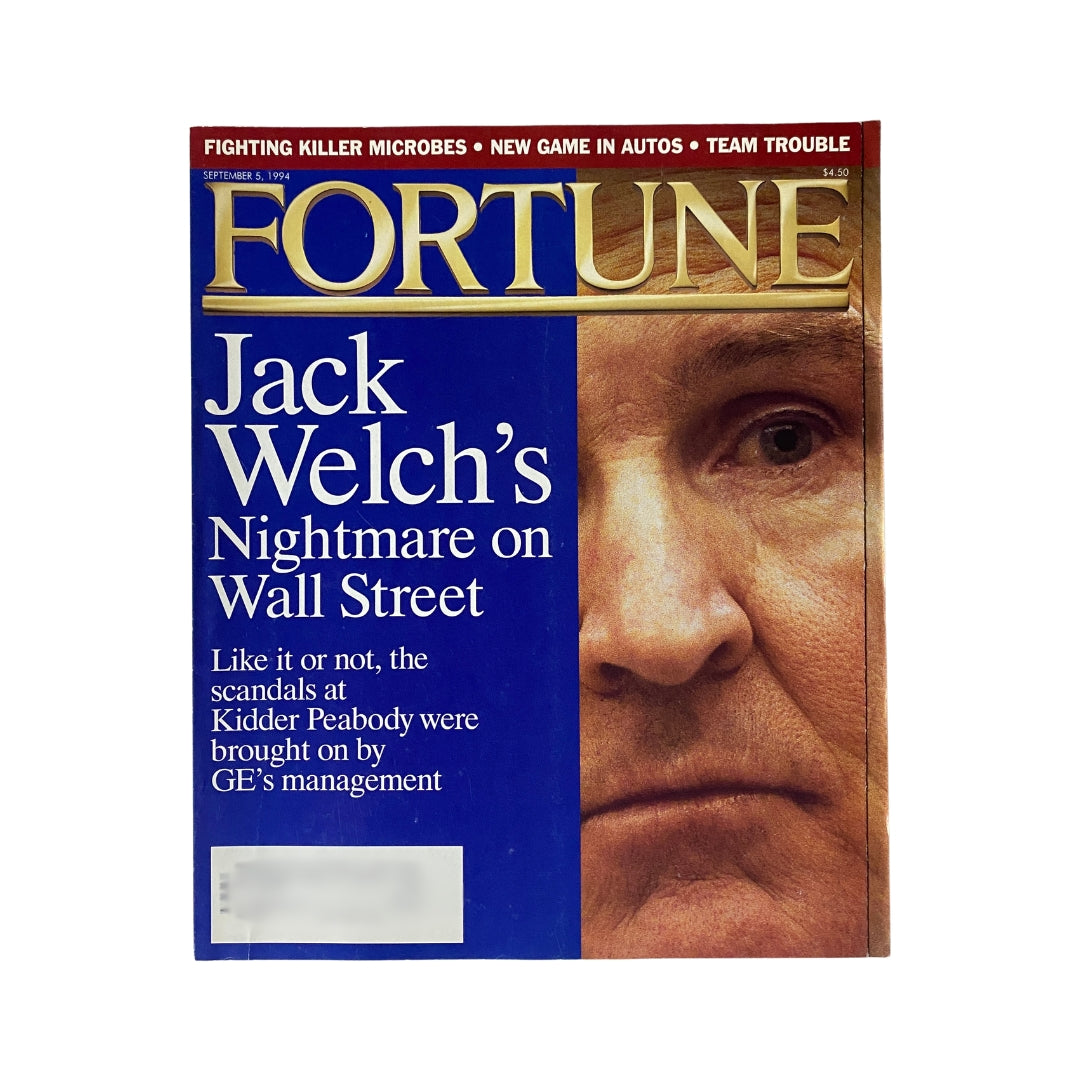
Few figures reshaped the landscape of American business with the seismic force of Jack Welch. From his ascent to the chairmanship of General Electric in 1981 through his celebrated retirement two decades later, the man they called "Neutron Jack" occupied a singular position in the public imagination — equal parts revered visionary and lightning rod for debate. At a time when American industry was fighting for its relevance against foreign competition and economic turbulence, he became the face of a new, uncompromising capitalism: leaner, faster, and ruthlessly focused on shareholder value. His management philosophies — stack ranking, Six Sigma adoption, the relentless pruning of underperforming divisions — were not merely corporate strategies but cultural phenomena, debated in boardrooms, business schools, and Sunday supplements alike. In an era before Twitter storms and podcast takes, the public followed his story exclusively through print: through breathless cover profiles, deep investigative features, and the quarterly business press that treated GE's earnings reports like dispatches from the front lines of American capitalism.
Inside the Archive
Vintage magazines of the 1980s and 1990s captured Welch with an editorial reverence typically reserved for heads of state. Photographers often portrayed him mid-gesture — a pointed finger, a forward lean across a conference table — projecting the restless, kinetic energy that defined his public persona. Fortune magazine was perhaps his most faithful chronicler, returning to him repeatedly across two decades, dissecting his methods and crowning him its most admired CEO of the century. Business Week offered a more analytical counterpoint, probing the human cost of his restructuring campaigns with rigorous long-form journalism that balanced the hagiography found elsewhere. Time brought him into the living rooms of a broader American readership, contextualizing his rise within the sweeping narrative of Reagan-era economic optimism and the anxious dawn of globalization. Internationally, publications such as The Economist framed his tenure as a case study in Anglo-American corporate doctrine, while niche trade journals from the manufacturing and finance sectors covered his every strategic pivot with almost forensic intensity.
Curator's Checklist: Highlights Often Include
- Landmark cover profiles from major business publications marking milestone moments — GE's record earnings announcements, the unveiling of his management philosophy, and the long-anticipated search for his successor
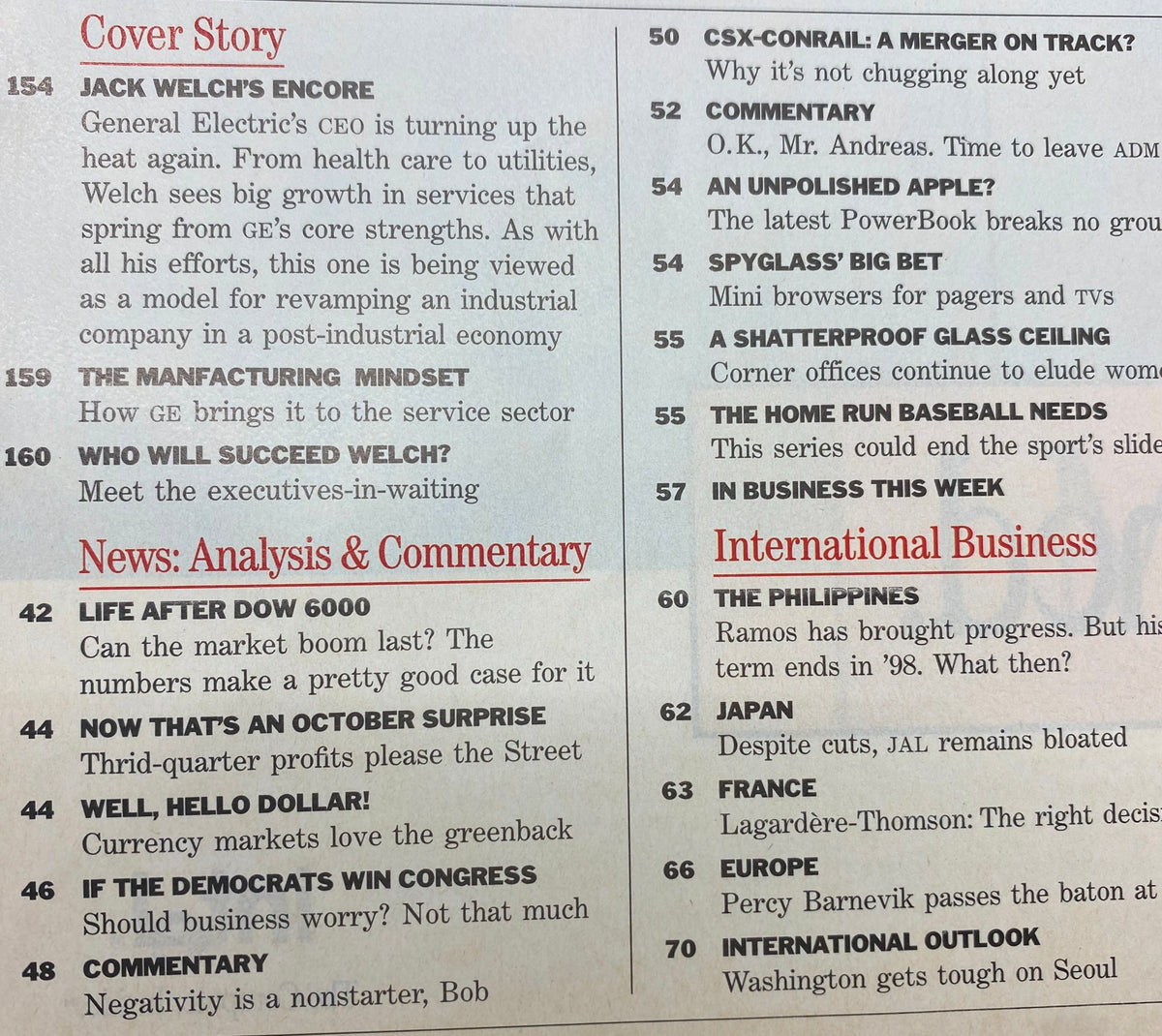
- In-depth features on the "GE Way" exploring Crotonville leadership programs, the Six Sigma initiative, and the cultural transformation of one of America's oldest industrial giants
- Controversy and counterpunch coverage examining the human toll of mass layoffs throughout the 1980s, and the fierce public debate over whether his brand of capitalism served workers or simply shareholders
- Retirement and succession narratives from circa 2001, when the race to replace him — ultimately won by Jeff Immelt — was treated by the business press as a succession drama worthy of a corporate dynasty
- Year-end and decade retrospectives positioning his twenty-year GE tenure within the broader sweep of late-20th-century American economic history
The Collector's Value
To hold one of these original issues is to hold a primary document of the age that made modern management. The slightly brittle texture of the uncoated business paper, the dense columns of type interrupted by full-bleed portraits shot on film — and yes, the faint, irreplaceable scent of decades-old ink that no digital archive can replicate — these are the textures of a moment when a single CEO could move markets and redefine what it meant to lead. Tucked between the feature profiles, the period advertisements tell their own story: full-page spreads for long-gone American manufacturers, brokerage houses, and corporate conglomerates that were themselves navigating the very economic forces Welch embodied. For collectors of American business history, corporate leadership and management culture, or late 20th-century economic Americana, these publications offer an irreplaceable window into the ideas and personalities that built — and in some cases broke — the modern enterprise. Browse the current available inventory below and find your piece of the era.