📖 About this Collection
Jayne Mansfield: Platinum, Powder, and the Price of Fame
The Legend & The Legacy
In the years between her debut and her tragically early death in 1967, Jayne Mansfield occupied a singular, fever-bright position in the American imagination — at once a calculated creation of Hollywood's studio machinery and a woman of genuine wit, ambition, and theatrical nerve. She arrived in the mid-1950s as the blonde bombshell the postwar public seemed to demand, yet she consistently confounded the role by holding a reported IQ of 163, speaking multiple languages, and playing the violin. The public consumed her story almost entirely through print: through the glossy pages fanned open in beauty parlors and barber shops, through the fan magazines stacked on drugstore carousels, through the international press that treated her European tours as affairs of state. There was no streaming archive, no social media feed — only the photograph, the caption, and the breathless editorial column to explain what it meant that this woman had walked into a room and changed the temperature of it.
Inside the Archive
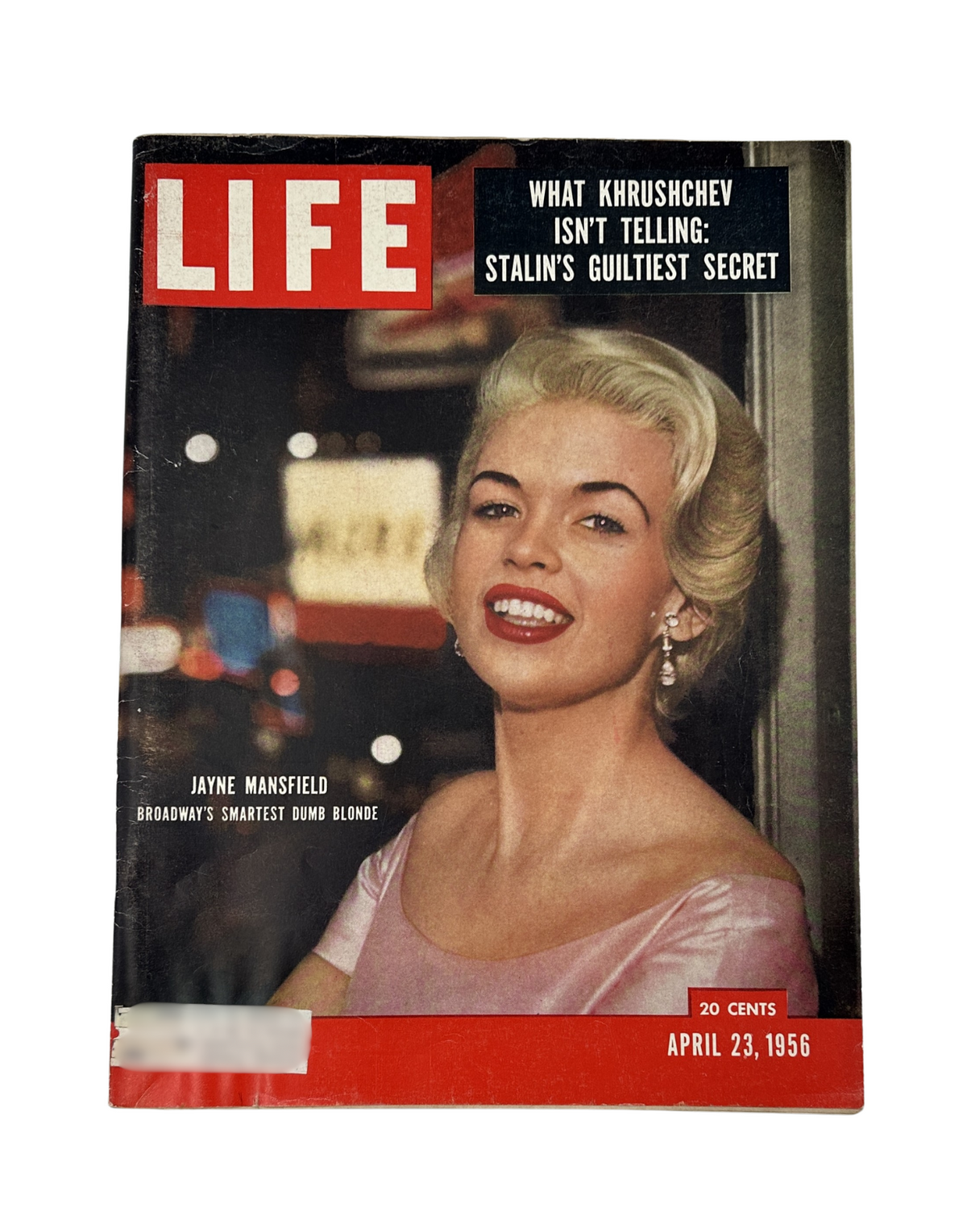
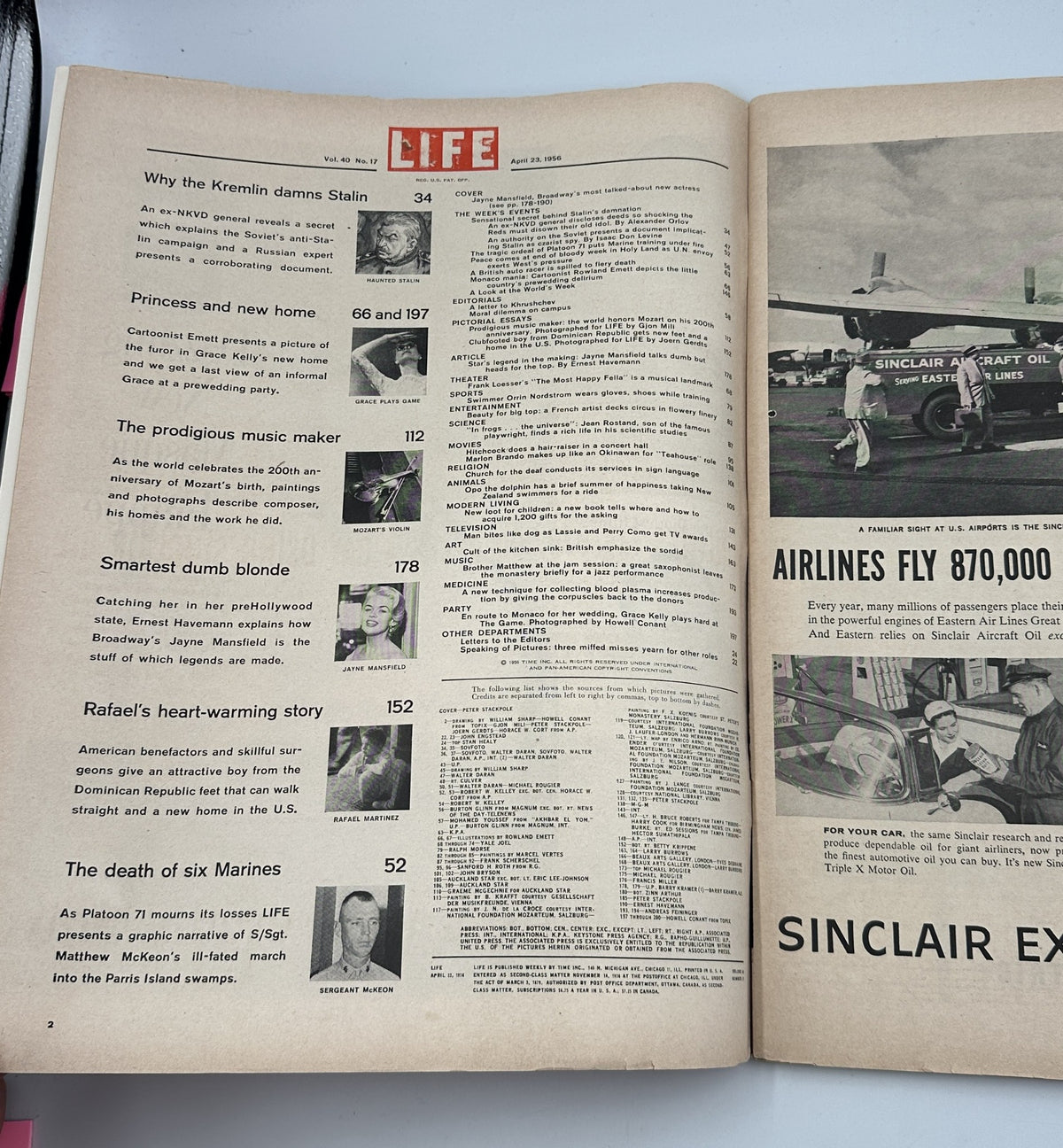
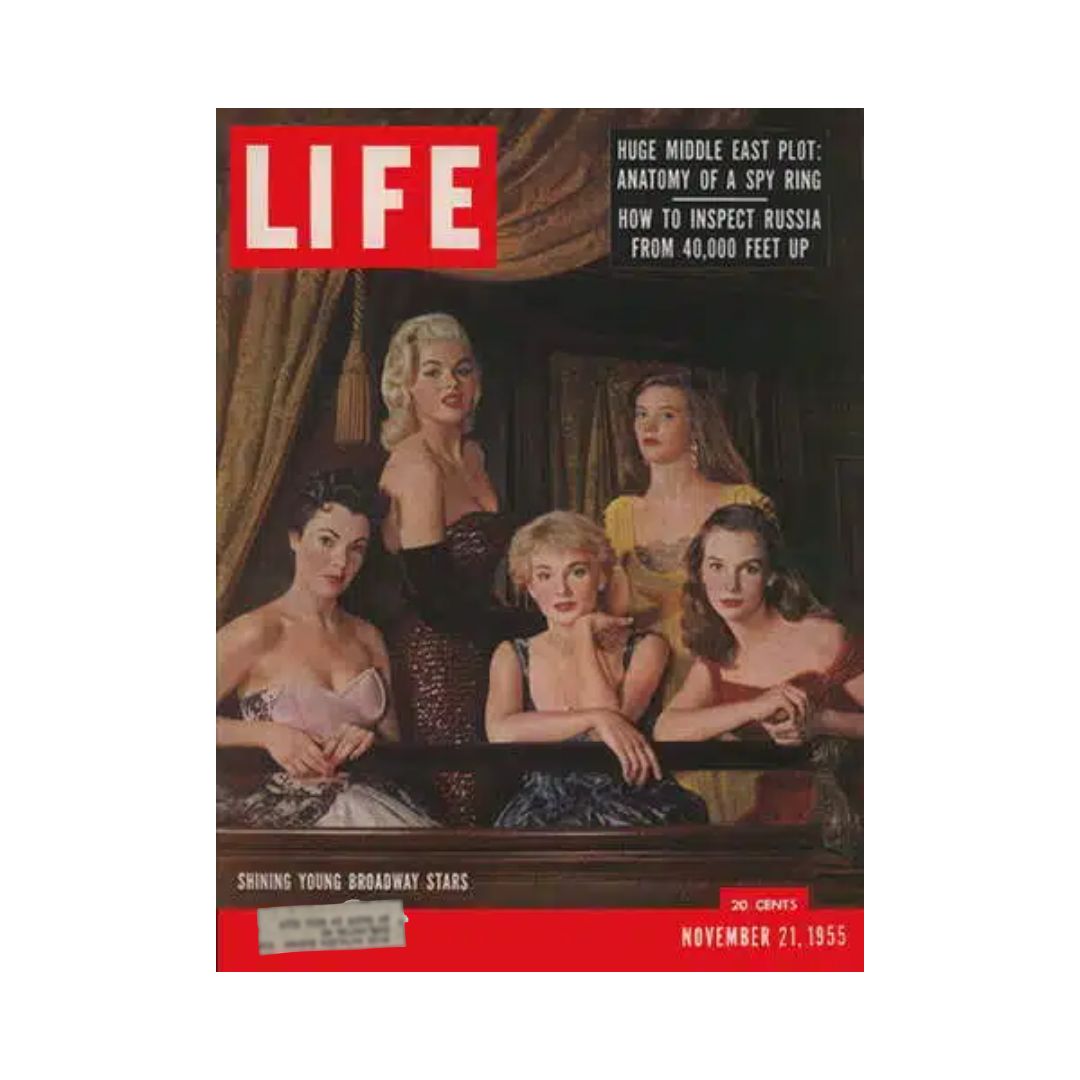
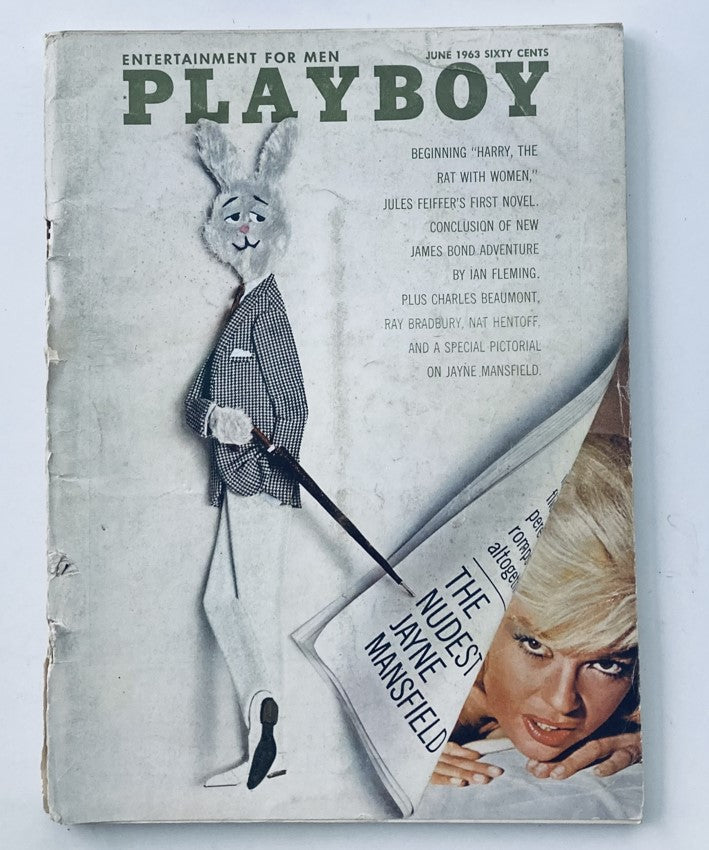
Vintage magazines from the 1950s and early 1960s covered her with an intensity that veered between adoration and prurience, and the photography reflected both impulses. Glamour portraiture — soft-lit, lavishly staged, shot through filters that turned her into something closer to an oil painting than a human being — appeared alongside candid paparazzi work that caught her at premieres, on film sets, and aboard transatlantic ocean liners. Playboy made her one of its defining early cover personalities, while Life offered more architecturally composed studies that placed her within the broader cultural conversation about femininity, celebrity, and spectacle in Eisenhower's America. European publications such as Paris Match treated her American-ness as its own kind of exotic phenomenon, running lavish photo essays whenever she toured France or Italy that feel, today, like despatches from a more saturated, more perfumed world.
Curator's Checklist: Highlights Often Include
- Hollywood fan magazine profiles from the peak years of 1956–1962, in which publications like Photoplay and Modern Screen offered intimate, carefully managed portraits of life at her famed pink mansion, the Jayne Mansfield Pink Palace in Holmby Hills
- Film promotional coverage tied to her major theatrical releases, including The Girl Can't Help It (1956) and Will Success Spoil Rock Hunter? (1957), often featuring full-color studio stills and original advertising ephemera from their initial runs
- International press features capturing her celebrated tours of Europe and Latin America, where she was received with a mania that rivalled the Beatles' later reception — documentation that speaks to her status as a truly global phenomenon
- Society and gossip column appearances chronicling her marriages, her relationship with Mickey Hargitay, and the relentless personal drama the press both manufactured and consumed throughout her career
- Later-era coverage from 1963–1967, a period often overlooked by casual collectors, when her career shifted toward nightclub performances and overseas film work — a fascinating and melancholy chapter rendered in candid, less-filtered photography
The Collector's Value
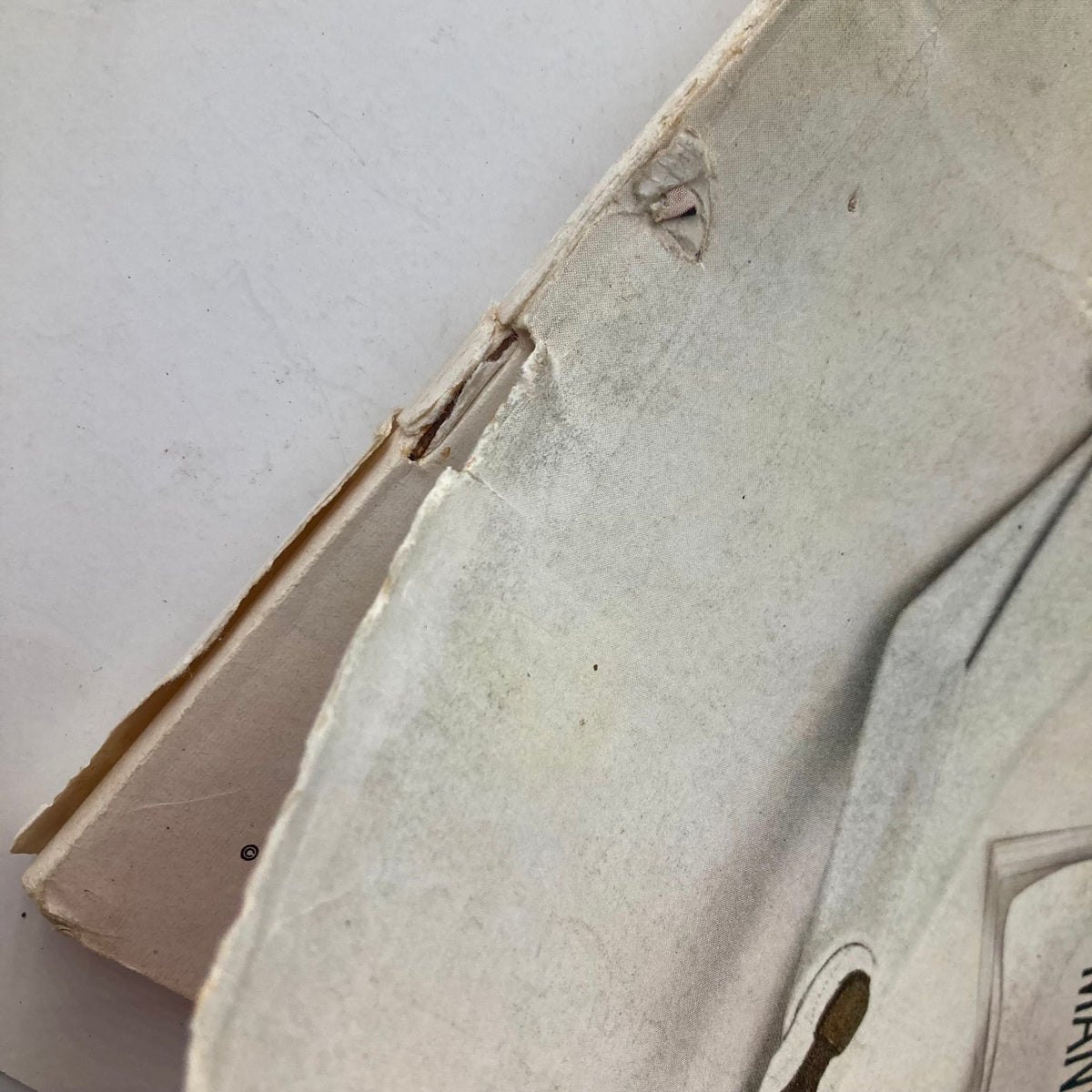
To hold one of these issues is to hold something the digital archive cannot replicate. The paper stock of a mid-century Life or Photoplay has a particular weight and give beneath the fingers — slightly chalky on the editorial pages, slick and cool on the advertisement spreads — and the ink carries a faint mineral scent that is the specific smell of a world that no longer exists. The advertisements that surround her image are themselves time capsules: cigarette brands, automobile models, Cold War-era kitchen appliances, all of them framing the blonde icon within the precise consumer landscape that produced her. A crease along the spine tells you someone read this eagerly; a subscription label on the back cover tells you someone waited for it to arrive. For collectors of mid-century Hollywood memorabilia, vintage pin-up and glamour ephemera, or postwar American cultural history, these publications offer irreplaceable primary-source documents — not reproductions, not reprints, but the actual object a fan held in 1957, seeing her face for the very first time. Explore the current available inventory below and find the issue that belongs in your archive.