📖 About this Collection
Jerry Seinfeld: The Comedian Who Became America's Mirror
The Legend & The Legacy
In an era before streaming algorithms and social media virality, America fell in love with Jerry Seinfeld the old-fashioned way — one television set, one Thursday night, one watercooler conversation at a time. From his early years haunting the comedy clubs of Manhattan to the unprecedented cultural dominance of Seinfeld, which ran from 1989 to 1998 and routinely commanded audiences of 30 to 76 million viewers, the observational genius from Long Island became something genuinely rare: a comedian who transcended comedy. He didn't just make people laugh; he gave them a shared language for the absurdity of modern life. Magazines of the era didn't simply profile him — they used him as a lens through which to examine American identity itself, the neuroses of urban living, the comedy of manners in the prosperous, self-absorbed 1990s. His face on a cover was shorthand for a particular cultural mood: sharp, ironic, self-aware, and entirely at ease with its own smallness.
Inside the Archive
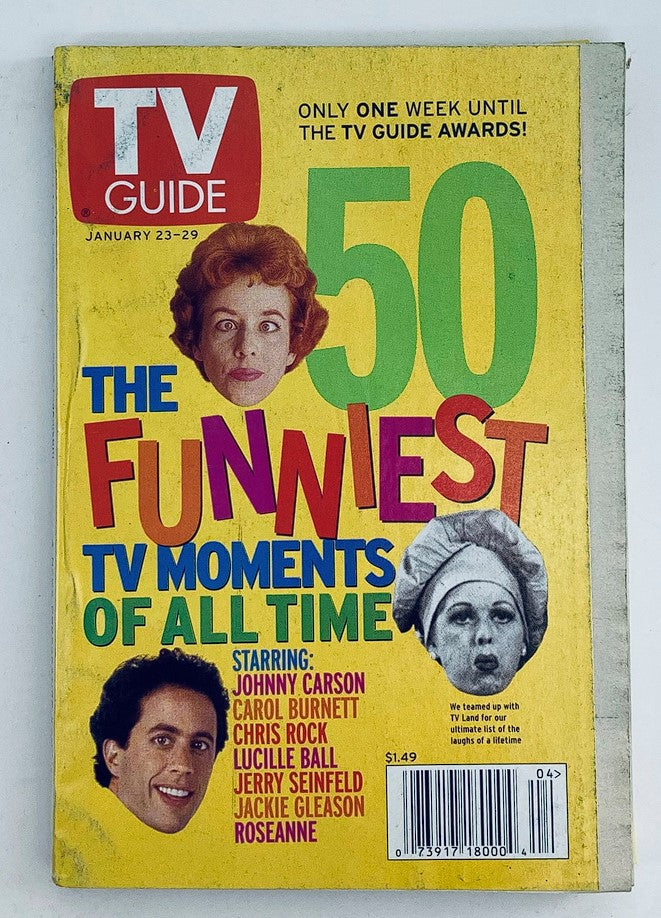
The print media coverage of the comedian and his eponymous show was voluminous, sophisticated, and often visually inventive — reflecting the high-gloss confidence of 1990s magazine culture at its commercial peak. TV Guide, the era's most powerful arbiter of televisual celebrity, featured him with remarkable frequency, its covers and centrepiece profiles tracking the show's rise from quirky curiosity to national institution. Rolling Stone approached him as a genuine cultural phenomenon, its long-form interviews probing the craft and philosophy behind the laughs with the seriousness usually reserved for rock legends. Entertainment Weekly became the definitive chronicler of the Seinfeld machine, dissecting cast dynamics, ratings milestones, and the cultural afterlife of its most beloved episodes. Beyond the entertainment press, mainstream titles — Time, Newsweek, People — regularly deployed him as a barometer of the decade, his image gracing features about the state of American comedy, celebrity, and the peculiar genius of a show famously about nothing.
Curator's Checklist: Highlights Often Include
- The Seinfeld Phenomenon Coverage (Early-to-Mid 1990s): Features tracking the show's improbable ascent from a low-rated summer experiment to the defining sitcom of its generation, often with full cast photography and behind-the-scenes editorial access.
- The Final Season & Series Finale Retrospectives (1997–1998): Extensive commemorative coverage across entertainment and general-interest publications marking the end of an era, including collector-worthy issues dedicated entirely to the show's legacy and cultural impact.
- Stand-Up Comedy Profiles (Late 1980s–Early 1990s): Rarer, earlier coverage from comedy and entertainment trades capturing the comedian before mainstream superstardom — profiles of the New York stand-up circuit that document his origins and craft.
- Celebrity & Lifestyle Features: Glossy, personality-driven profiles in titles like People and Us exploring his public persona, his famously fastidious habits, and his relationship with and eventual marriage to Jessica Sklar.
- Year-End & Decade Retrospectives: Issues from late 1998 through 2000 in which critics and editors named the show — and its creator — among the defining cultural figures of the decade, offering rich contextual documents of how the era assessed its own icons.
The Collector's Value
There is something irreplaceable about holding a 1990s magazine that captured this comedian at the height of his powers — the cover image printed on paper stock that has gained the warm, slightly amber patina of age, the ink carrying that faint, distinctive smell of a decade well-preserved, the interior pages framed by advertisements for products and fashions that are themselves now artifacts of a vanished world. These are primary sources: unfiltered documents of how an era consumed its own culture, untouched by the revisionism of retrospect or the compression of the digital archive. The photography is generous, the profiles unhurried, the editorial ambition of the 1990s magazine industry fully on display. For collectors of television history, devotees of American comedy and its craft, or those who lived through the 1990s and wish to hold a piece of its particular spirit in their hands, these publications offer an intimacy with the era that no streaming service or Wikipedia entry can replicate. Browse the current available inventory below and discover which pieces of this remarkable cultural chapter are waiting to find a new home.