📖 About this Collection
Joan Rivers: The Woman Who Made the World Laugh — and Think
The Legend & The Legacy
Long before Twitter feuds and viral takedowns, there was a woman with a microphone and an absolutely unshakeable nerve. Joan Rivers didn't simply enter show business — she detonated herself into it, shattering the unspoken rule that the comedy stage was no place for a woman with something real to say. From her electrifying early appearances on The Tonight Show in the 1960s, where Johnny Carson declared her destined for stardom, to her reign as the undisputed queen of red carpet commentary and her late-career renaissance as a comedic elder stateswoman, she remained perpetually, defiantly relevant. In an era when women in entertainment were expected to be decorative rather than dangerous, she chose dangerous every single time. Readers devoured her story through the glossy pages of magazines stacked on coffee tables and beauty parlor waiting rooms — a culture that processed celebrity through print, where a single photograph or a devastating interview quote could define a public persona for years. Joan Rivers was not a subject the press could ignore; she was a subject the press could not stop writing about.
Inside the Archive
Vintage magazine coverage of Rivers is a study in contradictions — glamorous and gritty, admiring and occasionally unsettled by exactly how far she was willing to go. In her earlier decades, publications like People and TV Guide captured her with the relentless energy of someone perpetually in motion: bold, brash, impeccably turned out, and radiating the particular hunger of a woman who had clawed her way past every closed door. Vanity Fair approached her with the kind of deep-focus editorial gravitas it reserved for figures who had genuinely reshaped culture, exploring the psychology beneath the punchlines and the steel beneath the sequins. Meanwhile, Us Weekly and the broader entertainment press chronicled her fashion evolution — and her famously candid relationship with cosmetic surgery — with a mix of fascination and the occasional raised eyebrow she would have immediately turned into a joke. Photography across these decades reflects a performer who understood the camera as an instrument of power: always lit, always performing, always in command of exactly what she was projecting, even when the projection was deliberate self-deprecation.
Curator's Checklist: Highlights Often Include
- Early career breakthroughs — Coverage from the mid-1960s through the 1970s documenting her rise through the New York stand-up circuit, her pivotal Tonight Show appearances, and her emergence as a genuinely groundbreaking female voice in American comedy
- The E! Entertainment years — Issues from the 1990s and 2000s tying her to the explosion of red carpet culture, including features on her iconic Fashion Police commentary style and her reinvention as the era's most quotable celebrity critic
- Profile and interview features — Long-form pieces from major entertainment and lifestyle publications in which she speaks candidly about resilience, widowhood after the death of Edgar Rosenberg, and the relentless pursuit of the next laugh
- Fashion and beauty editorials — Spreads in which she is styled with full theatrical flair, often accompanied by her own commentary on beauty standards, aging, and the absurdity of Hollywood's relationship with women over fifty
- Tribute and retrospective issues — Publications from 2014 onward commemorating her extraordinary legacy, celebrating a seven-decade career that influenced virtually every female comedian who followed
The Collector's Value
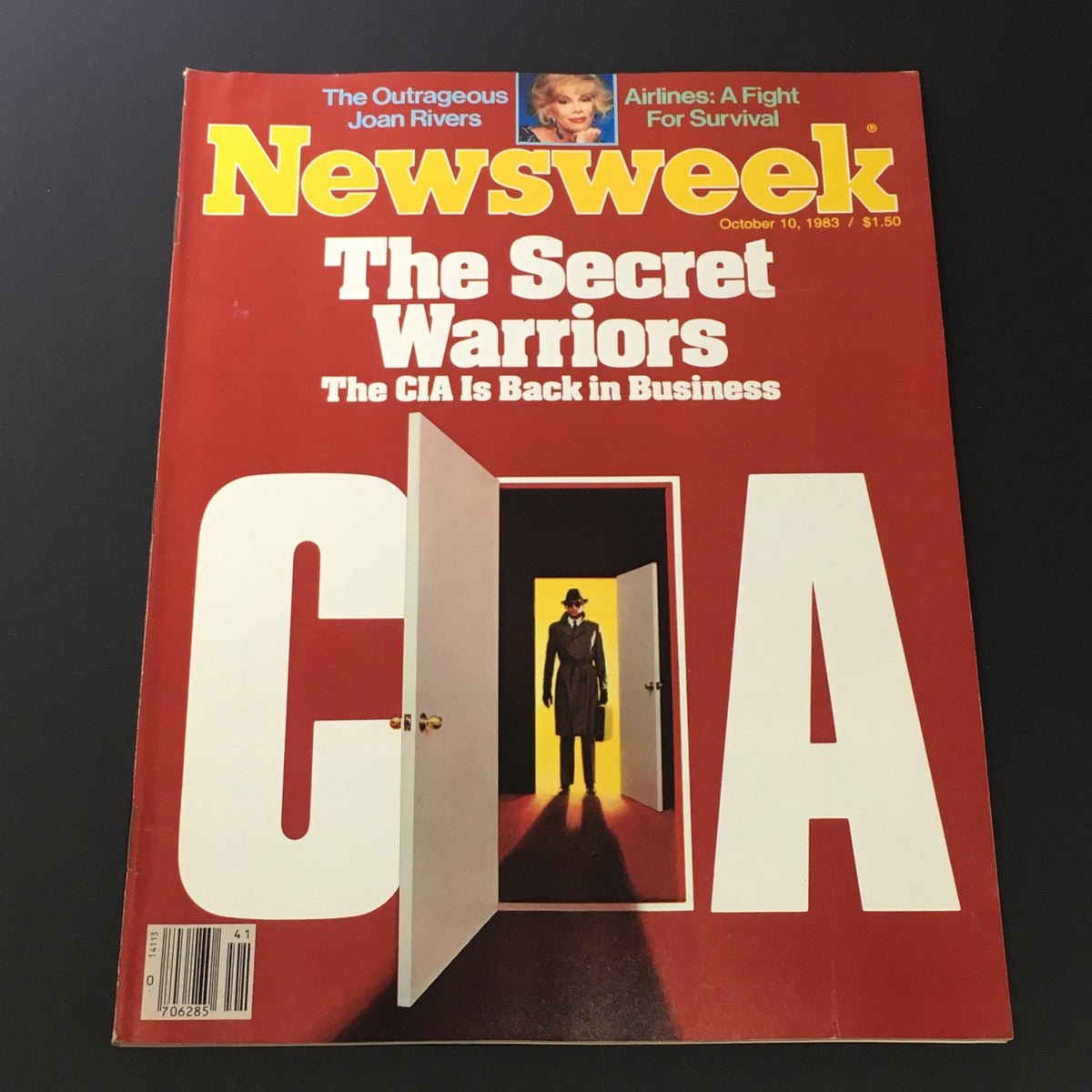
To hold a vintage magazine featuring Joan Rivers is to hold a artifact of a very specific, irreplaceable moment in American cultural history — a time when celebrity was mediated through ink and paper, when a cover photograph was a cultural event and a pull-quote could echo through an entire decade. The paper itself tells a story: the slightly waxy stock of a 1970s People issue, the heavier, luxurious weight of a Vanity Fair profile from the late 1980s, the faint, sweet mustiness of decades past mingling with the ghost of perfume advertisements long discontinued. Surrounding editorials and vintage advertisements place her squarely within the era she inhabited and transformed, offering the collector not just a portrait of one extraordinary woman but a vivid, tactile window into the world she made funnier and more honest. For collectors of comedy history and entertainment memorabilia, feminist cultural artifacts, or golden-age television and late-night broadcasting ephemera, these publications offer something no digital archive can replicate — the weight of real time, held in your hands. Browse the current inventory below and discover which pieces of her remarkable story are available to bring home today.