📖 About this Collection
Jodie Foster: A Mind That Captivated the World
The Legend & The Legacy
Few careers in the history of American cinema have unfolded with such precocious intensity, intellectual gravity, and quiet defiance as that of Jodie Foster. She arrived in the public consciousness as a child, fully formed and unsettling in her seriousness — a girl who seemed to understand the camera more deeply than most adults ever would. By the time Taxi Driver detonated across cinema screens in 1976, she had already become a cultural flashpoint: a child star who refused the saccharine mold, chosen instead to inhabit the darkest corners of the American imagination. Long before the internet collapsed the distance between celebrity and audience, the reading public followed her story in print — through breathless cover lines, considered film criticism, and probing long-form profiles that attempted, often in vain, to decode the extraordinary composure behind those pale, watchful eyes. The magazines of her era did not merely report on her; they bore witness to one of the most remarkable and complicated ascents in Hollywood history, from the studios of New Haven to the twin peaks of the Academy Awards.
Inside the Archive
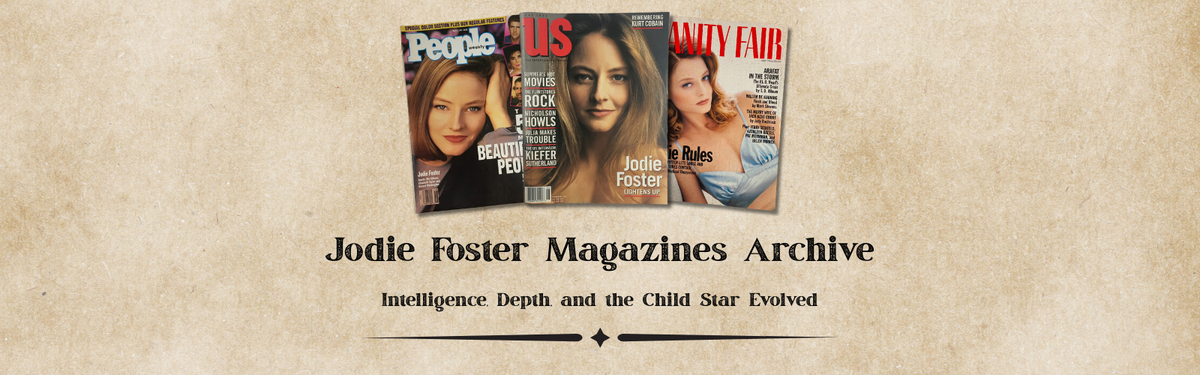
The print coverage of this singular actress evolved dramatically across the decades, shifting from the fascination of child prodigy coverage in the mid-1970s to the more reverential treatment befitting a two-time Oscar winner by the early 1990s. Early profiles in Rolling Stone and People grappled with the paradox she presented — a Yale-educated intellectual thriving at the center of the dream factory — often pairing candid, naturalistic photography with editorial tones pitched somewhere between admiration and unease. Premiere, the essential magazine of serious Hollywood discourse in the late 1980s and 1990s, returned to her repeatedly, granting her the kind of sustained analytical attention typically reserved for directors rather than stars. International publications, particularly Paris Match and European cinema weeklies, treated her with the unguarded reverence of a continent that had always been more comfortable with her brand of cerebral, uncompromising stardom. The photography across these eras tells its own story: early images of a self-possessed teenager giving nothing away, transitioning to the spare, confident portraiture of a woman who had survived the unthinkable and emerged wholly on her own terms.
Curator's Checklist: Highlights Often Include
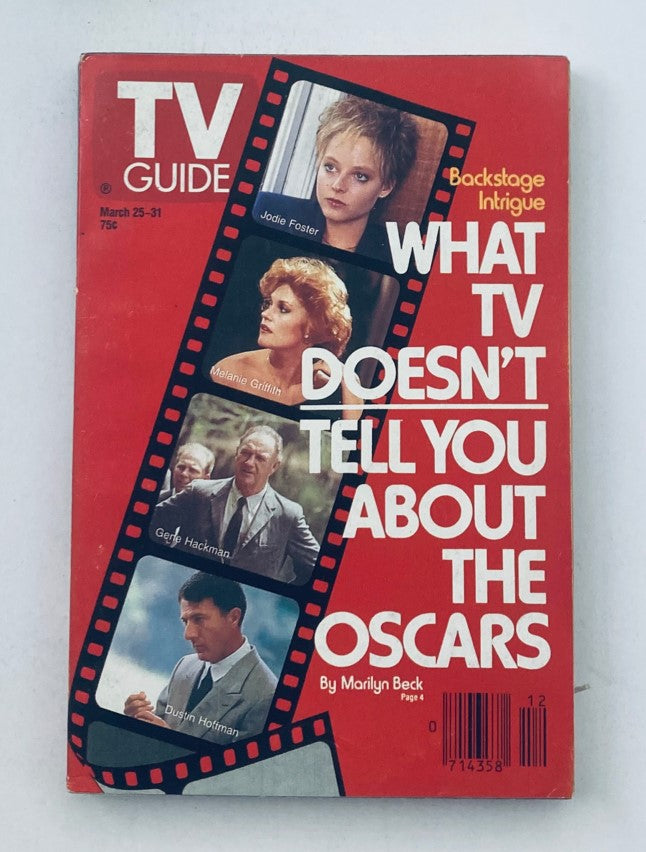
- Child star and early career coverage (mid-1970s): Features and reviews tied to her breakthrough work, exploring the cultural unease and astonishment surrounding a child performer of such uncommon depth and range.
- Post-Hinckley media scrutiny (early 1980s): A deeply sensitive chapter in her public life that generated significant, often unwanted, press coverage — issues from this era offer a remarkable and sobering document of celebrity, trauma, and the limits of public intrusion.
- The Silence of the Lambs era (1991–1992): Collector favorites frequently emerge from this moment — cover features and in-depth profiles timed to the film's release and her second Academy Award, representing the full-flowering of her critical and popular authority.
- Director and producer profiles (late 1990s–2000s): Coverage often reflects her evolution behind the camera, with trade publications and prestige film magazines examining her transition from icon to auteur.
- International and foreign-language editions: European and French press coverage, in particular, offers a distinctive perspective on her stardom — more philosophical, less invasive, and often accompanied by striking, unconventional portraiture unavailable in domestic publications.
The Collector's Value
To hold one of these issues is to hold a document of cultural history that no digital archive can replicate. The paper stock of a 1970s Rolling Stone has a particular warmth and softness beneath the fingertips; the heavier, coated pages of a 1991 Premiere carry the faint, intoxicating scent of decades-old ink and the faded perfume of a long-ago advertisement. And those advertisements — for cigarettes, for American cars, for perfumes that no longer exist — frame the story of a woman's career within the broader story of a vanishing world, giving each issue a time-capsule resonance that no reprint or screenshot can approximate. The covers themselves are primary sources: the exact image the public saw, the exact headline that shaped the conversation, untouched and unmediated by retrospect. For collectors of classic Hollywood cinema, feminist cultural history, or vintage entertainment journalism, these publications offer an irreplaceable window into the making of a legend — issue by issue, decade by decade. Explore our current available inventory below and find the piece of that history that belongs in your collection.