📖 About this Collection
Kim Alexis: The Golden Girl of the Supermodel Age
The Legend & The Legacy
Before the term "supermodel" had fully entered the cultural lexicon, Kim Alexis was already living its definition. Rising to prominence in the late 1970s and commanding the 1980s with a luminous, all-American beauty that seemed to embody an entire decade's aesthetic ideal, she became one of the most recognizable faces in the world — not through a screen, but through the printed page. In an era when a magazine cover was the singular summit of visibility, she reached it repeatedly, her image distributed across newsstands from Manhattan to Milan, from suburban grocery stores to international airport kiosks. Readers didn't scroll past her — they picked her up, carried her home, and kept her. Her career unfolded in real time through ink and glossy stock, each new cover a cultural event, each editorial spread a carefully crafted chapter in a story that the public consumed month by month, issue by issue. She was, in the truest sense, a creature of print.
Inside the Archive
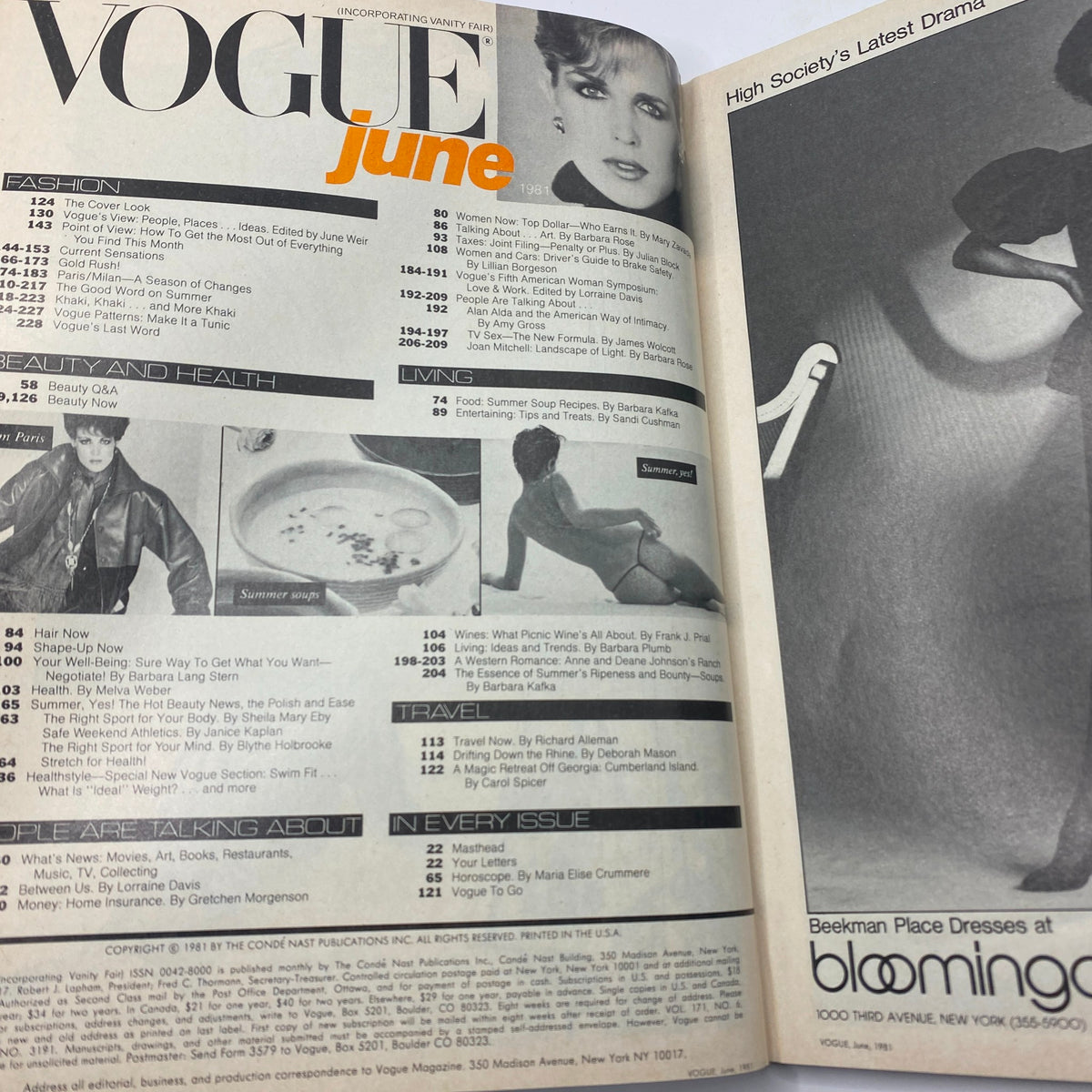
The magazines that chronicled her ascent did so with the full visual arsenal of a golden age of fashion and sports photography. Sports Illustrated made her a recurring icon of its legendary Swimsuit Issue throughout the 1980s, deploying the era's sun-drenched, cinematic photography to cement her status as a fixture of American popular culture. Vogue — both its American and European editions — treated her with the high-fashion gravitas she commanded, pairing her angular, classically proportioned features with the decade's bold color palettes and architectural styling. Harper's Bazaar, ever the more cerebral counterpart to Vogue's glamour, featured her within editorials that leaned into elegance over spectacle. Beyond the fashion press, her mainstream celebrity drew coverage from People and Woman's Day, publications that framed her not merely as a model but as a public figure — a face that transcended the runway and entered the broader American living room. The editorial tone across these publications was invariably aspirational, positioning her as the embodiment of a particular radiant, wholesome, yet undeniably glamorous ideal of femininity.
Curator's Checklist: Highlights Often Include
- Sports Illustrated Swimsuit Issues (late 1970s–1980s): Among the most sought-after items in any collector's search, these issues represent the apex of her mainstream cultural visibility and are perennial targets for both swimwear-era enthusiasts and supermodel historians alike.
- High-fashion editorial spreads: Collectors frequently encounter issues of Vogue and Harper's Bazaar from the late 1970s through the mid-1980s featuring her in signature decade-defining looks — oversized shoulders, bold makeup, and the restrained opulence that defined Reagan-era aesthetics.
- Mainstream celebrity profiles: Issues of People, Us, and similar publications often surface with features exploring her personal life, her outspoken Christian faith, and her transition into television hosting — offering a rounder portrait of the woman beyond the cover.
- International fashion press: European editions of Elle, Cosmopolitan, and various Italian and German fashion titles covered her extensively, reflecting the truly global reach of her image during the supermodel era's peak.
- Health, fitness & lifestyle coverage: As the 1980s wellness movement gained momentum, she appeared in publications centered on fitness and healthy living, broadening her archive into categories that speak to collectors beyond the traditional fashion sphere.
The Collector's Value
To hold one of these original issues is to hold something that no digital archive can replicate. The paper stock of an 1980s Sports Illustrated has a particular weight and texture — slightly coarser than today's publications, with a warmth in the printing that modern offset processes have long since rationalized away. The ink carries a faint, distinctive scent that anyone who grew up in that decade will recognize immediately as the smell of anticipation, of a magazine pulled fresh from a mailbox or a wire rack. Surrounding her image, you will find the full cultural context of the moment: advertisements for perfumes that no longer exist, fashion houses in their pre-conglomerate era, cars and consumer electronics that now read as design history. These are not merely photographs — they are primary documents, windows into how a society saw itself and what it chose to celebrate. For collectors of supermodel and fashion history, 1980s American pop culture, or Sports Illustrated and swimwear memorabilia, these publications offer an irreplaceable tactile connection to an era that existed entirely in print, entirely in the physical world. Browse the current available inventory below and find the exact piece of that world waiting to come home with you.