📖 About this Collection
Liza Minnelli: A Daughter of Hollywood, A Citizen of the World
The Legend & The Legacy
Few figures in the second half of the twentieth century commanded the cultural stage with such raw, magnificent force. Born into the gilded mythology of Old Hollywood — the daughter of Judy Garland and director Vincente Minnelli — she could have coasted on inheritance alone. Instead, she built something entirely her own: a career of staggering range that moved effortlessly between Broadway, film, television, and the concert hall. Her 1972 Oscar-winning performance in Cabaret arrived at a pivotal moment in American cinema, a turning point when Hollywood was shedding its old skin, and she embodied that transformation with every frame. On stage, her Tony-winning work in Flora the Red Menace and the legendary Liza with a Z television special announced a performer of volcanic charisma. Through the 1970s and into the glittering excess of the 1980s — Studio 54, sold-out Carnegie Hall nights, collaborations with Halston, Andy Warhol, and Mikhail Baryshnikov — she was not merely a celebrity. She was a phenomenon, a living symbol of a New York that burned bright and brief, captured in ink and photography before the internet could flatten it into pixels.
Inside the Archive
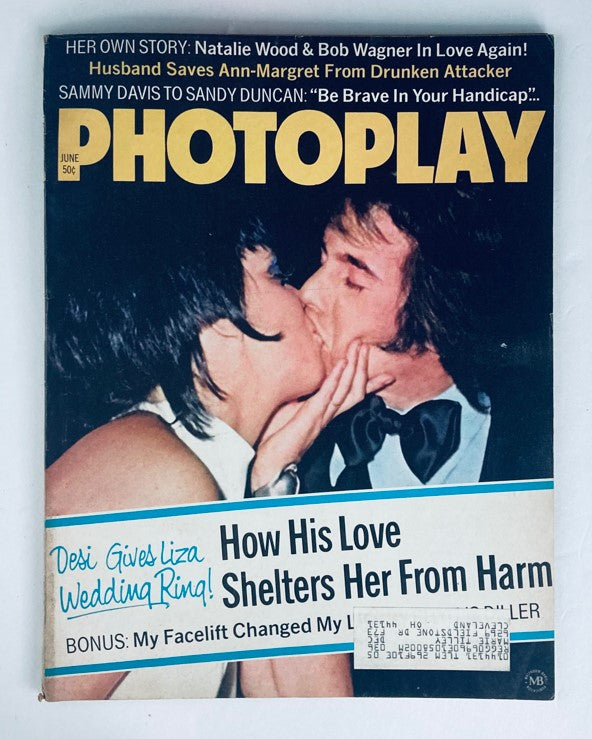
The print media of her era rose to meet her spectacle with genuine reverence and, at times, breathless fascination. Fashion and culture magazines treated her as a muse and a subject of endless reinvention: the kohl-rimmed eyes, the Halston sequins, the bowler hat silhouette that became one of the most iconic images of 1970s cinema. Life magazine documented her rise with the weight and gravitas it reserved for figures of genuine historical consequence, placing her among the cultural monuments of her generation. Vogue returned to her repeatedly, exploring the intersection of high fashion and theatrical glamour that she embodied so completely, while international publications such as Paris Match brought her story to European audiences who adored her with a particular Continental intensity. Entertainment trade papers captured the industry side — the deals, the comebacks, the critical reckonings — while fan magazines chronicled the personal mythology that surrounded her public life. The photography of this era is especially remarkable: grand, theatrical, deliberately composed studio portraits sit alongside candid on-set images and electrifying live performance shots, all printed with the rich, saturated color printing of the period that no digital reproduction has ever fully replicated.
Curator's Checklist: Highlights Often Include
- Cabaret-era features (1972–1973): Coverage surrounding her Academy Award win frequently appears in archives of this period — profiles, behind-the-scenes features, and the cultural commentary that recognized Cabaret as a landmark film.
- Liza with a Z broadcast coverage (1972): Television and entertainment publications from this period often documented the making and reception of her legendary Bob Fosse-directed concert special, one of the most celebrated television events of the decade.
- Studio 54 and the New York social scene (late 1970s): Society and nightlife coverage from this era — in both mainstream and fashion titles — frequently places her at the center of that remarkable, unrepeatable cultural moment.
- International and European editions: Collectors often seek out French, Italian, and British publications from the 1970s and early 1980s, where she was treated as a figure of enormous glamour and transatlantic significance, often with distinct photography and editorial perspectives unavailable in American editions.
- Comeback narratives and critical reassessments (1980s–1990s): A career of her arc generated substantial long-form journalism around her returns to the stage and screen, offering a fascinating through-line of how critics and editors tracked the evolving legend over time.
The Collector's Value
To hold one of these original issues in your hands is to hold something that no archive website or streaming service can offer: the full, sensory weight of the era itself. The slightly coarse texture of the paper stock, the faint chemical perfume of decades-old ink, the generous full-bleed photographs printed without the compression of digital reproduction — and surrounding every editorial page, the vintage advertisements for perfumes, cigarettes, and automobiles that place the entire artifact unmistakably in its historical moment. These are not reprints. They are primary sources: documents that were printed, sold, and read by people who were living through the very history they recorded, with no idea it would one day be scarce. For collectors of Broadway and Golden Age entertainment memorabilia, mid-century fashion and photography history, or New York City cultural history of the 1970s and 1980s, these publications offer an irreplaceable window into an era that existed, brilliantly and briefly, before it was gone. Explore our current rotating inventory below and discover which original issues are available today.