📖 About this Collection
Meg Ryan: America's Sweetheart, Captured in Print
The Legend & The Legacy
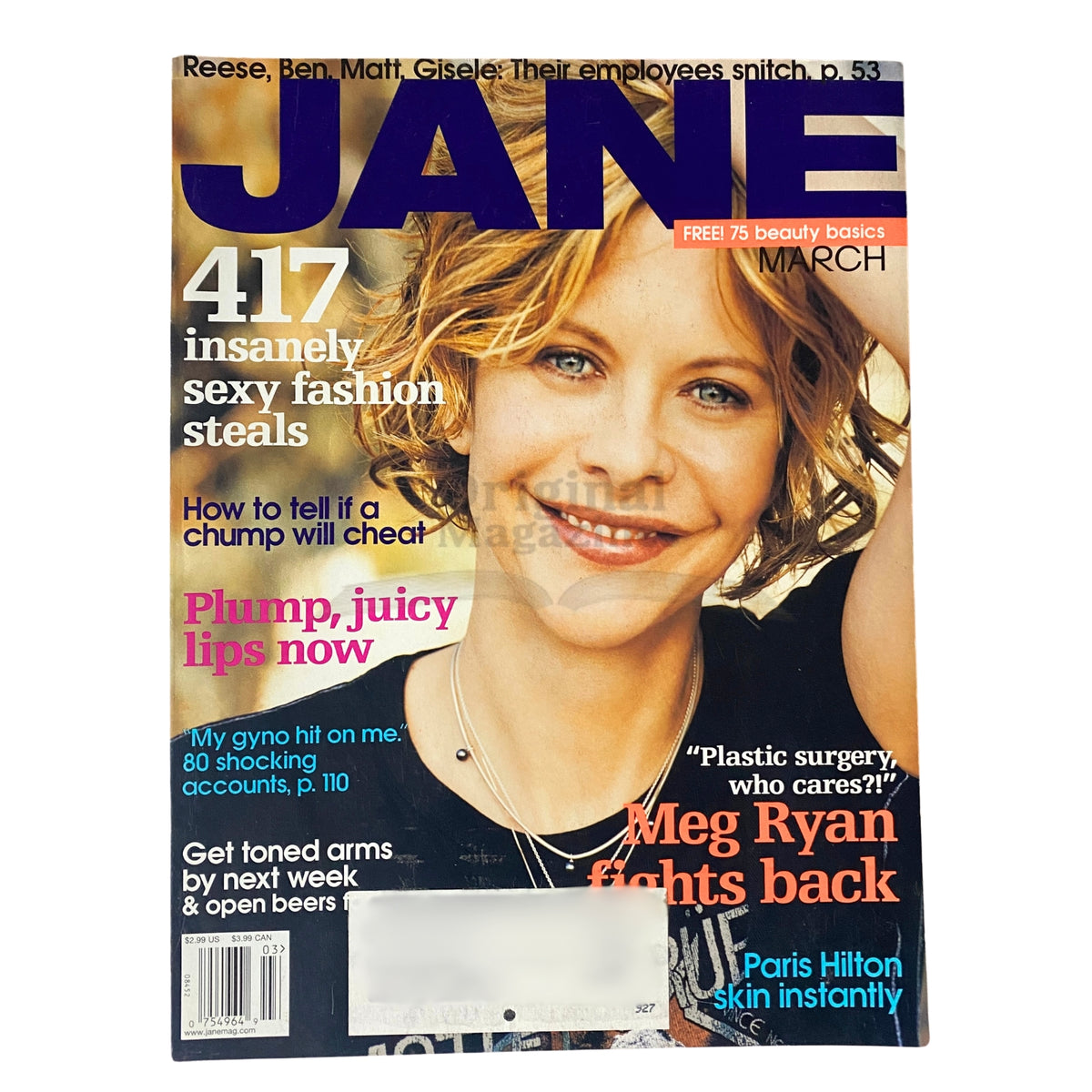
From the late 1980s through the turn of the millennium, few faces sold more magazines than Meg Ryan's. At the height of her cultural reign, she embodied a specific and deeply coveted American ideal — warm, luminous, effortlessly witty, and possessed of a laugh so infectious it became something of a national treasure. Her ascent through When Harry Met Sally..., Sleepless in Seattle, and You've Got Mail made her the defining romantic lead of her generation, but it was the gossip columns, the fashion spreads, and the breathless cover profiles that truly shaped how a devoted public understood her. In an era before social media collapsed the distance between star and audience, it was the glossy pages of a magazine — purchased at a newsstand, read on a commute, clipped and pinned above a desk — that carried her image into everyday life. She was not merely a movie star; she was a cultural companion, someone whose haircut (that effortlessly tousled bob of the mid-1990s) became a phenomenon unto itself, replicated in salons from Manhattan to Malibu and catalogued in obsessive detail across the print press of the day.
Inside the Archive
Vintage magazines from the 1989–2003 era captured the actress with a particular editorial warmth that feels impossible to replicate today. Photographers favored natural light and open, approachable compositions — a deliberate contrast to the more severe glamour afforded to many of her contemporaries. People magazine returned to her repeatedly throughout the decade, chronicling everything from her box-office triumphs to her high-profile personal life with the kind of intimate, narrative-driven coverage that once made print feel genuinely indispensable. Entertainment Weekly, in its early years as the definitive barometer of Hollywood's cultural currency, placed her on its covers during major release cycles, pairing sharp critical prose with carefully art-directed photography. Internationally, publications such as Paris Match and Hello! approached her with the reverence typically reserved for royalty, presenting her as something of a transatlantic symbol of American femininity at its most disarming. The editorial tone across these publications was consistently one of affectionate admiration — a press corps that seemed, collectively, genuinely charmed.
Curator's Checklist: Highlights Often Include
- Romantic comedy release coverage — Feature profiles and cover stories tied to the theatrical releases of her signature films, often including on-set photography and extended cast interviews that place her work within the broader cultural conversation of the era.
- The haircut phenomenon — Style and beauty features from the mid-1990s documenting the cultural firestorm ignited by her layered, tousled bob, a moment when a single hairstyle became a nationwide obsession covered across fashion, entertainment, and even news publications.
- Year-end "It" lists and decade retrospectives — As the 1990s closed, editors frequently positioned her as the defining female star of the decade, making late-nineties year-in-review issues particularly rich with her image and legacy.
- Personal life coverage — Publications from the late 1990s and early 2000s that chronicled the intense media focus on her private world, representing some of the era's most candid and historically revealing celebrity journalism.
- International editions — European and Australian magazine issues that offer a fascinating lens on how her particular brand of American charm was received, interpreted, and occasionally mythologized abroad.
The Collector's Value
To hold one of these original issues is to hold a small, perfectly preserved window into a very specific moment in American cultural life. The paper stock of a 1990s glossy carries its own sensory history — the slight give of coated pages, the faint, distinctive scent of decades-old ink and adhesive, the surrounding advertisements for perfumes, sedans, and long-distance calling plans that ground each issue in its precise historical moment as no digital archive ever could. These are primary sources, not reproductions; the crease on the spine and the subscription address label on the back cover are as authentic as the cover image itself. For collectors of 1990s Hollywood memorabilia, romantic comedy cinema history, or iconic pop-culture ephemera of the pre-internet era, these publications offer an irreplaceable tactile connection to a star and a cultural moment that defined an entire decade of American life. Explore our current rotating inventory below and claim your piece of this golden era before it moves on.