📖 About this Collection
Menachem Begin: Architect of Peace, Voice of a Nation
The Legend & The Legacy
Few figures of the twentieth century embodied contradiction so completely, or so compellingly. Menachem Begin — resistance fighter, ideologue, statesman, and Nobel laureate — lived a life that unfolded like a century's worth of history compressed into a single biography. From his harrowing escape through Soviet labor camps to his leadership of the Irgun underground, from the founding of the State of Israel to the floor of the Knesset where he served as a thunderous opposition voice for nearly three decades, the story of this tenacious Polish-born Jew was one the world's press could not look away from. When he finally ascended to the Prime Ministership in 1977 — shattering the Labor establishment's grip on Israeli politics — and then brokered the historic Camp David Accords with Anwar Sadat in 1978, global media descended in full force. This was a man whose arc moved from wanted terrorist poster to the halls of the White House, and every chapter of that journey was documented in ink and print, folded into the pages of magazines that readers passed between hands, debated over coffee, and saved in deliberate stacks beneath their beds.
Inside the Archive
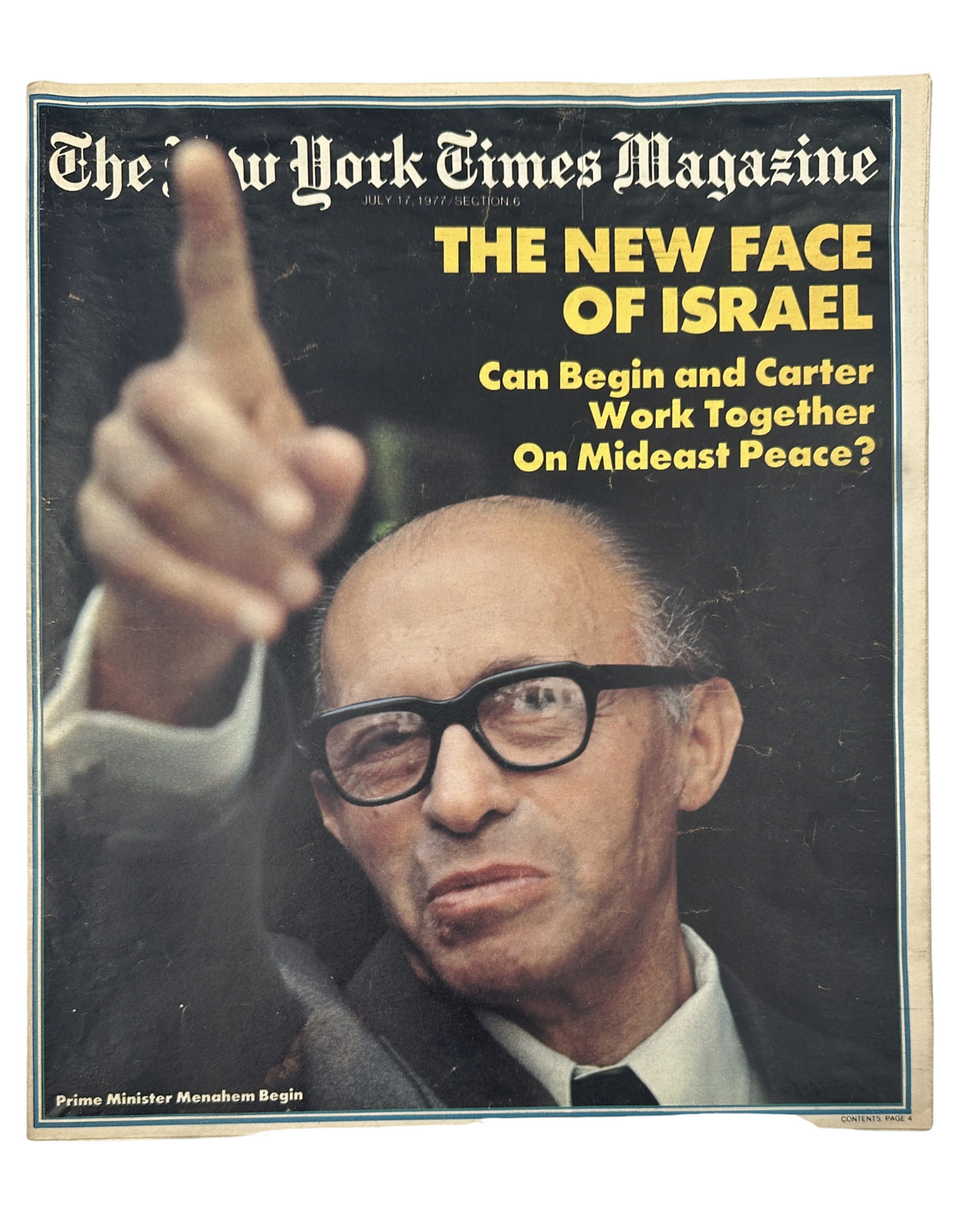
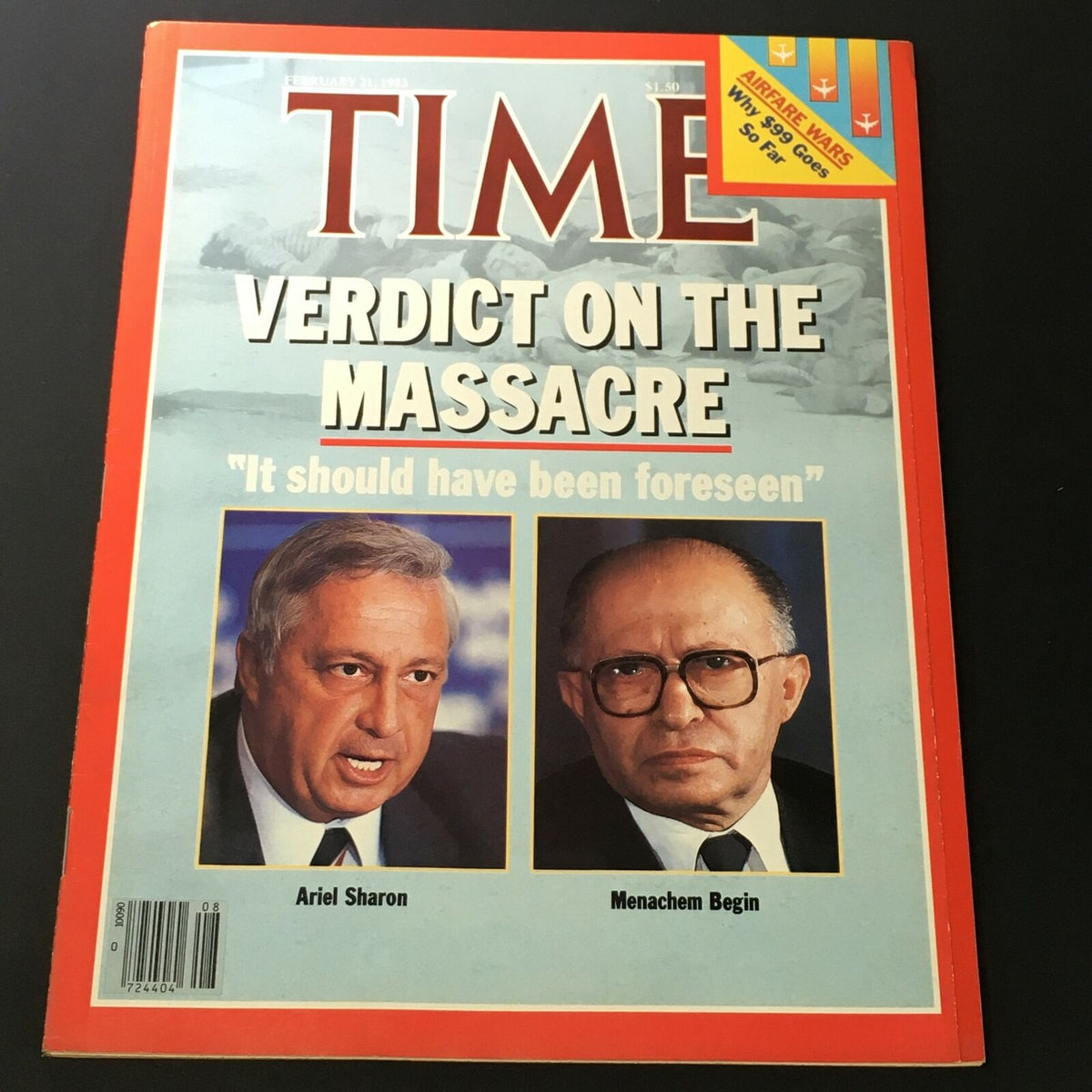
The visual language surrounding Begin in vintage print was one of gravitas and intensity. Photographers captured the steel in his eyes, the upward tilt of his chin, the careful formality of a man who always appeared to be addressing history itself. American newsweeklies framed him within the Cold War geopolitical landscape, while European publications grappled with his complex legacy as both a former militant and a peacemaker. TIME Magazine featured him repeatedly throughout the late 1970s, most memorably in the aftermath of Camp David when he and Sadat shared its cover as joint Men of the Year for 1978 — one of the most iconic issues in the publication's history. Newsweek offered its own deep editorial dives into the shifting sands of Middle Eastern diplomacy, often pairing sharp photography with analytical long-form pieces that treated the Israeli-Egyptian peace as nothing short of miraculous. Meanwhile, international publications such as Paris Match and Der Spiegel approached the figure of Begin through a distinctly European lens — at once fascinated, ambivalent, and historically informed — producing some of the most visually arresting and editorially nuanced coverage of the era. Israeli domestic publications, for their part, documented every chapter with a personal intensity that foreign presses could not replicate.
Curator's Checklist: Highlights Often Include
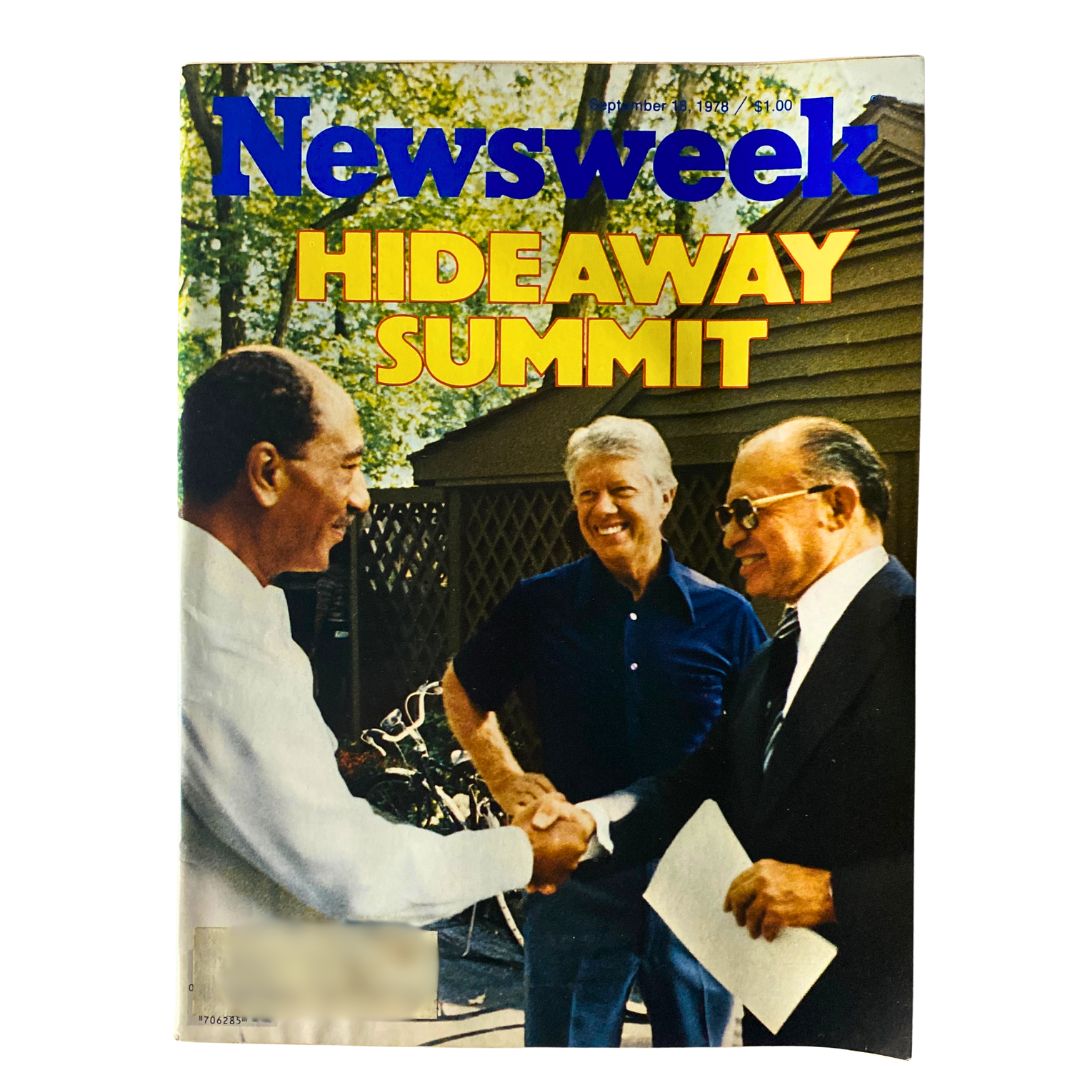
- Camp David & the Nobel Peace Prize (1978–1979): Coverage of the landmark peace negotiations with Egypt, featuring imagery of Begin, Sadat, and President Carter at the summit — among the most sought-after issues of the entire decade
- The 1977 Israeli Election: Reporting on the seismic political upset that brought the Likud to power for the first time, often framed internationally as one of the great democratic surprises of the postwar era
- The Entebbe Aftermath & Security Policy: Features connecting Begin's ideology to Israeli defense doctrine, including retrospective coverage of the 1976 Entebbe rescue and the broader context of regional conflict
- Profiles of the Underground Years: Long-form retrospectives on his leadership of the Irgun, the King David Hotel bombing, and the British Mandate period — often revisited during his premiership as journalists attempted to reconcile the militant past with the statesmanlike present
- Personal & Human Interest Portraits: Quieter features exploring his deep Jewish faith, his devotion to his wife Aliza, his literary sensibility, and the profound grief that marked his final years — the more intimate side of a man history often reduced to ideology alone
The Collector's Value
To hold one of these issues in your hands is to reconnect with the world as it was genuinely experienced — the slightly rough texture of mid-century newsprint giving way to the glossy weight of a full-color feature spread, the faint woody perfume of aging ink mingling with the faded scent of the decade itself. The advertisements surrounding the editorial content are time capsules in their own right: whiskey brands, American automobiles, transatlantic airlines — a reminder that these magazines lived and breathed inside a real cultural moment, not behind a museum's glass. The coverage of this era carries a documentary urgency that no digital archive can fully replicate, because these pages were written without the benefit of hindsight, in real time, by journalists who did not yet know how the story would end. For collectors of Cold War political history, Middle Eastern diplomatic history, or Jewish heritage and the founding era of modern Israel, these publications offer an irreplaceable primary source — the raw, unmediated record of a world processing extraordinary events as they happened. Explore our current available inventory below and discover which pieces of this remarkable story are waiting to find a new home.