📖 About this Collection
Mother Teresa: A Saint in Print, A Light in the Dark
The Legend & The Legacy
Long before the world could stream a documentary or scroll through a social feed, the story of Mother Teresa reached millions through the rustling pages of the world's great magazines. Born Anjezë Gonxhe Bojaxhiu in Skopje in 1910, she would become the most recognizable face of human compassion in the twentieth century — a tiny Albanian nun whose work in the slums of Calcutta quietly stunned a world growing numb to suffering. It was print media that first brought her to global consciousness, transforming a local missionary into an international icon. When Malcolm Muggeridge's 1969 BBC documentary Something Beautiful for God introduced her to Western audiences, it was the subsequent magazine coverage — sprawling, photographed, and deeply reported — that cemented her legend. Through the Cold War, through famine and war, through the turbulent social revolutions of the 1960s, '70s, and '80s, readers opened their magazines to find her there: small in stature, immense in purpose, wrapped in that unmistakable white-and-blue sari. She was awarded the Nobel Peace Prize in 1979, and the world's press responded with the kind of reverent, full-color coverage reserved only for figures of genuine historic gravity.
Inside the Archive
The photographic record of Mother Teresa in vintage print is among the most quietly powerful in twentieth-century magazine history. Photographers who documented her work in the House for the Dying in Calcutta, in her orphanages, and on her travels produced imagery that editors knew required space — full pages, double spreads, images allowed to breathe without clutter. Life magazine, the great American chronicle of the century, covered her with the same moral seriousness it brought to war and civil rights, framing her as a living rebuke to modernity's coldness. Time magazine placed her on its cover and in its most considered long-form features multiple times across her decades of service, and its 1979 Nobel coverage stands as one of the definitive print records of her international recognition. Paris Match, the French institution famed for marrying photojournalism with emotional storytelling, brought her story to European audiences with an intimacy and visual lyricism uniquely its own — its photographers capturing the humanity of her missions in ways that transcended language. The editorial tone across publications was rarely detached; journalists who spent time in her presence wrote with an unusual sense of personal reckoning, as though the experience of witnessing her work demanded a different kind of prose altogether.
Curator's Checklist: Highlights Often Include
- Nobel Peace Prize coverage (1979): Issues from this landmark year frequently feature in-depth profiles, acceptance speech excerpts, and editorial reflections on what her recognition meant for the relationship between faith, poverty, and global politics.
- Calcutta mission photojournalism: Collectors often encounter striking documentary-style photo essays depicting life inside the Missionaries of Charity — the dying, the orphaned, the ministered-to — photographed with a rawness rarely seen in commercial print.
- Papal and Vatican adjacency coverage: As one of the most celebrated Catholics of the century, she regularly appeared in issues coinciding with papal visits, Vatican announcements, and coverage of the global Catholic Church — particularly during the papacies of Paul VI and John Paul II.
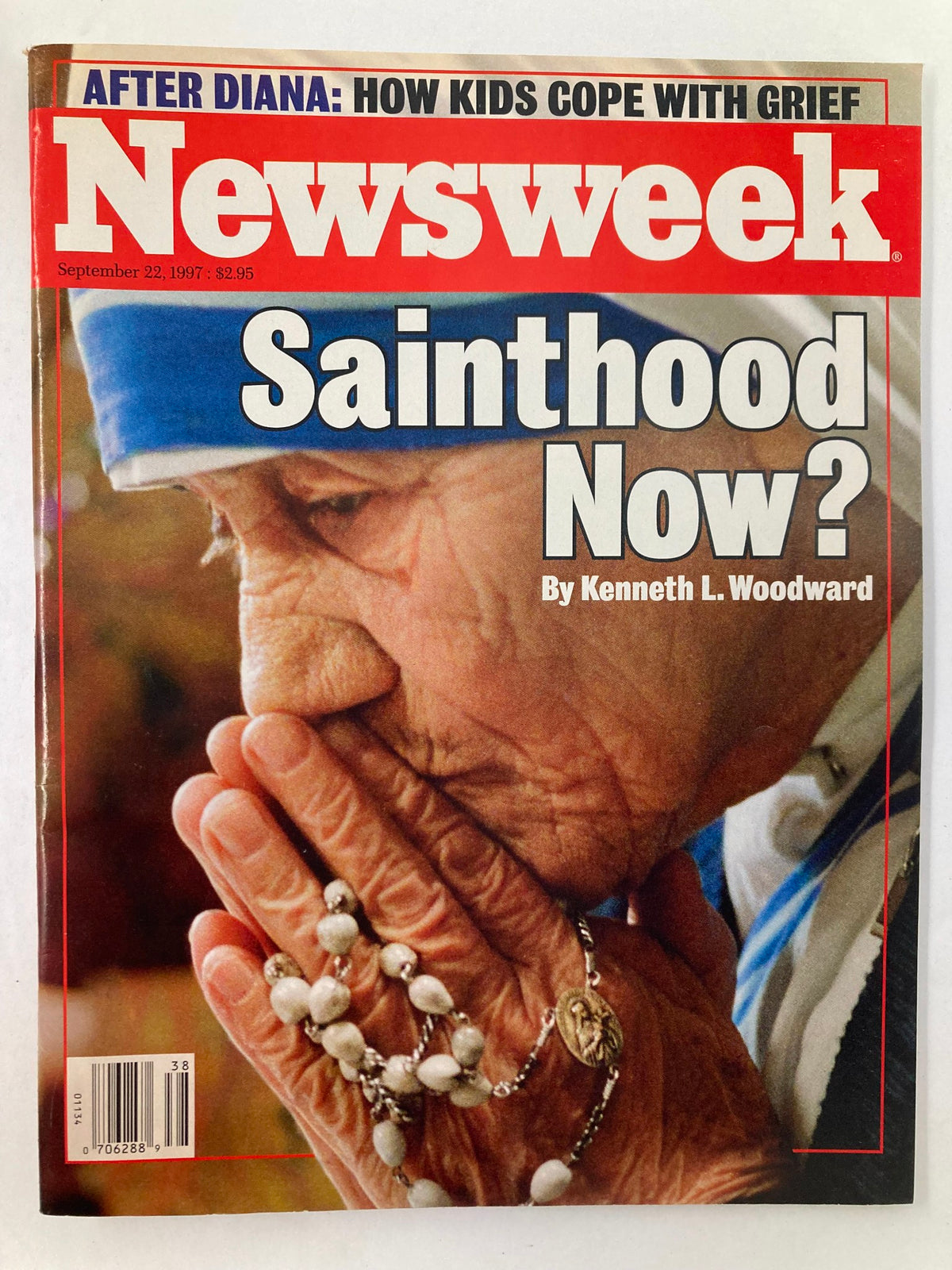
- Death and canonization retrospectives: Issues published following her passing in September 1997 — and later surrounding her beatification (2003) and canonization (2016) — offer powerful commemorative spreads, often drawing on decades of archival photography.
- International humanitarian crisis coverage: Her presence was frequently noted in broader features on famine, disease, and poverty across Asia, Africa, and Latin America, placing her within the defining humanitarian narratives of the late twentieth century.
The Collector's Value
To hold a vintage magazine featuring Mother Teresa is to hold something that exists entirely outside the digital economy of images — no pixel compression, no algorithmic cropping, no screen between you and the photograph. The paper stock of a 1970s Life or Time carries its age honestly: a warm yellowing at the edges, the faint mineral scent of decades-old ink, the slight give of pages that have been turned before by hands now long gone. These are primary sources — unmediated, unapologetically physical artifacts of the century that made her famous. The advertisements that surround her image are themselves a time capsule: mid-century automobiles, pharmaceutical curiosities, the fashions of a world she largely refused — a striking contrast that only deepens the power of her presence on the page. For collectors of religious and Catholic history, humanitarian and social justice ephemera, or twentieth-century photojournalism and Nobel Prize history, these publications offer an irreplaceable window into how a living saint was perceived, debated, and venerated in real time, by ordinary people, in the world she chose to serve. Explore our current rotating inventory below and discover which rare originals are available today.