📖 About this Collection
Mr. Rogers: The Gentle Revolutionary Who Taught a Nation How to Feel
The Legend & The Legacy
In an age when television was still finding its moral compass, one man in a cardigan and canvas sneakers walked quietly onto a small set and changed the culture forever. Fred Rogers — ordained Presbyterian minister, puppeteer, composer, and television pioneer — built Mister Rogers' Neighborhood into one of the most enduring and emotionally sophisticated programs in the history of American broadcasting, airing from 1968 through 2001 on PBS. Long before the language of emotional intelligence entered the mainstream lexicon, he was speaking directly to children about fear, divorce, death, and self-worth with a radical tenderness that unsettled critics and captivated parents in equal measure. His influence radiated far beyond the screen: he famously defended public broadcasting before the United States Senate in 1969, his testimony so disarming that it moved a skeptical chairman to tears and secured $20 million in federal funding. In those decades before the internet fragmented attention and dissolves into algorithms, Americans processed his cultural presence the old-fashioned way — through print. Magazines arrived on doorsteps and in waiting rooms, carrying interviews, profiles, and tributes that captured a nation trying to understand why a soft-spoken man with a fish tank and a model trolley had become one of its most trusted figures.
Inside the Archive
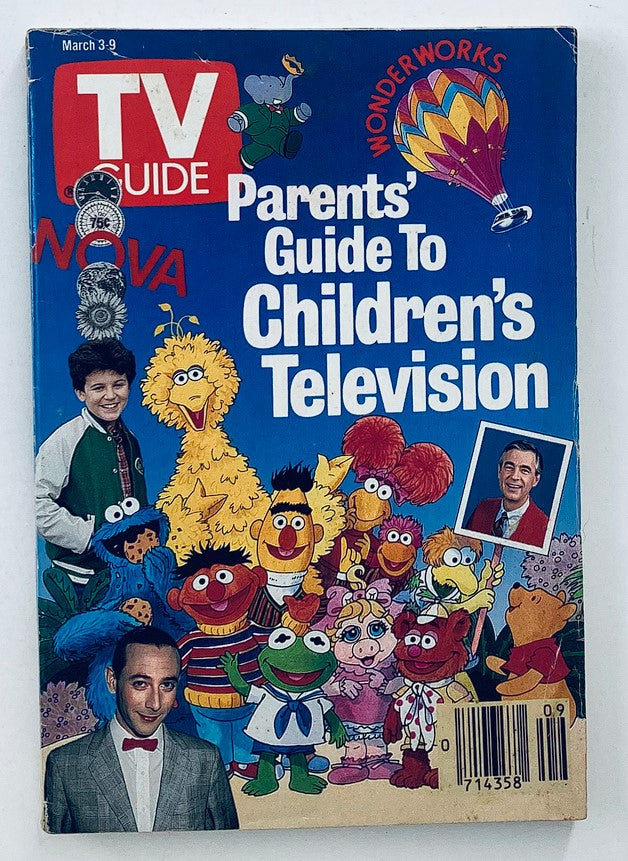
Vintage magazines approached the gentle neighbor with a reverence that was itself unusual in an era of celebrity journalism. TV Guide, the ubiquitous weekly companion to American household viewing, featured him across multiple decades — profiling the theological convictions behind his pedagogy, and exploring the deliberate, almost radical slowness of his on-screen pacing. People magazine, particularly in the 1980s and 1990s, returned to him repeatedly as a moral counterweight to a noisier cultural moment, running intimate portraits that emphasized the striking congruence between the man on camera and the man off it. Life, ever the chronicler of the American soul, documented the broader phenomenon of children's educational television with a photographic warmth that placed him alongside the era's great public humanists. The photography across these publications reflects the subject himself — unhurried, warm, and composed — favoring candid shots in the Neighborhood set, close portraits emphasizing his characteristic directness of gaze, and documentary-style spreads that honored his work's educational and spiritual seriousness. Editorial tone was almost universally reverent, yet probing: journalists consistently struggled, in the most illuminating way, to reconcile the simplicity of his message with the depth of its cultural impact.
Curator's Checklist: Highlights Often Include
- Senate testimony and PBS funding coverage — Issues from 1969 onward occasionally feature news and feature coverage of his landmark congressional appearance, one of the defining moments in the history of American public media.
- Landmark anniversary profiles — Publications marking the 10th, 20th, and 25th anniversaries of Mister Rogers' Neighborhood often include retrospective features examining the show's lasting psychological and cultural footprint.
- Tributes and memorial issues from 2003 — Following his passing in February of that year, a wide range of weekly and monthly magazines devoted column inches and cover treatments to mourning a figure many Americans described as a surrogate grandfather.
- Children's media and education features — Broader editorial pieces on the state of American children's television frequently placed him at the center, contrasting his philosophy with the rising tide of commercial Saturday-morning programming.
- Human interest and faith profiles — His ordained ministry and deeply held Presbyterianism made him a compelling subject for publications covering the intersection of spirituality and public life, yielding some of the most intimate and philosophically rich interviews of his career.
The Collector's Value
To hold one of these original issues is to hold something the internet cannot replicate: the physical weight of a moment in time. The slightly rough tooth of mid-century newsprint beneath your fingers, the sweet-sharp scent of decades-old ink, the surrounding advertisements for station wagons and breakfast cereals that place you precisely in the living rooms where his viewers first encountered him — these details transform a magazine from document into artifact. The typography, the photography treatments, the editorial sensibilities of each era are themselves historical evidence of how America chose to see and sanctify this man across half a century. For collectors of television history, American cultural ephemera, or childhood nostalgia, these publications offer something no streaming platform or digital archive can approach: a primary source, untouched and umediated, from the world he shaped. Explore the current available inventory below, and find the issue that brings you back to the Neighborhood.