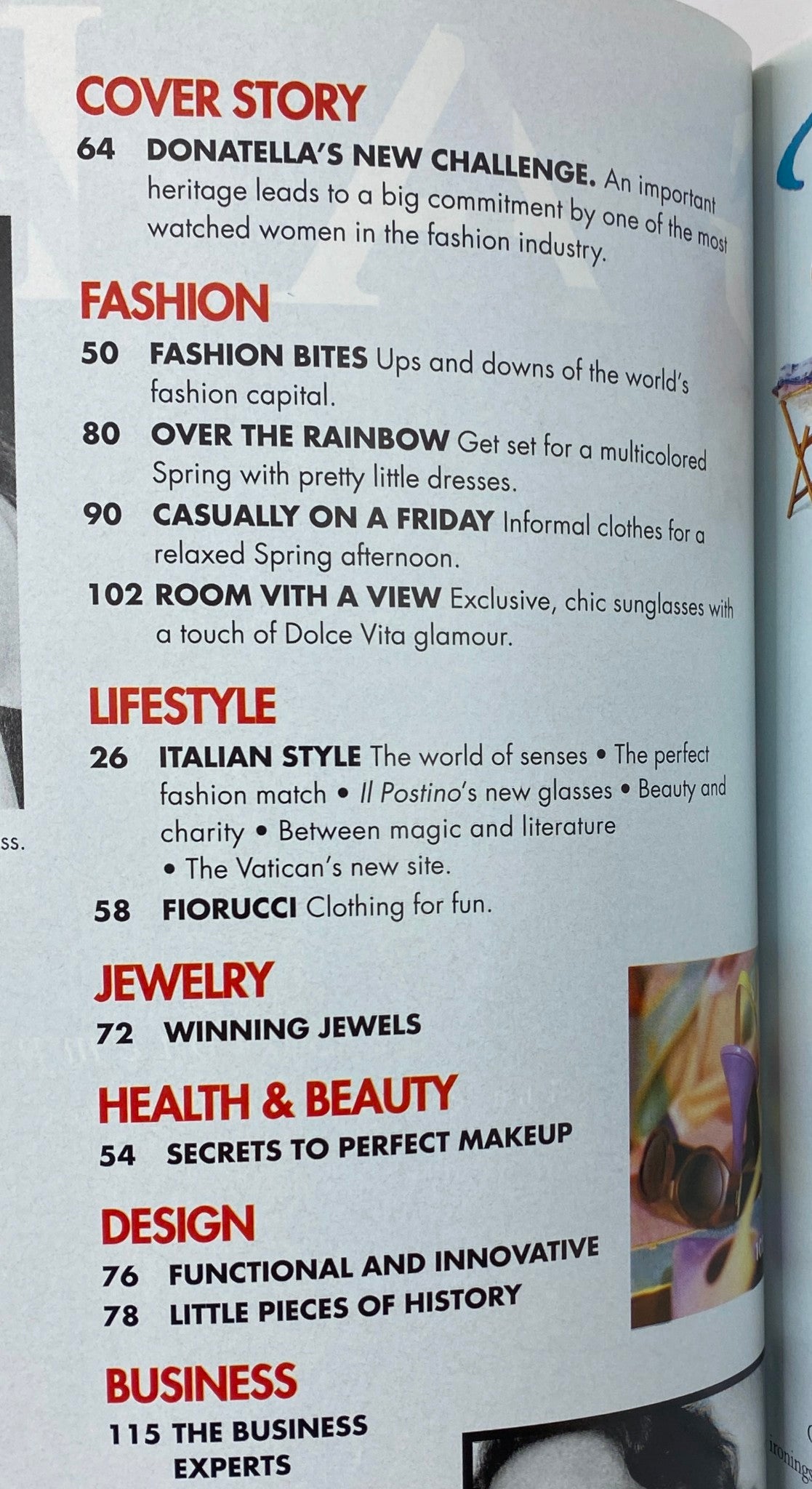
📖 About this Collection
Naomi Campbell: The Immutable Force of Fashion's Sovereign
The Legend & The Legacy
When Naomi Campbell emerged onto the world stage in the late 1980s, the fashion industry had never encountered anything quite like her — a presence so commanding, so precisely engineered by talent and will, that the camera seemed to surrender to her rather than capture her. Before social media flattened celebrity into a stream of ephemera, her story was told entirely through the glossy weight of print: the breathless fashion spreads, the cover lines that promised something extraordinary inside, the profile essays that struggled to contain her. She became the first Black woman to appear on the covers of French Vogue and Time magazine's Style issue, milestones that reverberated not just through fashion circles but through culture at large. In an era when the world processed icons through newsstands and subscription deliveries, the supermodel was a monthly revelation — a face that sold issues, shifted conversations, and, with extraordinary consistency, redefined what beauty and power could look like in print.
Inside the Archive
The visual language used to document the Streatham-born icon across two decades of editorial coverage was one of uncompromising drama. Photographers like Helmut Newton, Steven Meisel, and Patrick Demarchelier rendered her in images of almost mythological scale — high-contrast shadows, sculptural poses, a gaze that communicated authority rather than invitation. Vogue — in its American, British, French, and Italian editions — returned to her with a frequency that amounted to a sustained artistic dialogue, each cover a new argument for her singular magnetism. i-D and The Face, the British style bibles of the late '80s and '90s, captured her raw, pre-supermodel ascent with a street-level intimacy that institutional fashion press rarely achieved. Ebony and Essence documented her cultural significance with particular depth, contextualizing what her success meant within a broader history of Black excellence in the global spotlight — not merely as a model, but as a symbol. The editorial tone across these publications ranged from reverential to provocative, but never indifferent; no magazine that put her on its cover treated the decision as anything less than an event.
Curator's Checklist: Highlights Often Include
- Landmark cover appearances from the late 1980s through the 2000s in major international fashion titles, often coinciding with Paris, Milan, or New York Fashion Week seasons and featuring the defining collections of Versace, Chanel, and Azzedine Alaïa
- The supermodel era group features — editorial spreads and profiles from the early 1990s documenting the unprecedented cultural moment when she, alongside Linda Evangelista, Christy Turlington, and Cindy Crawford, elevated modeling into a form of global celebrity
- Controversy and cultural reckoning coverage from news-adjacent magazines and weekly titles that documented her highly publicised legal proceedings and public persona during the mid-to-late 1990s, a period that generated enormous press attention worldwide
- International fashion press — particularly issues of Vogue Paris, Vogue Italia, and Harper's Bazaar — featuring the technically masterful, often surrealist fashion photography for which those publications were celebrated during her peak decade
- Milestone anniversary and retrospective issues from the late 1990s and 2000s, in which editors and fashion historians began explicitly placing her within the canon of the century's defining style figures
The Collector's Value
To hold one of these magazines is to hold a specific moment in time that the internet cannot replicate. The slight give of the heavyweight coated paper stock, the faint chemical perfume of decades-old printing ink, the unexpected discovery of a Versace advertisement opposite her editorial spread — together these details constitute an experience that is tactile, temporal, and irreplaceable. A digital scan of a cover communicates information; the original communicates presence. These are primary source documents from the peak years of an industry and a cultural moment that will not come again — the last era in which a handful of faces genuinely held the world's collective gaze, mediated entirely through print. For collectors of Black cultural history and representation, high fashion and 20th-century editorial photography, or supermodel era memorabilia and runway history, these publications offer not merely decoration but genuine archival significance — a physical inheritance from a watershed moment in style, media, and identity. Explore the current available inventory below and secure a piece of that irreplaceable record.